The $1.1 Billion Aftershock: MSC’s Kerala Disaster and Broader Energy Investment Implications
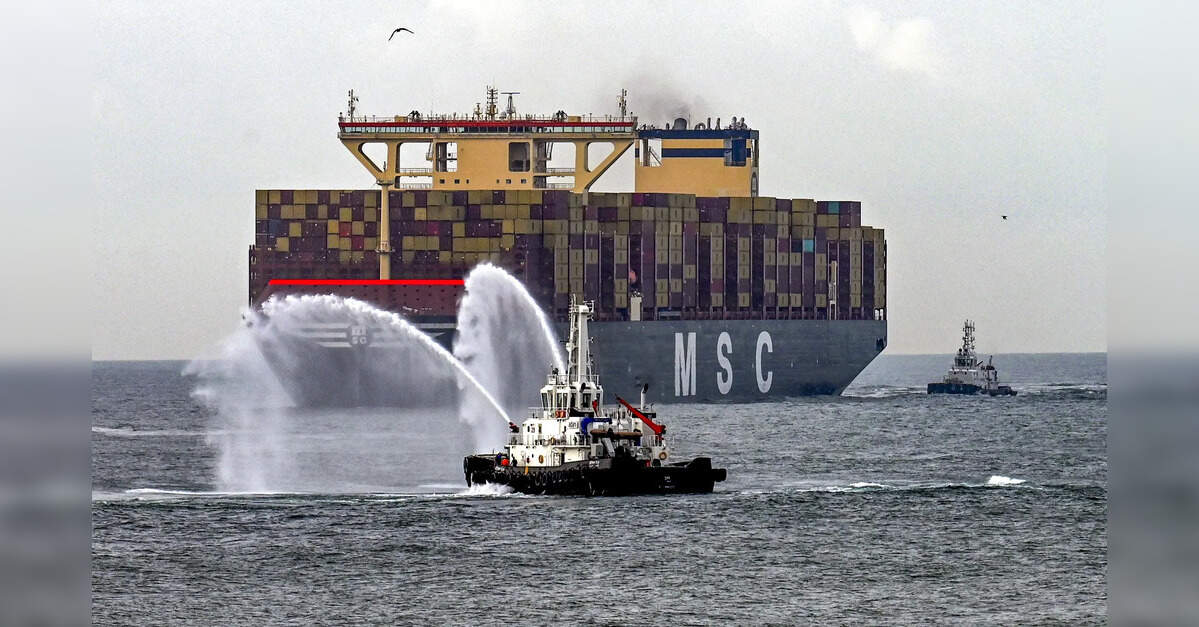
The May 2025 environmental disaster off the coast of Kerala, India, involving the capsize of the MSC ELSA3 and subsequent fuel leakage, continues to reverberate through the maritime logistics sector, culminating in a staggering $1.1 billion compensation claim from the state government against Mediterranean Shipping Company (MSC). This substantial claim, underscored by a high court order last year to detain an MSC vessel, the MSC ANNA, at Vizhinjam Port as security, serves as a stark reminder for oil and gas investors of the escalating financial and reputational risks associated with environmental negligence in global supply chains. While the immediate focus is on MSC, the incident’s fallout highlights broader challenges for the energy industry, which relies heavily on a robust and environmentally compliant shipping fleet for crude, refined product, and LNG transport.
Financial Contagion and the Cost of Environmental Risk
The financial demands levied against MSC are unprecedented in their scale for a single incident of this nature. The $1.1 billion sought by Kerala’s government encompasses not only the immediate costs of oil removal and environmental cleanup – a task MSC had already engaged a marine services company for – but also the long-term detriment to the marine ecosystem, coastal fisheries, and public health. This includes compensation for over 105,000 fishing families impacted by the incident. For investors, this punitive figure underscores a critical shift: environmental liabilities are no longer abstract risks but concrete, multi-billion-dollar exposures that can significantly impact a company’s balance sheet and operational continuity. The detention of a vessel, a severe operational disruption, sends a clear signal about regulatory intent to enforce accountability. Such events can trigger a domino effect, leading to higher insurance premiums for all maritime operators, increased scrutiny from port authorities globally, and potentially tighter environmental regulations, all of which translate to higher costs for the transportation of energy commodities.
Market Sensitivity: Operational Risks Amidst Volatile Crude Prices
The ongoing repercussions of the Kerala incident add another layer of complexity to an already dynamic energy market. As of today, April 15, 2026, Brent Crude is trading at $94.81, showing a marginal increase of 0.02% within a day range of $91-$96.89. WTI Crude stands at $90.97, down 0.34%, with a day range of $86.96-$93.3. Gasoline prices are at $2.99, up 0.67%. This current snapshot follows a significant dip in Brent over the past two weeks, falling from $102.22 on March 25, 2026, to $93.22 on April 14, 2026, marking an 8.8% decline. While this decline is primarily driven by broader macroeconomic factors and supply-demand dynamics, localized operational disruptions like the MSC incident contribute to an overall increase in perceived risk within the supply chain. Investors are keenly focused on understanding future price trajectories, with our reader intent data showing significant interest in building a base-case Brent price forecast for the next quarter and consensus 2026 Brent forecasts. These forecasts must now increasingly factor in not just geopolitical tensions and economic indicators, but also the potential for costly operational incidents that can affect freight rates, insurance costs, and the reliability of global energy flows.
ESG Imperatives and Investor Scrutiny
The Kerala disaster is a powerful illustration of why Environmental, Social, and Governance (ESG) factors have moved from niche consideration to mainstream investment imperative. The state government’s detailed court filing, citing “massive pollution” and “serious detriment” to the environment and public health, provides a compelling narrative for stricter environmental compliance. Our proprietary reader data indicates a growing investor appetite for understanding the operational integrity of companies within the energy ecosystem, not just their financial performance. The incident prompts questions about the due diligence applied to third-party logistics providers and the robustness of emergency response protocols across the industry. For upstream and midstream companies, ensuring their transportation partners meet stringent environmental standards is no longer just good practice; it’s a critical risk management strategy. Failure to do so can lead to indirect reputational damage, supply chain disruptions, and increased operational costs that ultimately erode shareholder value. This incident reinforces the idea that robust ESG frameworks are not merely about public perception but about mitigating tangible financial and operational risks.
Forward Outlook: Operational Risks Intersecting with Key Energy Events
Looking ahead, the energy market faces a series of critical events over the next two weeks that will shape supply and demand expectations. The OPEC+ Joint Ministerial Monitoring Committee (JMMC) meeting on April 18th, followed by the Full Ministerial Meeting on April 20th, will provide crucial insights into future production policies. These decisions, combined with weekly data from the API (April 21st, April 28th) and EIA (April 22nd, April 29th) on crude inventories, and the Baker Hughes Rig Counts (April 17th, April 24th) indicating drilling activity, will be pivotal in determining market direction. While these events directly address fundamental supply and demand, the persistent shadow of incidents like the MSC ELSA3 capsize introduces an element of operational vulnerability. Higher insurance costs, potential regulatory delays for vessels, and increased scrutiny on shipping practices can subtly impact the efficiency and cost-effectiveness of transporting oil and gas. Investors, already asking about how Chinese “teapot” refineries are running this quarter and the drivers of Asian LNG spot prices, must recognize that these localized operational risks, while not headline-grabbing supply shocks, contribute to the complex web of factors influencing global energy prices and the overall investment thesis in the oil and gas sector.


