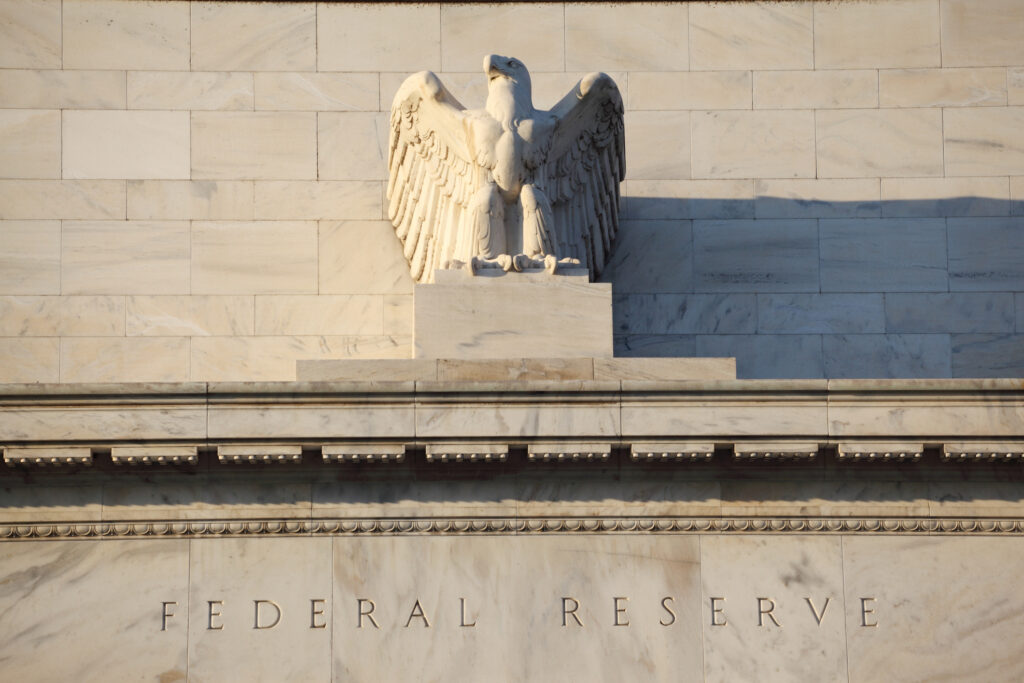
The Fed’s September Conundrum: A Critical Juncture for Energy Investors
The Federal Reserve stands at a pivotal moment, with growing expectations among economists for a potential interest rate cut as early as September. However, this decision is far from straightforward, presenting a complex dilemma for central bankers that will have profound implications for global financial markets, and particularly for the energy sector. As investors navigate a landscape shaped by monetary policy, geopolitical tensions, and supply dynamics, understanding the Fed’s intricate balancing act between a softening labor market and persistent inflationary pressures becomes paramount. The trajectory of energy prices, from crude benchmarks to refined products, will be significantly influenced by whether the Fed opts to ease policy, hold steady, or even surprise markets with a more hawkish stance.
Navigating the Fed’s Uncomfortable Balancing Act
The core of the Federal Reserve’s current dilemma lies in the conflicting signals emerging from the U.S. economy. On one hand, there’s increasing evidence suggesting a cooling labor market, a key indicator that could justify a reduction in borrowing costs to prevent a deeper economic slowdown. Economists point to a likely weakening in employment trends over the coming months, which historically provides the Fed with room to maneuver. On the other hand, inflation remains a stubborn concern. Fed Chairman Jerome Powell has indicated expectations for higher inflation readings through the summer months, creating a challenging backdrop for any dovish pivot. This means that by their September 16-17 meeting, policymakers could be faced with the uncomfortable scenario of a slowing economy juxtaposed against rising prices. While some economists believe the Fed will ultimately “look through” the elevated inflation to support growth, others argue that cutting rates in such an environment risks reigniting inflationary pressures, potentially undoing months of restrictive policy. The benchmark interest rate currently sits in a range of 4.25% to 4.5%, a level Powell has acknowledged is suppressing demand. A move towards a more “neutral” rate, estimated by some to be around 3%, would represent a significant shift, but the path to get there is fraught with internal disagreement among Fed officials.
Current Crude Volatility Amidst Policy Uncertainty
The energy markets are already reflecting a degree of this global economic uncertainty and the anticipation of future monetary policy shifts. As of today, Brent Crude trades at $94.8 per barrel, showing a marginal gain, while WTI Crude sits at $90.87, slightly down for the day, with gasoline prices holding at $3 per gallon. These figures, however, belie a more significant trend. Over the past two weeks, Brent has experienced notable volatility, shedding approximately $9, or 8.8%, from $102.22 on March 25th to $93.22 by April 14th. This recent downward pressure underscores investor sensitivity to demand outlooks, which are directly tied to economic growth and, by extension, interest rate policy. A September rate cut, by stimulating economic activity and consumer spending, could provide a tailwind for crude demand and potentially push prices higher. Conversely, if the Fed delays or fails to cut rates, maintaining a tighter monetary stance, it could dampen global economic expansion, putting a cap on oil price appreciation. The daily trading ranges, with Brent fluctuating between $91 and $96.89 and WTI between $86.96 and $93.3, highlight the market’s ongoing search for direction, heavily influenced by incoming economic data and central bank rhetoric.
Upcoming Catalysts: Beyond the Fed’s Horizon
While the Federal Reserve’s September decision looms large, energy investors must also monitor a series of critical industry-specific events over the next two weeks that will further shape the supply-demand narrative. These events provide crucial data points that, when combined with monetary policy signals, paint a comprehensive picture for crude price forecasting. On April 17th and again on April 24th, the Baker Hughes Rig Count will offer insights into North American drilling activity, a key indicator of future supply. More significantly for global supply, the OPEC+ Joint Ministerial Monitoring Committee (JMMC) is scheduled for April 18th, followed by the full OPEC+ Ministerial Meeting on April 20th. These meetings are critical for assessing the cartel’s production policy, and any unexpected adjustments to quotas could dramatically impact global supply balances. Furthermore, weekly inventory reports from the American Petroleum Institute (API) on April 21st and 28th, followed by the official EIA Weekly Petroleum Status Report on April 22nd and 29th, will provide real-time data on U.S. crude and product stockpiles, offering direct indicators of domestic demand and refinery activity. These upcoming events will create immediate price catalysts, providing a dynamic backdrop against which the Fed’s future actions will be judged.
Addressing Investor Concerns: The Q3 Brent Outlook
Our proprietary reader intent data reveals that a top priority for investors this week is building a robust base-case Brent price forecast for the next quarter, alongside understanding the consensus 2026 Brent outlook. The Fed’s impending decision is undoubtedly a cornerstone of these forecasts. A September rate cut, particularly if followed by additional easing as some economists predict for October and December, could provide significant upward momentum for crude prices by boosting demand expectations. Lower interest rates typically translate to a weaker dollar, making dollar-denominated commodities like oil more attractive to international buyers. Conversely, a delayed or absent rate cut, especially if inflation persists, could cap any significant rally. While the Fed’s actions drive the demand side of the equation, investors are also keenly watching other factors. Questions about the operational status of Chinese “tea-pot” refineries and broader Asian LNG spot prices underscore the market’s focus on global consumption trends, particularly from key Asian economies. These regional demand dynamics, coupled with OPEC+’s supply decisions, will interact with the Fed’s monetary policy to determine the ultimate trajectory of Brent for Q3 and beyond. The “consensus 2026 Brent forecast” is currently in flux, reflecting the deep uncertainty surrounding the precise timing and extent of global monetary policy easing and its subsequent impact on economic growth.