ETH Zurich Innovation: A New Frontier in Carbon Capture for Energy Investors
The global energy landscape is undergoing a profound transformation, driven by an urgent need for sustainable solutions and ambitious decarbonization targets. For investors navigating the complexities of the oil and gas sector, identifying disruptive technologies that align with these imperatives is paramount. A groundbreaking development from ETH Zurich now presents a potentially game-changing approach to carbon capture, leveraging biological processes to create “living materials” that actively draw CO2 from the atmosphere.
This visionary research, spearheaded by an interdisciplinary consortium, focuses on integrating conventional material science with biological components like bacteria, algae, and fungi. The overarching goal is to engineer materials endowed with beneficial properties derived from microbial metabolism, such as the inherent capacity to sequester atmospheric carbon dioxide through photosynthesis. Mark Tibbitt, a distinguished Professor of Macromolecular Engineering at ETH Zurich, highlights this as a key objective, underscoring the innovative blend of biology and engineering at play.
Engineering Life for Environmental Impact
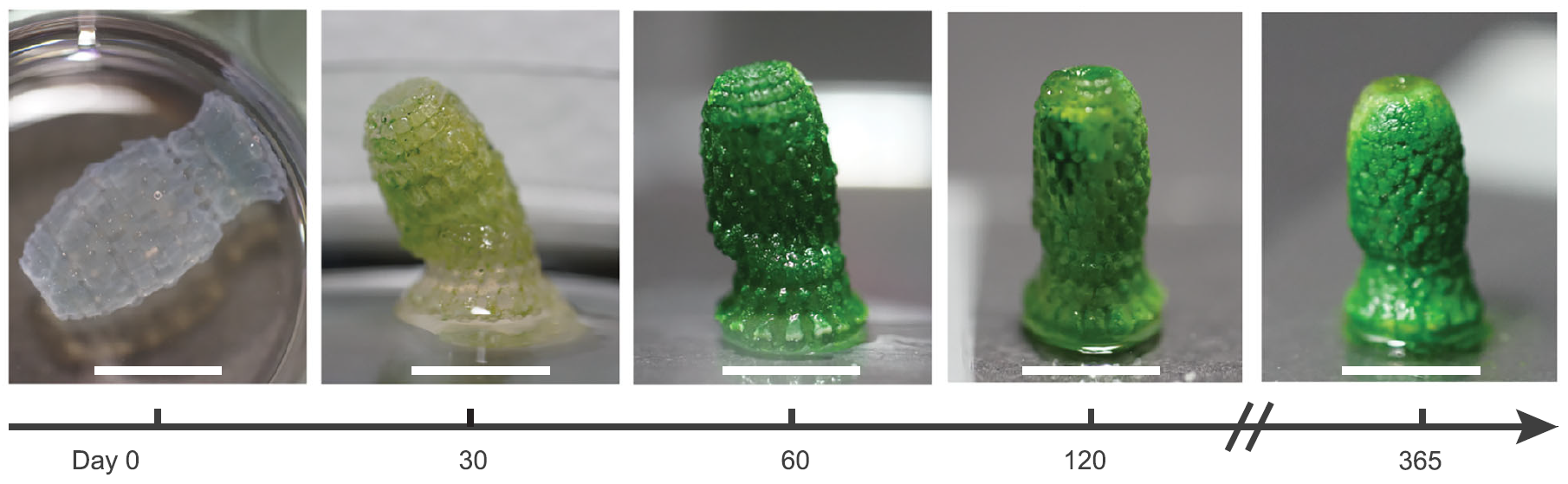
Professor Tibbitt’s team has recently unveiled a significant milestone in this ambitious endeavor: the successful integration of photosynthetic bacteria, specifically cyanobacteria, into a stable, printable gel. This breakthrough has resulted in the creation of a truly living material, capable of self-replication and active carbon removal from the air. Their findings, detailing this “photosynthetic living material,” were recently published in the esteemed journal Nature Communications, signaling its scientific rigor and potential impact.
The adaptability of this innovative material is striking. It can be precisely shaped using 3D printing technologies and requires only readily available inputs for growth: sunlight, artificial seawater, essential nutrients, and of course, atmospheric CO2. Professor Tibbitt, a co-initiator of ETH Zurich’s living materials research, envisions a future where this material could serve as a fundamental building block in construction, directly embedding carbon storage capabilities into our infrastructure.
Unlocking Enhanced Carbon Sequestration
What truly distinguishes this living material is its extraordinary efficiency in carbon capture. It binds significantly more CO2 than can be accounted for by mere organic growth alone. Professor Tibbitt explains that this superior performance stems from the cyanobacteria’s unique ability to store carbon not just in their biomass, but also in the form of minerals. This dual storage mechanism offers a robust and stable pathway for long-term carbon sequestration, presenting a compelling investment thesis for sustainable materials.
Yifan Cui, one of the study’s lead authors, elaborates on the biological prowess of cyanobacteria. As some of the planet’s most ancient life forms, these microorganisms exhibit exceptional photosynthetic efficiency, converting even diffuse light into biomass from CO2 and water. Crucially, their metabolic activity also alters the surrounding chemical environment, leading to the precipitation of solid carbonates, such as lime. These mineral deposits function as an additional, and notably more stable, carbon sink compared to organic biomass alone.
Cyanobacteria: Nature’s Master Builders
“We are specifically harnessing this inherent capability within our engineered material,” states Cui, a doctoral student in Tibbitt’s research group. A practical advantage of this process is the internal deposition of these minerals, which progressively reinforce the material’s mechanical strength. Initially pliable structures gradually harden, transforming soft gels into robust forms through the action of the cyanobacteria themselves. This bio-mineralization process offers a self-strengthening mechanism that could lead to durable, carbon-negative construction components.
Laboratory evaluations have demonstrated the material’s consistent CO2 binding capacity over an impressive 400-day period. The majority of this carbon is locked away in mineral form, with the material capturing approximately 26 milligrams of CO2 per gram of material. This figure significantly surpasses the performance of many other biological carbon capture methodologies. For context, this achievement is substantially superior to the approximately 7 mg of CO2 per gram typically achieved through the chemical mineralization of recycled concrete, highlighting the biological approach’s advanced efficiency.
The Hydrogel Habitat: Optimizing Microbial Performance
The foundation for this living material is a hydrogel – a polymer network characterized by its high water content. Professor Tibbitt’s team meticulously engineered this polymer network to facilitate the efficient transport of light, CO2, and water to the embedded cyanobacteria. This optimized internal environment ensures the microorganisms can thrive and perform their photosynthetic and mineralization functions with maximum efficacy, underscoring the sophisticated engineering behind this biological innovation.
For investors focused on the energy transition and decarbonization, this research opens up significant avenues. The potential to integrate carbon capture directly into building materials could revolutionize the construction sector, offering a tangible pathway to carbon-neutral or even carbon-negative infrastructure. Furthermore, the scalability and relatively low input requirements of this technology suggest a wide range of applications beyond construction, from advanced carbon sequestration systems to novel bio-manufacturing processes.
Investment Implications for a Decarbonized Future
The oil and gas industry faces increasing pressure to innovate and diversify into sustainable solutions. Investments in frontier technologies like ETH Zurich’s living materials represent strategic plays in the burgeoning carbon capture, utilization, and storage (CCUS) market. Companies that can leverage or license such innovations could gain a competitive edge in meeting stringent ESG mandates and addressing the global climate challenge. This technology offers a compelling narrative for long-term value creation in a decarbonizing world.
As the world seeks more efficient and cost-effective methods to mitigate climate change, biologically-driven solutions like this photosynthetic living material are poised to attract substantial attention and capital. Investors should monitor the commercialization pathways for such discoveries, as they could underpin the next generation of sustainable materials and carbon management strategies, offering significant returns for those who recognize their transformative potential early.