US Legislative Shifts Energize European Renewable Investments
A recent significant legislative package debated within the United States Congress has captured the acute attention of European investors, particularly those focused on the burgeoning renewable energy sector. Following a series of critical amendments and subsequent approval by the Senate, shares of leading European wind power firms witnessed robust gains. The positive momentum continued as the U.S. House of Representatives commenced its final deliberations on the comprehensive bill, underscoring the market’s optimistic reception to the revised policy landscape.
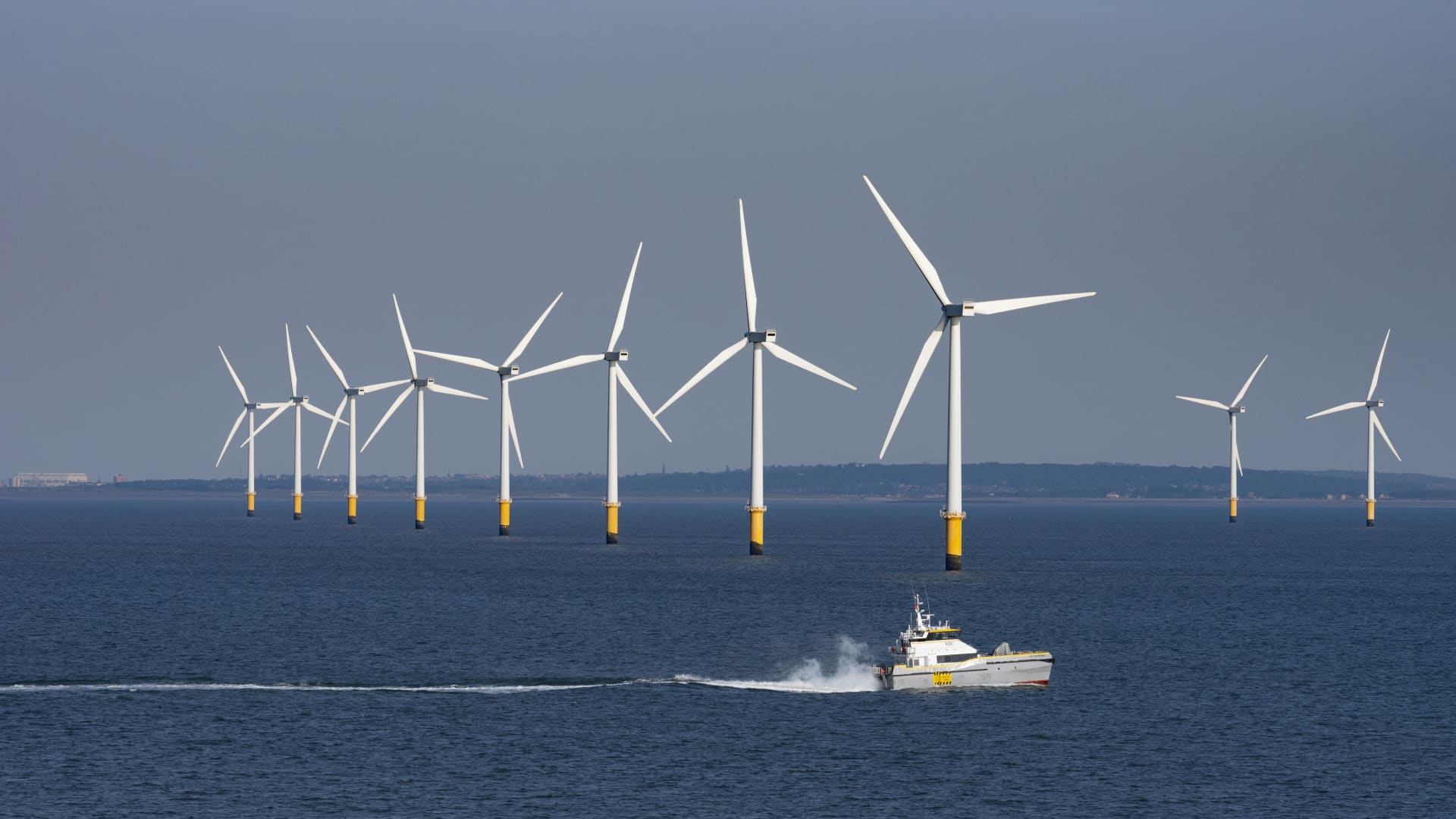
Turbine manufacturing giant Vestas experienced a substantial uplift, climbing over 10% in the prior trading session before adding another 3.4% in early Thursday trading. Similarly, wind farm operator Orsted and turbine producer Nordex built upon Wednesday’s strong performance, each advancing more than 2% during early Thursday hours. This market enthusiasm reflects a collective sigh of relief for a sector that has contended with a complex array of challenges, including securing adequate project financing, navigating intense global competition, notably from Chinese manufacturers, and grappling with persistent tariff uncertainties.
Policy Revisions Unlock Investment Potential
The latest iteration of the U.S. legislative framework introduces several pivotal revisions that directly benefit European renewable energy companies. A key amendment involves the elimination of a proposed tax on wind and solar projects that utilize components sourced from “foreign entities of concern.” This provision was widely interpreted as targeting China, and its removal is a significant boon, mitigating potential supply chain disruptions and fostering a more predictable environment for procurement. Industry analysts had previously warned that such a tax could stifle new orders and broader investment across the renewable energy supply chain, making its omission a crucial factor in renewed investor confidence.
Another major policy adjustment critical for European renewable energy developers is the removal of a stringent deadline that mandated all projects eligible for tax credits to be operational by the close of 2027. The revised terms now extend eligibility to all projects commencing before mid-2026. This extension is particularly impactful, as analysts at Citi suggest it will likely stimulate a flurry of near-term development activity. The threshold for a project to be considered “commenced” is relatively low, requiring only 5% of its total capital expenditure to be spent, thereby encouraging swift initiation of new ventures. This positive sentiment was mirrored in the performance of U.S. clean energy shares, which also saw gains this week.
Sydbank analysts underscored the long-term implications of these changes, stating that if the bill passes in its current form, it “will establish a robust foundation for the American onshore wind turbine market well beyond 2027.” They noted that the previous text carried a high inherent risk of a near-complete standstill in 2028, making the current revisions a “gigantic relief” for the onshore wind market within the United States. This regulatory clarity and extended runway for incentives are vital for attracting sustained capital into the sector.
The Indispensable Role of the U.S. Market
For Europe’s most prominent renewable energy developers, the U.S. market holds an undeniably strategic position. Tancrede Fulop, a senior equity analyst and renewables specialist at Morningstar, highlights that these legislative amendments, coupled with the recommencement of construction on Equinor’s Empire Wind project off the New York coast, signal a departure from what was once considered a “worst-case scenario” for the renewables sector under the existing U.S. administration. This suggests a more stable and supportive regulatory landscape is emerging.
The United States represents a substantial operational footprint for leading European players. For instance, the U.S. accounts for approximately 50% of the installed renewable capacity for both RWE and EDPR. For Iberdrola, the figure stands at around 40%. This deep market penetration means that U.S. energy policy directly and significantly impacts the financial health and growth trajectories of these multinational energy conglomerates. Their substantial investments in American wind and solar projects underscore the critical importance of a predictable and favorable regulatory framework.
Vulnerability and Resilience Across the Value Chain
While the legislative changes are broadly positive, their impact can vary across the renewable energy value chain. Developers, such as RWE, EDPR, and Iberdrola, possess a degree of flexibility to navigate policy shifts. Should tax credits eventually phase out or diminish, these companies could potentially offset such changes by securing higher power purchase agreement prices or by exerting pressure on manufacturers to reduce equipment costs. Their diversified portfolios and long-term project pipelines offer some insulation against immediate market fluctuations.
Conversely, manufacturers like Vestas and Siemens Energy often face greater vulnerability. These firms are highly dependent on new orders and project deployments, making them more susceptible to changes in policy or market demand. Vestas, for example, has approximately 35% of its onshore wind backlog concentrated in the U.S. This significant exposure means that any disruption or slowdown in American project development directly impacts their order books and revenue streams. The recent policy adjustments, therefore, provide a crucial injection of stability and demand for these manufacturing stalwarts, reinforcing their U.S. market presence and investment outlook.
In conclusion, the updated U.S. energy bill represents a pivotal moment for global clean energy investment, particularly for European firms deeply integrated into the American market. By removing restrictive taxes and extending critical tax credit deadlines, the legislation has not only spurred an immediate positive market reaction but also laid the groundwork for sustained growth and capital deployment in the U.S. renewable sector. For investors tracking the evolving energy landscape, these developments signal a strengthened commitment to clean energy, offering compelling opportunities within wind and solar power generation and manufacturing, and reshaping the broader outlook for energy transition investments.