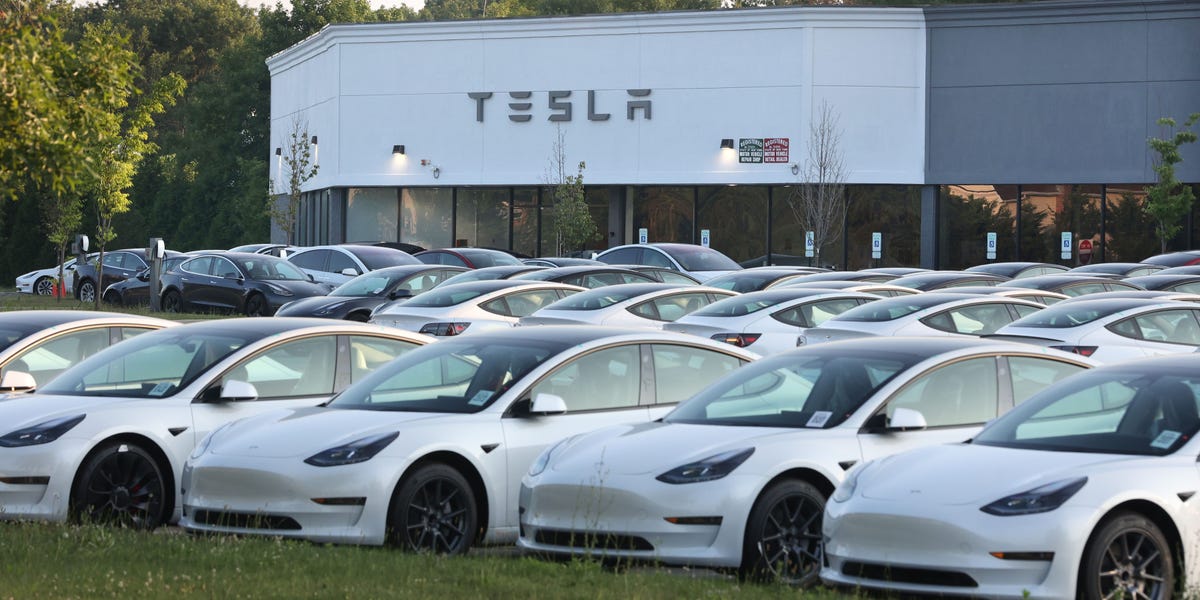
Tesla’s second-quarter delivery figures have landed, confirming what many in the market suspected: the electric vehicle (EV) market slowdown is not just a blip, but a persistent headwind. While Tesla’s stock saw a modest uptick post-announcement, the underlying numbers paint a challenging picture for the EV sector. For oil and gas investors, this isn’t merely news about an automotive company; it’s a critical signal impacting global energy demand forecasts, investment strategies, and the long-term trajectory of hydrocarbon consumption. A decelerating EV transition directly translates to sustained demand for traditional fuels, making a deep dive into these trends essential for navigating the evolving energy landscape.
The EV Headwind Hits Harder Than Expected
In Q2, Tesla delivered 384,000 EVs, falling short of Wall Street’s already lowered expectations of 389,400 units. This performance marks a significant year-over-year decrease of 13.5% from the approximately 444,000 vehicles delivered in Q2 2024, representing a substantial drop of 60,000 deliveries – the largest quarterly decline in the company’s history. This follows a bruising first quarter where Tesla delivered nearly 336,700 EVs, a 13% decrease from the same period in 2024 and its lowest quarter since 2022. The company’s CFO attributed these challenges to factors including assembly line changeovers for the refreshed Model Y and what was termed “anti-Tesla hostility” in some markets. While the refreshed Model Y, Tesla’s top seller, has since launched and boosted April sales, it is not the more affordable model that was slated for late June production. This consistent underperformance, coupled with increasing competition and brand perception issues, signals an industry-wide slowdown that is reshaping assumptions about the pace of electrification and, consequently, the demand for liquid fuels.
Crude Markets React: A Complex Dance of Supply and Demand
The deceleration in EV adoption provides a crucial backdrop to the current volatility observed in crude markets. As of today, Brent crude trades at $90.38 per barrel, experiencing a sharp daily decline of 9.07%, with prices ranging from $86.08 to $98.97. Similarly, WTI crude is at $82.59, down 9.41% within a daily range of $78.97 to $90.34. This significant daily movement follows a broader bearish trend over the past two weeks, where Brent has fallen from $112.78 on March 30th to $91.87 yesterday, a substantial decline of $20.91 or 18.5%. While the immediate price pressure on crude is influenced by a confluence of factors including geopolitical developments and inventory data, the slower-than-anticipated EV transition acts as a long-term demand stabilizer. Gasoline prices, currently at $2.93 per gallon and down 5.18% today, demonstrate that despite crude’s recent dip, demand for refined products remains relatively robust, likely cushioned by the slower shift away from internal combustion engine vehicles. For oil and gas investors, this implies that the ‘peak oil demand’ narrative may be pushed further into the future, offering a prolonged runway for conventional energy investments.
Looking Ahead: Key Events to Watch for Oil & Gas Investors
The implications of a slowing EV market extend directly into the critical upcoming energy calendar. This weekend, oil and gas investors will closely monitor the OPEC+ Joint Ministerial Monitoring Committee (JMMC) meeting tomorrow, April 18th, followed by the full Ministerial meeting on Sunday, April 19th. Against a backdrop of weakening EV demand growth and recent crude price declines, the question of whether OPEC+ will maintain or adjust its current production quotas becomes paramount. Any signals regarding deeper cuts or extended reductions could significantly impact market sentiment and pricing. Following these crucial OPEC+ decisions, attention will shift to weekly inventory data. The API Weekly Crude Inventory report on April 21st and the EIA Weekly Petroleum Status Report on April 22nd will provide fresh insights into U.S. supply-demand balances. Similar reports on April 28th and 29th will offer further clarity. Stronger-than-expected inventory builds could reinforce bearish sentiment, while draws might signal resilient demand. Finally, the Baker Hughes Rig Count on April 24th and May 1st will indicate North American drilling activity, offering a forward-looking perspective on future supply. These events, viewed through the lens of a decelerating EV transition, will be instrumental in shaping short-to-medium term investment decisions in the oil and gas sector.
Investor Sentiment and the Long-Term Outlook
Our proprietary reader intent data provides a direct window into what oil and gas investors are currently grappling with. A consistent theme emerging this week revolves around long-term price predictions, with many asking, “What do you predict the price of oil per barrel will be by end of 2026?” This query underscores the market’s hunger for clarity amidst conflicting signals. The confirmed EV slowdown, while not an immediate market driver, certainly impacts this long-term outlook by suggesting a slower erosion of gasoline demand than previously modeled by some analysts. This potentially extends the window for robust oil demand, influencing future price expectations. Furthermore, investors are closely examining company-specific performance, exemplified by questions like, “How well do you think Repsol will end in April 2026?” This highlights a focus on individual E&P companies’ resilience and strategic positioning within a dynamic energy landscape. The ongoing interest in “OPEC+ current production quotas” further emphasizes the critical interplay between supply-side management and demand-side shifts, including the revised EV adoption trajectory. The slower EV transition provides a tailwind for conventional energy, potentially supporting stronger earnings for well-positioned oil and gas companies and reinforcing the importance of disciplined supply management from major producers like OPEC+ to capitalize on sustained demand.


