The Ghost of Retail Past: A Cautionary Tale for Oil & Gas Investors
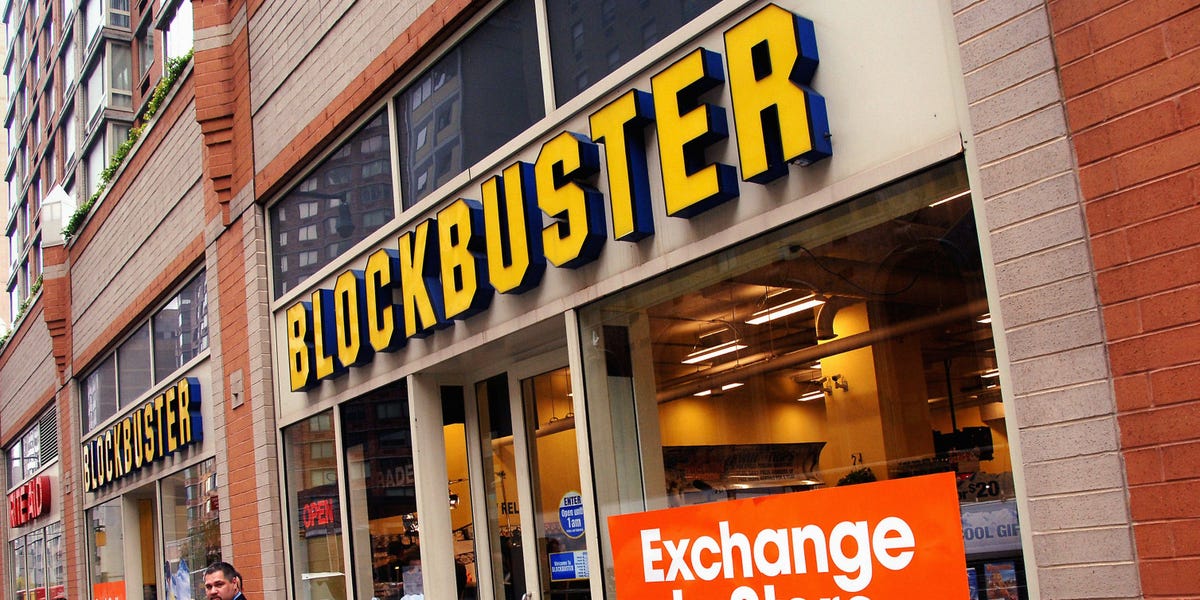
The business graveyard is littered with the remnants of once-dominant retailers – household names like Blockbuster, Circuit City, and Borders. These companies, despite their immense scale and brand recognition, ultimately succumbed to profound shifts in consumer behavior and technological disruption. Their downfall wasn’t a sudden collapse but a gradual erosion, as they failed to adapt to the rise of e-commerce and changing market dynamics. For oil and gas investors, this retail history offers a potent, albeit uncomfortable, metaphor: even industries with deep foundational roots are not immune to disruptive forces. While the energy sector currently enjoys robust fundamentals, a deeper look reveals potential parallels that demand strategic foresight and proactive adaptation to avoid a similar fate.
Navigating Volatility: Beyond the Daily Price Point
Today’s energy market presents a picture of relative strength, yet beneath the surface, volatility remains a constant companion. As of this afternoon, April 15, 2026, Brent Crude is trading at $95.19, marking a 0.42% increase for the day, with WTI Crude at $91.74, up 0.5%. Gasoline prices also reflect this upward trend, currently at $3, a 1.01% rise. These figures, while encouraging, must be viewed in context. Over the past 14 days, Brent experienced a notable decline, dropping from $102.22 on March 25 to $93.22 on April 14 – an 8.8% reduction. This significant swing underscores the inherent unpredictability of global commodity markets. Just as Blockbuster’s strong quarterly rentals couldn’t stave off the streaming revolution, current price strength in oil and gas cannot mask the underlying shifts in global energy demand and supply dynamics. Investors must look beyond the immediate day-to-day fluctuations and consider how broader macro trends, energy transition pressures, and geopolitical factors could introduce structural changes that challenge traditional business models.
Anticipating Tomorrow: Key Events and Long-Term Shifts
The coming weeks are packed with critical events that will undoubtedly influence short-term market sentiment and price discovery. Investors will be closely watching the Baker Hughes Rig Count on April 17 and April 24, offering insights into North American production activity. More significantly, the OPEC+ Joint Ministerial Monitoring Committee (JMMC) meets on April 18, followed by the full OPEC+ Ministerial Meeting on April 20. These gatherings are pivotal for understanding global supply strategies. Further data points, such as the API Weekly Crude Inventory (April 21, April 28) and the EIA Weekly Petroleum Status Report (April 22, April 29), will provide crucial updates on U.S. inventory levels and demand signals. However, the lesson from retail is that focusing solely on immediate indicators can be a trap. While these events are vital for tactical positioning, long-term investors must consider how the cumulative impact of energy transition policies, technological advancements in renewables, and evolving consumer preferences could fundamentally alter the demand landscape for hydrocarbons. Just as the retail giants failed to foresee the long-term impact of broadband internet and digital distribution, the oil and gas sector must actively anticipate and prepare for a future where the energy mix looks vastly different.
Investor Focus: Beyond the Next Quarter’s Forecast
Our proprietary investor intent data reveals a keen focus on price discovery and regional dynamics. A dominant theme this week centers around building a base-case Brent price forecast for the next quarter, alongside requests for the consensus 2026 Brent forecast. Investors are also drilling down into specific market segments, asking about the operational status of Chinese “tea-pot” refineries this quarter and the drivers behind Asian LNG spot prices. These questions are entirely rational for an industry driven by commodity cycles and regional supply-demand imbalances. Yet, the warning from retail is clear: a myopic focus on the immediate forecast can obscure existential threats. While understanding the nuances of Chinese refining capacity or Asian LNG demand is crucial for short-term trading and investment, it doesn’t address the strategic imperative of adapting to a world increasingly prioritizing decarbonization. The most successful energy companies in the coming decades will be those that can answer not just “what is Brent next quarter?” but “how will our business thrive in a net-zero world?” This demands an expanded view beyond traditional hydrocarbon production, encompassing investments in renewables, carbon capture, hydrogen, and other emerging energy solutions.
Avoiding Obsolescence: Strategic Imperatives for the Energy Sector
The demise of retail giants serves as a stark reminder that even industries perceived as immutable can be disrupted. For the oil and gas sector, the analogy isn’t about outright disappearance but about transformation. The question isn’t whether oil and gas will exist, but in what form, for whom, and under what conditions. Companies that cling solely to legacy business models, ignoring the accelerating pace of energy transition and the growing demand for sustainable solutions, risk becoming the “Blockbusters” of the energy world. Strategic imperatives include diversifying energy portfolios, investing heavily in low-carbon technologies, optimizing operational efficiency to reduce emissions, and engaging proactively with stakeholders on environmental and social governance. Investors should scrutinize companies not just on their current production metrics and quarterly earnings, but on their long-term vision, their adaptability, and their commitment to evolving into integrated energy providers. The future of energy investing lies not just in identifying the next big oil play, but in recognizing the companies that are building resilience and relevance in a rapidly changing global energy landscape.


