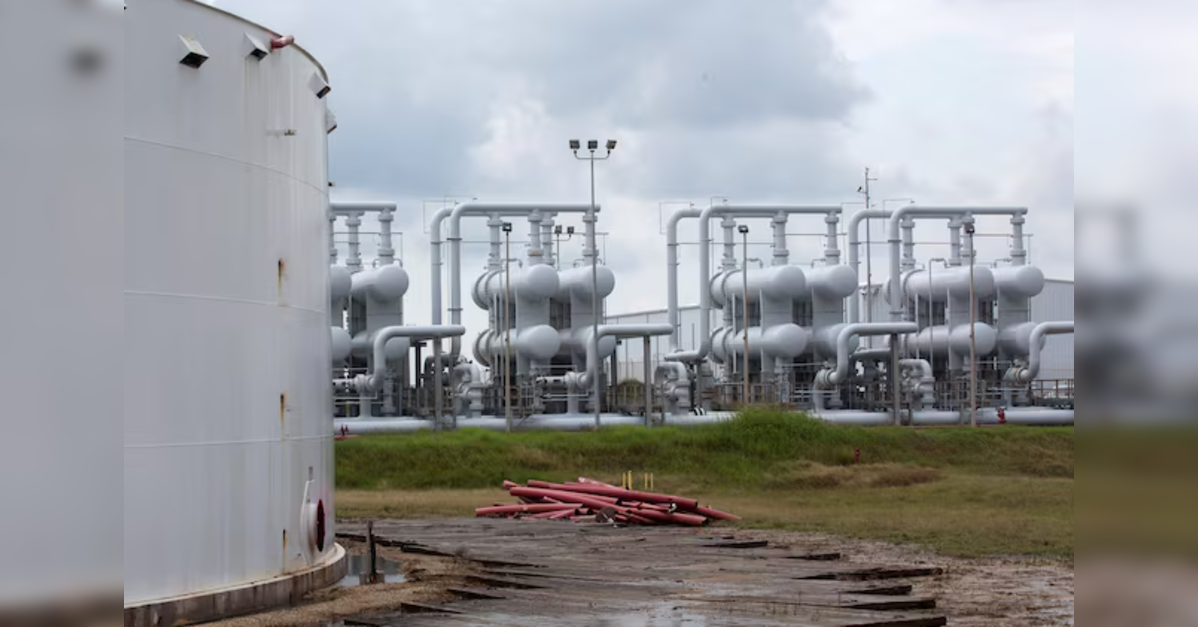
The strategic petroleum reserve (SPR) has long been a critical buffer for global oil markets, yet its recent management has become a focal point for investors assessing future crude price stability and government policy. A significant development in mid-2025 saw the US Department of Energy announce a delay in scheduled crude oil deliveries to the SPR, pushing completion of 15.8 million barrels—originally slated for January through May—until the end of that year. Citing maintenance issues, this setback meant only 8.8 million barrels had been delivered by the time the announcement was made, leaving a substantial portion to be rescheduled. For oil and gas investors, this move underscores the complex interplay between strategic energy policy, infrastructure realities, and their tangible impact on market supply and demand dynamics.
The Echo of 2025 Delays in Today’s Market
The 2025 SPR refill delays, while now a past event, offer crucial insights into the US’s capacity and commitment to rebuilding its strategic crude inventories. The fact that 7 million barrels of planned demand were pushed from early 2025 into later that year effectively reduced immediate government-backed buying pressure on the market. This dynamic is particularly relevant given the current volatile crude environment. As of today, Brent crude trades at $95.19 per barrel, marking a 0.42% increase on the day, while WTI sits at $91.74, up 0.5%. These prices reflect a recent rebound, considering Brent’s trajectory over the past two weeks, which saw it drop from $102.22 on March 25th to $93.22 just yesterday, before today’s modest recovery. Had the US government been actively procuring those 7 million barrels in early 2025, the market might have experienced different price support. The lingering question for investors is whether these maintenance issues have been fully resolved, or if they represent an ongoing bottleneck for future, more aggressive refill solicitations, potentially limiting a key source of demand when prices dip.
Navigating Political Rhetoric and Financial Realities
The management of the SPR has become a highly politicized issue, clouding clear investment signals. The Biden administration’s unprecedented 180 million barrel release in 2022, aimed at curbing spiking gasoline prices following geopolitical events, was followed by claims of a $3.5 billion profit from buybacks at an average of less than $76 per barrel, compared to the $95 average sale price. However, this narrative contrasts sharply with counter-claims from the Energy Secretary, who has cited hundreds of millions in damages resulting from the large-scale drawdown. Specific figures include $2 million for emergency repairs, $35 million in oil movement costs, and a staggering $243 million in costs from delays to congressionally-directed maintenance. This intricate financial backdrop, coupled with political promises to “fill the SPR right to the top,” highlights the unpredictable nature of government intervention in oil markets. Investors must filter out the political noise to assess the true operational efficiency and long-term strategic goals for the reserve, recognizing that these factors can significantly impact future supply-side demand.
Addressing Investor Concerns: The 2026 Price Forecast and SPR Influence
Our proprietary reader intent data reveals a strong focus among investors on forward-looking price analysis, with frequent inquiries regarding the base-case Brent price forecast for the next quarter and the consensus 2026 Brent outlook. The operational challenges faced by the SPR, as evidenced by the 2025 delays, directly feed into these forecasts. A slower, more erratic refill pace by the US government means less predictable demand for crude, potentially dampening upward price pressure during periods of market weakness. Conversely, if maintenance issues are resolved and the government commits to an accelerated refill schedule, it could introduce a significant, concentrated source of demand, particularly if global supply remains tight. For investors building their 2026 models, the SPR’s capacity to absorb excess supply or contribute to demand during drawdowns is a crucial variable. The ability of the US to efficiently execute its long-term refill strategy, estimated to take years and require billions, will be a key determinant in market balance and price stability.
Upcoming Catalysts and the SPR’s Shadow
The coming weeks are packed with critical market catalysts that investors will be closely monitoring, and the ongoing narrative around strategic reserves subtly influences their interpretation. The OPEC+ Joint Ministerial Monitoring Committee (JMMC) meeting on April 18th, followed by the Full Ministerial meeting on April 20th, will provide crucial insights into production policy. While these decisions primarily concern global supply, a perceived inability of major consumers like the US to effectively manage their strategic reserves could factor into OPEC+’s calculus regarding market stability and demand projections. Additionally, weekly data releases such as the API Weekly Crude Inventory (April 21st, 28th) and the EIA Weekly Petroleum Status Report (April 22nd, 29th) will offer granular views on US crude stockpiles. Any unexpected drawdowns or builds, especially against the backdrop of a still-recovering SPR, could trigger significant market reactions. Furthermore, the bi-weekly Baker Hughes Rig Count (April 17th, 24th) provides a pulse on North American production activity. For astute oil and gas investors, understanding how these events interact with the enduring challenges of SPR replenishment is essential for informed decision-making in a dynamic global energy landscape.


