Silver Surge to $50: What it Means for Oil Investors
The financial world is abuzz with the prospect of silver reaching $50 an ounce, driven by a confluence of simmering geopolitical risks, escalating industrial demand, and persistent inflationary pressures. While silver’s unique monetary and industrial utility positions it as a potential “asymmetric trade setup,” astute energy investors must dissect what this macro narrative implies for the oil and gas sector. The forces propelling silver are often the same ones shaping crude markets, making a deep dive into these interconnections crucial for navigating the months ahead.
The Macro Backdrop: Geopolitics, Inflation, and Capital Flows
The current environment, marked by heightened global tensions and central banks grappling with elevated inflation, creates a fertile ground for safe-haven assets. The narrative around silver points to H2 2025 as a period of significant economic volatility, a sentiment echoing through the energy complex. Rising geopolitical tensions, particularly in critical oil-producing regions, inherently introduce supply premium into crude prices. Simultaneously, the spectre of sustained inflation, fueled by sovereign debt levels and commodity price increases, erodes purchasing power and drives investors towards real assets. For oil and gas, this means a dual dynamic: potential upward pressure on prices due to supply disruption fears, coupled with the capital flows seeking inflation hedges that could benefit energy equities as a whole. Silver’s recent spike to $37 an ounce earlier this month, followed by a modest pullback to the $36 area, is being interpreted by some as a consolidation phase before a significant upward move. This mirrors the kind of price discovery and re-evaluation we often see in energy markets when macro shifts occur, where initial volatility gives way to a new, higher baseline.
Industrial Demand and the Green Transition’s Energy Footprint
A key driver for silver’s bullish outlook is its critical role in the accelerating green energy transition, electric vehicles, solar panels, and the burgeoning AI data centre boom. This industrial utility highlights a broader trend: massive capital allocation towards decarbonization and technological advancement. For oil and gas investors, this signifies a complex but ultimately interconnected landscape. While the long-term goal is to reduce reliance on fossil fuels, the sheer scale of the “green” build-out requires substantial traditional energy input. Construction of solar farms, manufacturing of EVs, and powering of data centres still demand vast amounts of energy, much of which is currently met by crude oil, natural gas, and their derivatives. Furthermore, the mining and processing of critical minerals like silver, copper, and lithium are energy-intensive processes themselves. Therefore, a surge in demand for green technologies, as indicated by silver’s prospects, paradoxically ensures continued robust demand for foundational energy sources in the medium term, supporting the sustained profitability of well-positioned oil and gas companies.
Crude Market Dynamics Amidst Macro Crosscurrents
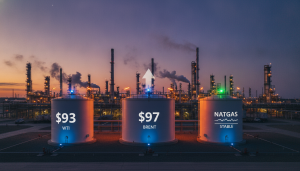
The macro forces propelling silver are undoubtedly influencing crude markets, albeit with their own unique supply-demand intricacies. As of today, Brent crude trades at $95.58, registering a 0.83% increase, with its daily range spanning $91 to $96.89. WTI crude also saw a gain, settling at $91.75, up 0.51% within a range of $86.96 to $93.3. Gasoline prices are up 1.35% to $3.01. While these daily gains reflect a generally firm market, our proprietary data shows a notable shift in Brent’s trajectory over the past two weeks, declining from $102.22 on March 25th to $93.22 on April 14th—a decrease of nearly 8.8%. This recent softening, despite geopolitical tensions, suggests that demand concerns or expectations of supply stability may be tempering the market. Many investors are asking for a base-case Brent price forecast for the next quarter and the consensus 2026 Brent outlook. Our analysis suggests that while current prices reflect some geopolitical premium, the downward trend over the past fortnight indicates a market grappling with a balance of supply discipline versus potential demand headwinds, particularly from key Asian economies. The interplay between these factors will dictate whether crude can mirror silver’s potential upward momentum or remain range-bound.
Upcoming Catalysts Shaping the Energy Outlook
The immediate future holds several critical events that could significantly sway crude prices, directly interacting with the macro themes highlighted by the silver market. The upcoming OPEC+ Joint Ministerial Monitoring Committee (JMMC) meeting on April 18th, followed by the Full Ministerial Meeting on April 20th, will be paramount. Any indication of production policy adjustments, whether cuts or increases, will have an outsized impact on global supply expectations. Given the current geopolitical landscape and the recent price softening, maintaining existing cuts or even hinting at further discipline could provide strong support for crude. Beyond OPEC+, the consistent stream of data from the U.S. will offer crucial insights into North American supply and demand. The Baker Hughes Rig Count reports on April 17th and April 24th will indicate drilling activity trends, while the API Weekly Crude Inventory (April 21st, April 28th) and EIA Weekly Petroleum Status Report (April 22nd, April 29th) will provide real-time snapshots of U.S. crude stocks, refinery utilization, and product demand. These reports are vital for assessing the health of the world’s largest oil consumer and producer, and their results will be closely scrutinized by investors seeking to understand the short-term trajectory of the energy market amidst broader macro uncertainty.
Conclusion: Navigating Interconnected Markets
The potential surge of silver to $50 an ounce is not an isolated phenomenon but a symptom of profound macro shifts – persistent inflation, heightened geopolitical risks, and a massive industrial push towards green technologies. For oil and gas investors, these same forces represent both challenges and opportunities. While the green transition aims to reduce fossil fuel dependence, its execution requires significant traditional energy inputs, creating sustained demand. The current crude market, as evidenced by Brent’s recent performance, is navigating this complex interplay. Vigilance around upcoming OPEC+ decisions and U.S. inventory data will be critical in assessing immediate price action. Ultimately, investors who understand these interconnected dynamics and position their portfolios to capture the demand generated by the ‘new’ economy, while acknowledging the foundational role of traditional energy, will be best equipped to thrive in this evolving landscape.