The global energy landscape is undergoing a profound transformation, driven by an accelerating confluence of technological advancement and shifting demand profiles. While traditional oil and gas markets continue to navigate complex geopolitical and economic currents, a powerful new energy consumption vector is rapidly emerging: artificial intelligence. The insatiable appetite of AI data centers for reliable, high-capacity power is not merely an incremental increase; it represents a fundamental reshaping of future energy infrastructure. In this dynamic environment, innovative solutions are gaining traction, exemplified by a recent strategic pivot from a major battery recycling player, which is now leveraging second-life batteries to directly fuel the AI boom, offering a compelling case study for investors tracking the broader energy transition.
The Unprecedented Energy Demand of Artificial Intelligence
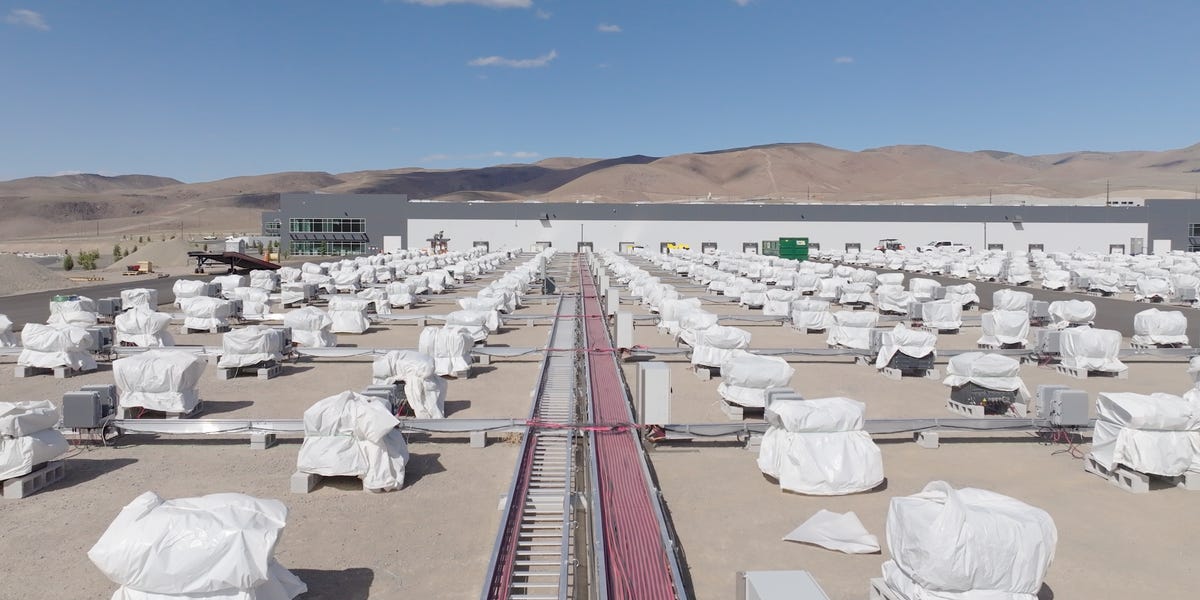
The scale of AI’s energy requirements is becoming strikingly clear. Massive new data center projects, such as the sprawling Google complex observed near Reno, Nevada, are indicative of an industry growing at an exponential pace. These facilities, housing energy-hungry GPUs and other specialized hardware, demand significantly more power than conventional cloud infrastructure, often straining existing grid capabilities. This surge has opened new avenues for energy innovation, particularly in storage solutions. Redwood Energy, a new venture from a leading battery recycling company, is stepping into this void. By repurposing used lithium-ion batteries into stationary energy storage systems, the company is directly addressing the critical need for resilient, on-demand power for these data behemoths. Annually, this firm processes over 20 GWh of used batteries, equivalent to approximately 250,000 electric vehicles. Crucially, these batteries, while no longer suitable for automotive use, still retain 50% to 80% of their original capacity, making them ideal candidates for stationary applications where consistent power delivery, rather than peak acceleration, is paramount.
Crude Market Dynamics Amidst Emerging Energy Frontiers
While new energy sectors like AI power storage rapidly evolve, traditional crude markets continue to exhibit their characteristic volatility, demanding constant investor vigilance. As of today, Brent crude trades at $95.39, reflecting a modest daily gain of 0.63%, within a day range of $91-$96.89. WTI follows suit at $91.53, showing a 0.27% increase. This comes as Brent crude has seen a modest pullback recently, falling from $102.22 just three weeks ago on March 25th to $93.22 yesterday, April 14th – an 8.8% decline over the period, indicating persistent supply-demand rebalancing efforts. Gasoline prices also show a slight uptick today at $3.01. These fluctuations underscore the ongoing sensitivity of conventional energy commodities to a multitude of factors, from geopolitical tensions to global economic indicators. However, the emergence of significant new demand centers, such as AI data farms, signals a broader energy market evolution where power generation and storage solutions will increasingly draw capital and influence the overall energy mix, indirectly impacting demand for all primary fuel sources.
Investor Focus on Long-Term Energy Security and Diversification
Our proprietary reader intent data reveals a consistent focus among investors on the future trajectory of crude prices, with questions frequently surfacing around “base-case Brent price forecasts for next quarter” and “consensus 2026 Brent forecasts.” Investors are clearly seeking clarity on long-term market stability amidst evolving global demand dynamics. We also see keen interest in regional demand indicators like “how Chinese tea-pot refineries are running this quarter” and the drivers behind “Asian LNG spot prices this week.” These inquiries highlight a collective effort to understand the intricate web of supply, demand, and pricing within established energy markets. However, the rise of AI as a major energy consumer introduces a new dimension to this analysis. While crude and LNG remain vital for power generation in many regions, the rapid expansion of data centers necessitates robust, often localized, energy solutions that can integrate renewables and storage. Companies that can bridge this gap, like those repurposing batteries for grid-scale storage, offer compelling diversification opportunities for investors looking beyond traditional upstream and downstream plays, securing critical infrastructure for the digital economy.
Forward Momentum: Upcoming Events and the Expanding Energy Horizon
Looking ahead, the next two weeks hold key events that will shape the immediate crude market outlook. The OPEC+ Joint Ministerial Monitoring Committee (JMMC) meets on April 18th, followed by the full Ministerial Meeting on April 20th. These gatherings are pivotal for production policy, directly impacting global supply and, consequently, crude prices. Additionally, the Baker Hughes Rig Count on April 17th and 24th, alongside API and EIA weekly inventory reports on April 21st/22nd and April 28th/29th, will provide crucial insights into North American supply dynamics and storage levels. While these events predominantly influence the traditional oil sector, they occur within a broader context of rapidly shifting energy demand. The sustained growth of AI data centers will continue to exert upward pressure on electricity demand, irrespective of short-term crude fluctuations. This persistent demand creates significant opportunities for companies involved in energy storage, smart grid development, and distributed power generation. Investors should consider how these emerging energy demands, driven by technological leaps like AI, will increasingly intersect with and influence the strategies of traditional energy producers and distributors, fostering a more diversified and complex energy investment landscape in the years to come.


