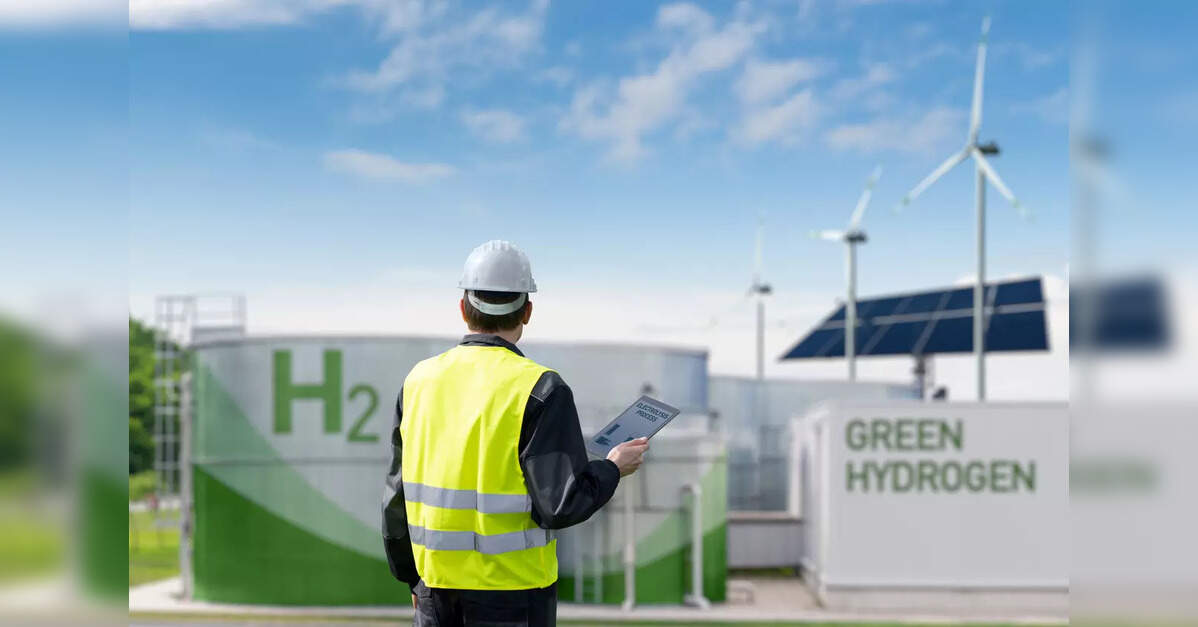
A recent scientific breakthrough in direct solar hydrogen production signals a potentially disruptive force in the global energy landscape, challenging traditional fossil fuel paradigms. Scientists in Bengaluru, India, have engineered a next-generation device that directly splits water molecules using sunlight and readily available materials, bypassing the conventional, two-step process of solar electricity generation followed by electrolysis. This innovation promises a simpler, more efficient, and potentially far cheaper method for producing green hydrogen, an energy carrier critical for decarbonizing heavy industries, transportation, and power generation. For investors in oil and gas, this development underscores the relentless pace of energy transition technologies and demands a re-evaluation of long-term market forecasts amidst ongoing short-term volatility.
The Promise of Direct Solar Hydrogen: A New Efficiency Frontier
At the heart of this innovation lies a direct photoelectrochemical (PEC) process that harnesses sunlight to trigger water-splitting, eliminating the need for an external power supply or fossil-fuel-based backup. This is a significant leap from current methods that first generate electricity via solar panels and then feed it to an electrolyser. The device, based on a novel silicon photoanode with an n-i-p heterojunction architecture (layers of n-type titanium dioxide, intrinsic silicon, and p-type nickel oxide), enhances light absorption and charge separation, crucial for efficient direct solar-to-hydrogen conversion. Critically, these materials are earth-abundant and deposited using magnetron sputtering, a commercial-scale thin-film technique, pointing towards robust scalability.
Performance indicators are compelling: the prototype achieved a surface photovoltage of 600 millivolts and a low onset potential of 0.11 volts versus the reversible hydrogen electrode (VRHE), indicating high photoelectrochemical efficiency. It demonstrated remarkable stability, operating continuously for over 10 hours under simulated solar irradiation with only a 4% drop in performance. The design avoids rare-earth or high-cost catalysts, does not require high pressure or temperature, and is compatible with lithium-ion battery chemistries for renewable storage integration. The successful testing of a 25 cm² photoanode further validates its potential for scaling from lab to pilot and eventually commercial applications, positioning it as a key enabler for India’s ambitious green hydrogen targets and a global competitor in the clean energy race.
Navigating Today’s Volatile Crude Market Amidst Green Horizon Shifts
While the long-term implications of such green hydrogen breakthroughs are profound, investors are currently grappling with immediate market dynamics. As of today, Brent crude trades at $90.38 per barrel, marking a significant 9.07% decline from its daily open, with a day range between $86.08 and $98.97. Similarly, WTI crude has seen a substantial 9.41% drop, settling at $82.59 per barrel, fluctuating between $78.97 and $90.34 today. This sharp daily downturn follows a broader retreat witnessed over the past two weeks, with Brent having shed $20.91, or 18.5%, from its $112.78 high recorded on March 30. Gasoline prices have also felt the pressure, currently at $2.93, down 5.18% on the day.
This market snapshot highlights the ongoing volatility driven by a complex interplay of macroeconomic factors, geopolitical tensions, and shifting supply-demand sentiment. While these daily and bi-weekly price swings command immediate attention, the underlying structural shifts in energy technology, exemplified by direct solar hydrogen, continue to advance. Savvy investors understand that while managing short-term exposure is critical, overlooking these fundamental long-term technology trends could prove far more costly in the grand scheme of portfolio positioning.
Investor Questions and the Long-Term Oil Price Trajectory
Our proprietary reader intent data reveals a clear focus on the future, with investors frequently asking, “What do you predict the price of oil per barrel will be by end of 2026?” and inquiring about the strategies of integrated energy companies like Repsol. The emergence of scalable, efficient green hydrogen production methods directly impacts these long-term forecasts. While direct solar hydrogen systems are still in their early commercialization phases, their potential to offer cheaper, direct-from-sunlight hydrogen production accelerates the viability of hydrogen as a widespread energy carrier. This could significantly erode demand for fossil fuels in sectors earmarked for decarbonization, such as heavy transport, industrial processes (e.g., steel, ammonia), and potentially even power generation where hydrogen can serve as a storage medium.
Such advancements complicate the traditional supply-demand models that underpin oil price predictions. A breakthrough that makes green hydrogen economically competitive could bring forward the “peak oil demand” timeline, exerting downward pressure on oil prices in the medium to long term, regardless of immediate OPEC+ production quotas or geopolitical supply shocks. Companies like Repsol, which are already diversifying into renewables and lower-carbon fuels, demonstrate the industry’s recognition of this evolving landscape. For investors, the question shifts from merely tracking barrels and rigs to assessing how quickly these green technologies can scale and displace existing fossil fuel consumption, fundamentally reshaping the energy commodity complex.
Upcoming Catalysts and the Pace of Energy Transition
The immediate calendar for energy investors is packed with events that will undoubtedly influence short-term market sentiment. This weekend, the OPEC+ Joint Ministerial Monitoring Committee (JMMC) and the Full Ministerial meetings are scheduled for April 18th and 19th, respectively. These gatherings are crucial for understanding potential adjustments to crude production quotas and will likely set the tone for market supply expectations in the coming weeks. Following closely, investors will scrutinize the API Weekly Crude Inventory report on April 21st and the official EIA Weekly Petroleum Status Report on April 22nd, providing vital insights into U.S. crude and product balances. The Baker Hughes Rig Count reports on April 24th and May 1st will further illuminate drilling activity and future supply potential.
While these short-term catalysts drive daily trading decisions, their influence must be viewed against the backdrop of long-term energy transition drivers. The continuous progress in green hydrogen, exemplified by the direct solar-to-hydrogen breakthrough, represents a powerful, structural force. Even as OPEC+ navigates market stabilization and rig counts signal near-term production trends, the underlying technological improvements in renewables and alternative fuels are accelerating. Investors must consider how these innovations will increasingly dictate capital allocation, policy decisions, and ultimately, the valuation of energy assets over the coming decade, creating a dual challenge of managing both immediate market volatility and the strategic imperative of decarbonization.


