New York’s Nuclear Pivot: A Long-Term Headwind for Natural Gas Demand
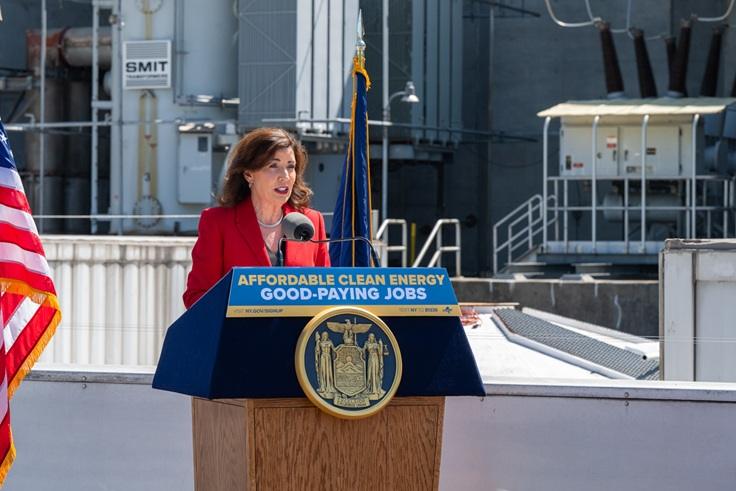
New York State has unveiled an ambitious plan to develop at least one gigawatt of zero-emission advanced nuclear power, a move that signals a significant shift in its energy strategy and poses a long-term challenge to natural gas demand within the region. Governor Kathy Hochul’s directive to the New York Power Authority (NYPA) to spearhead this initiative underscores a firm commitment to achieving a zero-emission electricity sector by 2040 and economy-wide carbon neutrality by mid-century. For oil and gas investors, this development is not merely a regional policy decision; it represents a tangible acceleration of the energy transition in a key demand hub, with direct implications for future natural gas consumption patterns and infrastructure viability.
The Nuclear Gambit and its Gas Market Implications
The core of New York’s new strategy lies in leveraging advanced nuclear technology to provide reliable, baseload power. This isn’t a new concept for the state, which previously explored accelerating such technologies to meet growing energy usage, particularly from computing needed to power AI, and to support broader electrification efforts for buildings and electric vehicles. While Governor Hochul has historically championed renewables, awarding 6.4 GW of offshore wind and land-based projects in 2023, the pivot to nuclear adds a crucial element: dispatchable, carbon-free power that can run continuously, unlike intermittent wind and solar. This directly positions nuclear as a competitor to natural gas for stable grid supply. As New York aims to deactivate aging fossil fuel generation and attract energy-intensive industries, the intent is clear: new demand will be met by zero-emission sources, fundamentally eroding the long-term addressable market for natural gas in the state’s power sector. Investors with exposure to gas-fired generation assets or gas transportation infrastructure in the Northeast should pay close attention to the progress of NYPA’s evaluation of technologies, business models, and locations for this new facility.
Current Market Headwinds and the Broader Demand Shift
Against the backdrop of these structural shifts, the global crude market exhibits ongoing volatility. As of today, Brent crude trades at $95.35, marking a modest daily gain of 0.59%, yet it sits significantly lower than its $102.22 peak just three weeks ago on March 25th, reflecting an 8.8% decline over the past 14 days. WTI crude similarly advanced today to $92.46. While these figures suggest some daily resilience, the broader trend points to persistent supply-demand uncertainty influenced by geopolitical dynamics and economic indicators. Gasoline prices are up 1.68% today to $3.02, reflecting ongoing consumer demand. However, for natural gas, regional policy decisions like New York’s nuclear plan introduce a different dimension of risk. While crude prices react to global macro factors, regional policy shifts in major consuming economies like New York directly impact the long-term demand outlook for natural gas. The commitment to energy independence and supply chain security articulated by Governor Hochul reinforces a strategic decoupling from traditional fossil fuel reliance, creating a significant long-term headwind for gas demand in the state, regardless of short-term market fluctuations.
Investor Focus: Navigating the Energy Transition Landscape
Our proprietary reader intent data reveals a keen investor focus on fundamental price drivers, with top queries this week including “build a base-case Brent price forecast for next quarter” and “what is the consensus 2026 Brent forecast?” This highlights a market grappling with short-term volatility against a backdrop of evolving long-term demand narratives. New York’s nuclear initiative adds another layer of complexity to these forecasts, particularly for natural gas. Investors need to understand that while global crude demand might remain robust, regional shifts in power generation mix directly impact gas. A successful 1 GW nuclear plant, complementing extensive renewable build-outs, could structurally reduce demand for natural gas in a key consumption hub. This could lead to suppressed regional gas prices and potentially stranded assets or underutilized infrastructure for those heavily invested in the gas value chain in the Northeast. Strategic investors are increasingly evaluating the longevity of gas demand in regions actively pursuing aggressive decarbonization, moving beyond just short-term supply-demand balances to assess policy-driven structural shifts.
Key Dates on the Horizon for Oil & Gas Investors
Looking ahead, the coming weeks present several crucial data points that will further shape short-term market dynamics. The OPEC+ Joint Ministerial Monitoring Committee (JMMC) meeting on April 18th, followed by the Full Ministerial meeting on April 20th, will be closely watched for any signals regarding production policy, which could significantly influence crude prices. Beyond OPEC+, the regular cadence of industry data, including the Baker Hughes Rig Count on April 17th and 24th, along with the API and EIA Weekly Crude Inventory reports on April 21st/22nd and April 28th/29th, will provide immediate insights into supply-side activity and inventory draws. While these events drive near-term price movements and offer tactical trading opportunities, investors must integrate the structural demand shifts exemplified by New York’s nuclear strategy into their long-term frameworks. Even if OPEC+ maintains cuts or inventories show draws, the long-term trajectory for natural gas demand in regions committed to aggressive decarbonization remains a significant headwind, requiring a nuanced and forward-looking investment approach.


