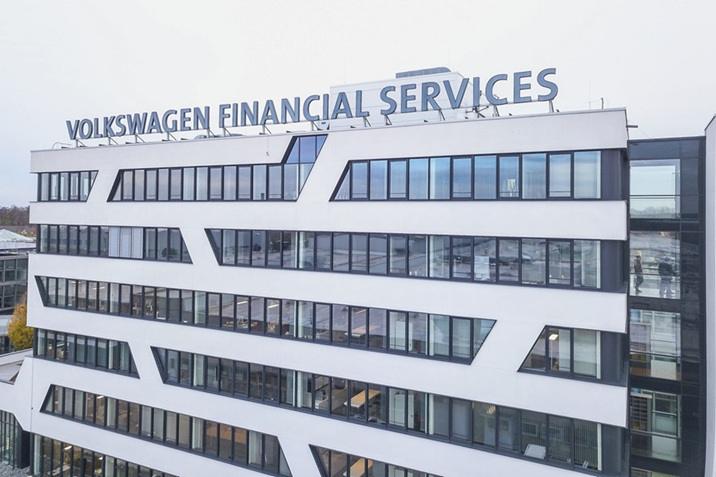
The recent announcement by Volkswagen Bank, securing €1.5 billion through its inaugural green bond, stands as a critical bellwether for the energy transition and its far-reaching implications for traditional oil and gas investing. While seemingly a financial instrument for an automotive giant, the overwhelming investor demand – a staggering €6.6 billion from over 170 participants for the 3-year and 6-year tranches – signals a profound shift in capital allocation. This financing, earmarked exclusively for battery electric vehicle (BEV) financing products, is a direct infusion of liquidity into the decarbonization movement, accelerating the shift away from fossil fuel dependency and demanding a recalibration of investment theses across the energy complex.
The Green Capital Flood: Investor Demand for Sustainable Mobility
The sheer scale of demand for Volkswagen Bank’s first green bond underscores a seismic shift in investor sentiment and capital market priorities. Oliver Roes, Managing Director of Volkswagen Bank GmbH, highlighted how sustainability is now a fully established part of their refinancing mix, aligning with their long-term Mobility2030 strategy. This isn’t just about Volkswagen; it reflects a broader trend where institutional capital is actively seeking out ESG-aligned opportunities. The “greenium” – the lower cost of capital for sustainable projects – is becoming increasingly evident, making it cheaper and more accessible for companies committed to the energy transition to fund their initiatives. For oil and gas investors, this signifies a growing challenge: as capital flows more readily into green ventures, traditional fossil fuel projects may face higher financing costs and increased scrutiny, impacting their long-term viability and returns.
EV Acceleration and its Long Shadow on Crude Demand
The direct consequence of robust green financing, such as Volkswagen Bank’s €1.5 billion issuance, is an accelerated adoption of electric vehicles globally. More affordable and accessible EV financing translates directly into more BEVs on the road, progressively eroding demand for gasoline. As of today, Brent crude trades at $95.01, showing a modest intraday gain of 0.23% within a range of $91-$96.89. WTI crude similarly saw a 0.31% uptick to $91.56. While these daily movements are often driven by immediate supply-demand dynamics or geopolitical headlines, the underlying structural shift is undeniable. The 14-day trend for Brent, for instance, reveals a notable decline from $102.22 on March 25th to $93.22 yesterday, a nearly 9% drop, highlighting the inherent volatility and sensitivity of crude markets to various factors. Gasoline prices currently sit at $2.99. While current volatility often overshadows long-term trends, the increasing penetration of EVs, fueled by mechanisms like this green bond, represents a persistent bearish pressure on gasoline and, by extension, crude oil demand. Investors asking for a base-case Brent price forecast for the next quarter must increasingly factor in not just immediate supply cuts or inventory data, but also the accelerating pace of EV adoption and the capital actively underwriting this transition.
Navigating the Crossroads: Upcoming Events and Investor Insights
The acceleration of EV adoption, propelled by dedicated financing, adds another layer of complexity to the upcoming energy market events. For instance, the OPEC+ JMMC and Full Ministerial Meetings scheduled for April 18th and 20th respectively, will be critical. While these meetings traditionally focus on supply quotas and market stabilization, the long-term erosion of demand from EVs, now heavily financed by green bonds, should weigh on their strategic considerations. Will they adjust their long-term outlooks, or continue to manage short-term supply? Similarly, the API Weekly Crude Inventory (April 21st, 28th) and EIA Weekly Petroleum Status Report (April 22nd, 29th) will provide crucial insights into immediate demand and supply balances. However, savvy investors, many of whom are asking about the consensus 2026 Brent forecast, must look beyond these weekly snapshots to the macro trends underpinned by green financing. Even questions like “How are Chinese tea-pot refineries running this quarter?” link back to this trend; China’s aggressive EV push will inevitably impact its overall refined product demand over time, gradually dampening the need for crude imports by these refiners. The Baker Hughes Rig Count on April 17th and 24th will indicate upstream activity, but the true long-term signal lies in how producers adapt their investment strategies in a world increasingly funding alternatives to their core product.
Investment Implications: Rebalancing Portfolios for a Decarbonizing World
For oil and gas investors, the message from Volkswagen Bank’s green bond is clear: the energy transition is not a distant threat but a present force actively reshaping capital markets. The ease and cost-effectiveness with which companies like Volkswagen can raise capital for EV initiatives stands in stark contrast to the increasing scrutiny and potentially higher cost of capital for new fossil fuel projects. This dynamic will likely create a growing divergence in valuation between energy companies that proactively embrace decarbonization and those that cling to traditional models. Investors must rigorously assess companies’ transition strategies, their exposure to demand destruction in key segments like light-duty transport, and their ability to diversify into lower-carbon revenue streams. Furthermore, the “greenium” phenomenon implies that companies perceived as lagging in their decarbonization efforts may face an increasing cost of debt and equity, impacting their ability to fund operations and growth. Developing robust scenario analyses that account for aggressive EV penetration, fueled by the accelerating availability of green financing, is no longer optional but essential for preserving and growing capital in the evolving energy landscape.


