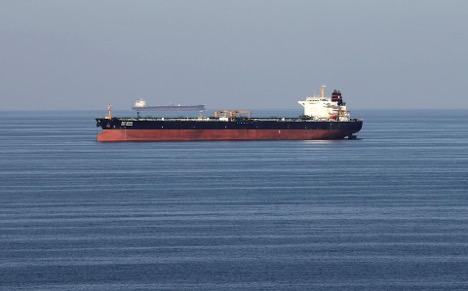
The Strait of Hormuz, a narrow maritime chokepoint through which approximately 20% of the world’s oil supply navigates, once again casts a long shadow over global energy markets. Recent reports indicate Iran’s parliament has backed a proposal to close this critical waterway, a decision now resting with the country’s Supreme National Security Council. This geopolitical flashpoint, exacerbated by recent military actions targeting Iranian nuclear facilities, injects a substantial risk premium into oil and gas prices, compelling investors to reassess their exposure and prepare for potentially dramatic market shifts. Our analysis leverages proprietary market data and forward-looking intelligence to dissect the implications of this escalating tension.
The Volatile Strait: Geopolitical Tensions and Market Realities
The specter of a Hormuz closure is not new, but the current geopolitical backdrop lends it unprecedented weight. Any disruption to traffic through the Strait would severely impact global energy flows, sending shockwaves across economies reliant on stable oil and gas supplies. As of today, Brent Crude trades at $95.01, registering a modest 0.23% gain for the day, with an intraday range spanning $91 to $96.89. WTI Crude mirrors this sentiment, currently at $91.56, up 0.31%. This modest upward movement comes despite a significant rebound from a recent 14-day trend where Brent shed nearly 8.8%, falling from $102.22 on March 25th to $93.22 by April 14th. This underlying downward pressure, prior to the latest geopolitical flare-up, suggests a market that was already wrestling with demand concerns, making any supply shock from Hormuz particularly potent.
The immediate reaction to escalating tensions was evident on Monday, with oil prices jumping to their highest levels since January following reports of US and Israeli attacks on Iran’s nuclear facilities. While Iran’s parliament has voiced support for a closure, the ultimate decision rests with its National Security Council, highlighting the delicate balance of power and the complex calculus involved. Global leaders, including US Secretary of State Marco Rubio, are actively engaging with key players like China to encourage de-escalation, underscoring the severe economic consequences a full closure would entail for all major global economies.
Decoding the Price Trajectories: Investor Scenarios and Forecasts
Investors are rightly scrutinizing potential price trajectories and asking about a base-case Brent price forecast for the next quarter, alongside the consensus 2026 outlook. Our analysis, incorporating insights from leading financial institutions and proprietary prediction market data, suggests significant upside risk. Should oil flows through the Strait of Hormuz be halved for just one month and remain 10% lower for the subsequent eleven, Brent crude could briefly peak at an alarming $110 per barrel. Even under this severe scenario, prices are projected to moderate, averaging around $95 per barrel in the fourth quarter of 2025.
Further analysis delves into scenarios involving direct Iranian supply disruptions. A 1.75 million barrels per day (bpd) drop in Iranian oil supply could push Brent to a peak of around $90 per barrel. Two distinct sub-scenarios emerge for the longer term: if this supply drop lasts six months followed by a gradual recovery, Brent could fall to the $60s by 2026. However, if Iranian production remains persistently lower due to reduced inventories and global spare capacity, Brent could still peak at $90 but stabilize between $70-80 in 2026. Notably, prediction markets, despite their inherent liquidity limitations, assign a 52% probability to Iran closing the Strait of Hormuz in 2025, a figure that demands serious consideration from portfolio managers. Given Brent’s current trading at $95.01, these forecasts underscore the significant premium investors must consider when assessing geopolitical risk in the Middle East.
Beyond Crude: Natural Gas and Global Supply Chain Impact
While the focus often remains on crude oil, the ripple effects of a Hormuz disruption would extend profoundly into the natural gas markets. European natural gas benchmarks, such as the TTF, are projected to price in a higher probability of disruption, potentially seeing prices rise closer to 74 euros per megawatt-hour (equivalent to $25/MMBtu). This potential spike in European gas prices is particularly relevant given that our readers have been actively inquiring about the drivers for Asian LNG spot prices this week. A major disruption in European gas supply would inevitably trigger a redirection of global LNG cargoes, tightening the market and pushing up spot prices across Asia as competition for available supply intensifies.
Conversely, the impact on US natural gas prices is expected to be more limited. Structural factors, including robust domestic production, strong export capacity, and minimal reliance on LNG imports, insulate the US market from the immediate shocks of a Hormuz closure. However, the broader economic incentives for major powers like the US and China to prevent a sustained and very large disruption of the Strait of Hormuz are undeniable. The intertwining of global supply chains means that while some regions may experience direct impacts, the secondary effects of higher energy costs and economic uncertainty would be universally felt.
Navigating the Near-Term: Upcoming Catalysts and Investor Outlook
For investors seeking to build robust price forecasts and navigate this volatile landscape, several upcoming calendar events demand close attention. The next 14 days are packed with potential market catalysts. Crucially, the OPEC+ Joint Ministerial Monitoring Committee (JMMC) meeting on April 18th, followed by the Full Ministerial OPEC+ Meeting on April 20th, will be pivotal. These meetings offer a critical opportunity for major producers to signal their response to the heightened geopolitical risk. A concerted effort by OPEC+ to increase spare capacity or adjust production targets in anticipation of potential supply shocks could provide some market stability, or conversely, inaction could exacerbate price volatility.
Beyond OPEC+, weekly data points such as the Baker Hughes Rig Count (April 17th, April 24th) and the API and EIA Weekly Crude Inventory reports (April 21st/22nd, April 28th/29th) will provide ongoing insights into underlying supply and demand dynamics. While these reports offer snapshots of current market health, their significance will be amplified as investors attempt to gauge the market’s resilience against the backdrop of potential Hormuz disruption. Our proprietary reader intent data also highlights strong interest in the operational status of Chinese “tea-pot” refineries, underscoring the importance of global demand signals in balancing any supply-side shocks. In this environment, a judicious investment strategy must balance the immediate geopolitical risks with a clear understanding of global supply responsiveness and demand resilience.