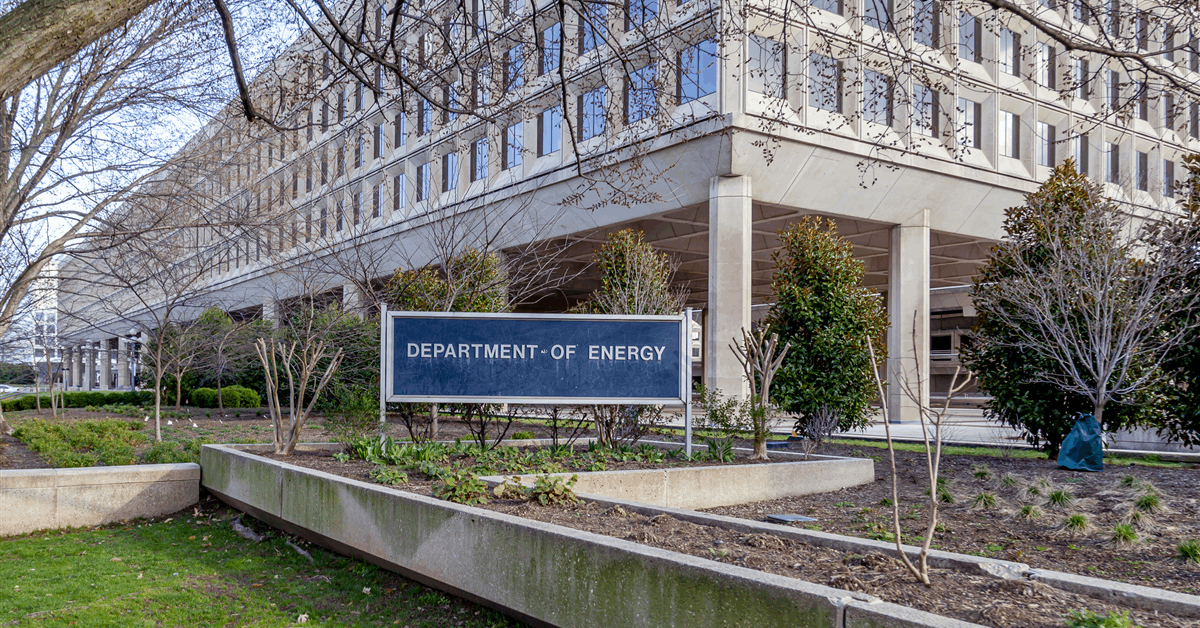
The recent announcement of the Department of Energy’s (DOE) final authorization for Commonwealth LNG to export liquefied natural gas to non-Free Trade Agreement (FTA) countries marks a significant milestone for the project and a robust signal for the broader US energy export landscape. This approval clears a critical regulatory hurdle, propelling the Kimmeridge Energy Management Co. LLC project in Louisiana closer to its projected Final Investment Decision (FID) in the third quarter of this year. With long-term binding offtake agreements already secured with global giants like Glencore, JERA, and PETRONAS, Commonwealth LNG is poised to add substantial capacity to the international market by its targeted first production in 2029, reinforcing the United States’ role as a pivotal global energy supplier. For investors, this development de-risks a major capital project, opening a clearer path to realizing its long-term revenue potential amidst evolving global energy dynamics.
Commonwealth LNG: De-Risking the Path to Global Supply
The full authorization to export up to 9.5 million metric tons per annum (MMtpa) of LNG, equivalent to approximately 1.21 billion cubic feet per day (Bcf/day), to both FTA and non-FTA nations through December 2050, solidifies Commonwealth LNG’s strategic position. This comprehensive permit, building on the FTA portion granted in April 2020, provides the regulatory certainty essential for a project of this scale. The fact that 4 MMtpa of this capacity is already backed by binding offtake agreements with top-tier global purchasers underscores the strong market demand for reliable US LNG. Commonwealth’s innovative “wellhead-to-water” strategy is designed to deliver low-cost, low-emission gas, positioning it favorably in a market increasingly scrutinizing supply chain efficiency and environmental impact. This integrated approach, coupled with the DOE’s explicit finding that increased US LNG exports enhance domestic and international global security with no discernable impact on global greenhouse gas emissions, provides a compelling narrative for investors seeking resilient, long-term energy assets.
Navigating Market Volatility: LNG’s Anchor in a Choppy Sea
In a week marked by significant volatility in the broader energy complex, the stability offered by projects like Commonwealth LNG becomes even more attractive. As of today, Brent Crude trades at $90.38, down 9.07% within a daily range of $86.08 to $98.97, while WTI Crude stands at $82.59, a 9.41% drop. This sharp decline follows a pronounced trend over the past two weeks, where Brent fell from $112.78 on March 30th to $91.87 on April 17th, representing an 18.5% depreciation. Such rapid price swings naturally lead investors to question the future, with our reader intent signals showing a strong interest in predicting “the price of oil per barrel by end of 2026” and understanding “OPEC+ current production quotas.” While crude prices influence overall energy sentiment, LNG projects, particularly those with long-term, take-or-pay contracts, often provide a degree of insulation from short-term commodity price fluctuations. The predictability of revenue streams from secured offtake agreements, like those Commonwealth has with Glencore, JERA, and PETRONAS, allows for more stable valuation models compared to uncontracted crude production. This fundamental difference underscores why major LNG infrastructure remains a compelling investment, even when the daily crude market is experiencing significant corrections.
Upcoming Catalysts and the Path to FID
The final permit de-risks Commonwealth LNG significantly, setting the stage for its crucial Final Investment Decision (FID) targeted for the third quarter of this year. Investors will be closely watching for further announcements regarding the finalization of its commercial book, as the project aims to secure agreements for its remaining 5.5 MMtpa capacity. While the project’s FID is primarily driven by its own commercial and financing milestones, the broader energy market context, shaped by upcoming calendar events, will inevitably influence investor sentiment and the cost of capital. This weekend, the OPEC+ Joint Ministerial Monitoring Committee (JMMC) and the full Ministerial Meeting (April 18-19) are set to convene, with any decisions on production quotas directly impacting global crude supply and price stability. These macro events, alongside the regular cadence of API (April 21, 28) and EIA (April 22, 29) weekly inventory reports, and the Baker Hughes Rig Count (April 24, May 1), provide continuous pulses on the supply-demand balance and drilling activity. While not directly tied to Commonwealth’s FID, a stable or strengthening energy market environment, influenced by these events, can foster greater investor confidence and potentially more favorable financing terms for large-scale energy infrastructure projects. The project’s progress towards FID will be a key indicator of continued investment in US energy export capabilities.
Economic Impact and Long-Term Investment Horizon
Beyond its strategic importance for global energy security, Commonwealth LNG represents a substantial economic boon. The project is expected to unlock approximately $11 billion in investments within Louisiana and generate an estimated $3.5 billion in annual export revenue. This scale of investment translates directly into significant job creation, with projections for approximately 2,000 workers during the peak of construction and 270 high-paying permanent jobs once the facility commences operations in 2029. The long-term nature of the non-FTA permit, extending through December 2050, provides a clear horizon for these economic benefits and sustained cash flow, making it an attractive proposition for patient, infrastructure-focused capital. In a world increasingly seeking reliable energy supplies from “trusted trading partners,” the economic and geopolitical advantages of projects like Commonwealth LNG reinforce the investment thesis for US energy export infrastructure, offering both domestic prosperity and international influence.


