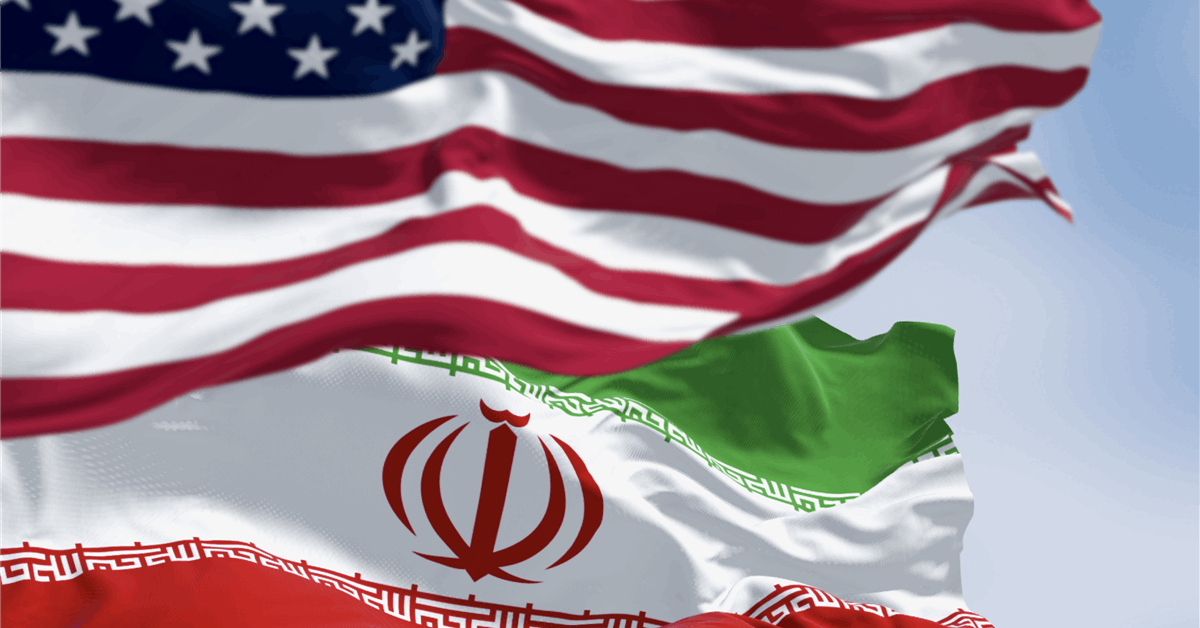
Geopolitical Flashpoint: US-Iran Standoff and its Complex Oil Market Implications
The global oil market finds itself navigating a fresh wave of geopolitical uncertainty as diplomatic discussions between the United States and Iran reach a critical, highly volatile juncture. President Trump has characterized ongoing negotiations, mediated by Pakistan, as “heated,” setting a tense backdrop for the expiration of a critical deadline for Iran to reopen the Strait of Hormuz. While the rhetoric from Washington has escalated dramatically, including threats of severe consequences, market participants are processing these developments with a nuanced perspective. Investors must understand the potential for supply disruption against a backdrop of broader market fundamentals and an intriguing recent price trend.
High Stakes at the Strait of Hormuz
The core of the current geopolitical risk centers on the Strait of Hormuz, a vital chokepoint through which roughly 20% of the world’s daily oil supply transits. President Trump’s firm Tuesday deadline for Iran to reopen the Strait has been met with a request from Pakistani Prime Minister Shehbaz Sharif for a two-week extension, framed as a “goodwill gesture.” While President Trump acknowledged Sharif as “highly respected,” a definitive response to the extension request remains pending. This diplomatic maneuvering follows a period of heightened military activity, including US forces striking sites on Kharg Island—Iran’s primary oil export terminal—though officials clarified that energy infrastructure was not directly targeted in these recent attacks. The President’s explicit threats, including references to wiping out Iran’s “whole civilization,” reportedly led Iranian negotiators to temporarily halt their participation in discussions, although White House officials have downplayed this as a tactical move and insist legitimate talks are ongoing. The precarious balance between aggressive posturing and active mediation creates an inherently unpredictable environment for global energy markets.
Market’s Measured Response: A Closer Look at Crude Prices
Despite the severe geopolitical rhetoric and the proximity of a potentially destabilizing deadline, the oil market’s immediate response has been surprisingly contained. As of today, Brent Crude trades at $93.92 per barrel, reflecting a modest gain of 0.73% on the day, with trading confined to a range of $91.39 to $94.86. Similarly, WTI Crude stands at $89.96 per barrel, up 0.32%, within a daily range of $87.64 to $91.41. These figures, captured live at 2026-04-22T12:00:07Z, illustrate a market that, while certainly aware of the risks, is not yet pricing in a major supply disruption. In fact, a broader view reveals a significant pullback in recent weeks. Brent crude has actually trended downwards by approximately 7% over the past 14 days, falling from $101.16 on April 1st to $94.09 by April 21st. This counter-intuitive decline suggests that investors may be skeptical of the threats translating into sustained supply outages, or perhaps other bearish factors, such as demand concerns or robust non-OPEC supply, are currently exerting a stronger influence on price discovery. The market’s relatively calm demeanor despite the headlines signals a complex interplay of factors beyond pure geopolitical risk.
Forward Outlook and Investor Focus
The current geopolitical landscape naturally leads many investors to ask pressing questions, with our internal data showing significant reader intent around the direction of WTI and the long-term outlook for oil prices by the end of 2026. While the immediate trajectory of WTI remains sensitive to breaking news from the US-Iran situation, the market’s underlying fundamentals will also play a critical role. Looking ahead, a series of key energy events on the calendar will provide crucial data points that could either reinforce or challenge the current market sentiment. The EIA Weekly Petroleum Status Reports, scheduled for April 22nd, April 29th, and May 6th, along with the API Weekly Crude Inventory releases on April 28th and May 5th, will offer fresh insights into US crude stockpiles, production, and demand. These reports are vital for assessing the supply-demand balance in North America. Furthermore, the Baker Hughes Rig Count on April 24th and May 1st will indicate drilling activity trends. Perhaps most significantly, the EIA Short-Term Energy Outlook, due on May 2nd, will offer a comprehensive forecast on global oil markets, potentially recalibrating expectations for the remainder of 2026. Should these reports signal ample supply or weakening demand, the geopolitical risk premium might be further dampened. Conversely, any indications of tightening markets could see prices respond more sharply to ongoing tensions. Investors should closely monitor the outcome of the two-week extension request for the Strait of Hormuz, as well as the language from all parties, while simultaneously integrating these fundamental data releases into their investment theses to form a holistic view on potential oil price movements.


