The recent announcement of TerraPower’s successful $650 million funding round, significantly bolstered by NVentures, the venture capital arm of tech behemoth NVIDIA, sends a potent signal to the energy investment landscape. This isn’t just another clean energy investment; it marks a growing trend of technology titans, spearheaded by figures like Bill Gates, channeling substantial capital into advanced nuclear solutions. For oil and gas investors, the immediate question isn’t about short-term price movements, but rather the long-term structural implications: could this accelerated push for next-generation nuclear energy fundamentally disrupt traditional hydrocarbon demand, and how should portfolios adapt?
Tech Giants Powering the Nuclear Renaissance
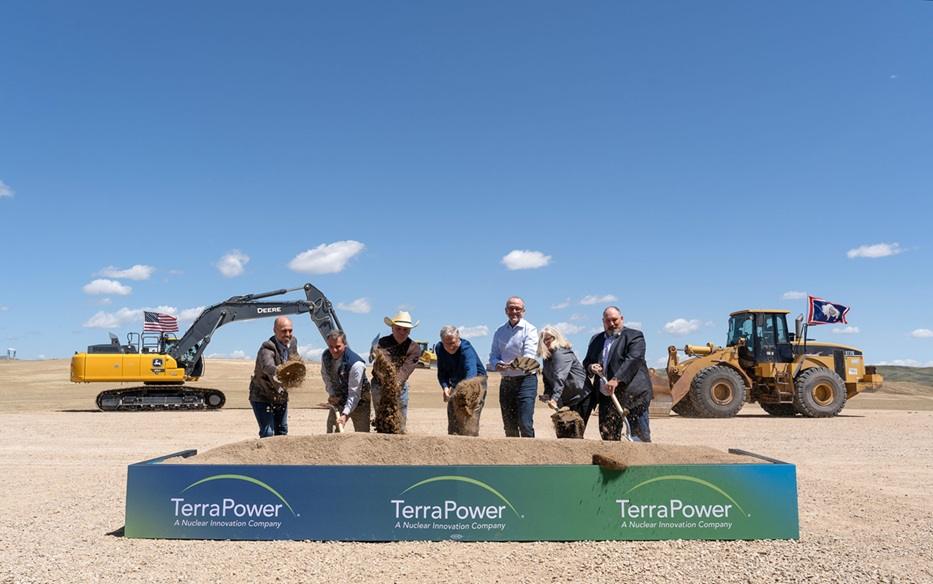
NVIDIA’s participation in TerraPower’s latest funding round underscores a critical shift in how major tech companies view their energy future. As artificial intelligence and data center footprints expand at an exponential rate, the demand for reliable, carbon-free power sources becomes paramount. We’ve seen similar moves from Google, Meta, and Amazon in recent months, all signing significant nuclear energy deals. This isn’t altruism; it’s a strategic imperative to secure abundant, clean electricity to fuel their growth while managing mounting emissions concerns. TerraPower’s Natrium plant, designed to couple a sodium-cooled fast reactor with gigawatt-scale energy storage, offers a compelling solution. Its ability to boost output during peak demand and integrate seamlessly with intermittent renewables like wind and solar positions it as a potential game-changer for grid stability and decarbonization. While the construction on the Natrium demonstration project began last year, with regulatory approval for the nuclear reactor anticipated next year, the capital infusion from such prominent investors accelerates the timeline for commercial deployment, suggesting a faster evolution of the energy mix than many have previously modeled.
Navigating Market Volatility Amidst Long-Term Shifts
For investors focused on the day-to-day realities of the oil market, it’s crucial to contextualize these long-term energy transition plays within current market dynamics. As of today, Brent crude trades around $93.22 per barrel, reflecting a notable 8.8% decline from its $102.22 peak recorded just a few weeks prior on March 25th. This recent downward trend highlights the inherent volatility of the global oil market, driven by a complex interplay of geopolitical tensions, supply expectations, and demand signals. While short-term fluctuations dominate headlines, the strategic investments by tech giants in advanced nuclear are a powerful reminder of the underlying structural shifts taking place. These developments, though not directly impacting crude prices this quarter, contribute to the broader narrative of energy diversification and a potential capping of long-term oil demand growth, influencing how investors build a base-case Brent price forecast for the coming quarters and beyond.
Advanced Nuclear: A Future Beyond Fossil Fuels?
Many investors are currently asking about the consensus 2026 Brent forecast and what factors might influence it. While conventional wisdom often points to OPEC+ decisions and global economic growth, the accelerating pace of advanced nuclear development introduces a compelling new variable. TerraPower’s technology, with its gigawatt-scale energy storage, directly addresses a key challenge for renewables: intermittency. By providing a stable, dispatchable, carbon-free baseload, it could reduce the reliance on natural gas as a bridge fuel or for peaker plants. This has direct implications for sectors like natural gas, particularly in power generation. For instance, the expansion of advanced nuclear could eventually impact the demand trajectory for LNG, potentially shifting the dynamics currently driving Asian LNG spot prices. While the scale of deployment is still years away from significantly eroding global fossil fuel demand, the flow of capital and the endorsements from industry leaders signal a credible pathway for nuclear to become a more dominant player, incrementally chipping away at the long-term demand growth for hydrocarbons, especially in the electricity sector.
Upcoming Catalysts and Policy Support
While the long-term vision of advanced nuclear gains momentum, the immediate focus for oil and gas investors remains on upcoming market catalysts. With the OPEC+ JMMC meeting scheduled for April 18th and the full Ministerial meeting on April 20th, market participants will be keenly watching for any signals on production policy, which could significantly impact near-term supply. Following these, the weekly API and EIA inventory reports on April 21st/22nd and 28th/29th will offer immediate insights into demand and supply balances, providing crucial data points for short-term trading strategies. These events represent the traditional levers of the oil market. However, it’s critical to integrate the growing policy support for advanced nuclear into our forward-looking analysis. The financing for TerraPower follows executive orders signaling strong federal support for next-generation nuclear technologies in the US. Furthermore, the European Commission’s updated strategic roadmap estimates over €240 billion in public and private investment required for expanding nuclear capacity across the bloc by 2050. These policy tailwinds, coupled with the “regulatory approval next year” milestone for TerraPower, suggest that advanced nuclear is not a fringe technology but an increasingly central component of global energy policy, setting the stage for significant long-term shifts.
Portfolio Considerations for the Evolving Energy Landscape
The strategic investments by technology giants in advanced nuclear, coupled with substantial policy backing, necessitate a recalibration of long-term investment strategies for oil and gas portfolios. While the immediate impact on global oil demand is minimal, the narrative of energy transition is undeniably accelerating. Investors need to consider how this influx of capital and innovation into carbon-free, dispatchable power sources will shape demand profiles over the next decade. The question isn’t whether advanced nuclear will replace all fossil fuels overnight, but rather how its growing role will constrain demand growth for hydrocarbons, particularly natural gas in power generation. Smart investors will recognize that while short-term fundamental analysis of crude inventories and OPEC+ decisions remains vital, a truly robust portfolio must also account for these profound, long-term shifts. Diversification into companies enabling the energy transition, including those developing advanced nuclear or supporting infrastructure, could offer a hedge against potential long-term pressures on traditional oil and gas assets. This is not merely a technological curiosity; it’s a structural evolution of the energy market demanding careful consideration.


