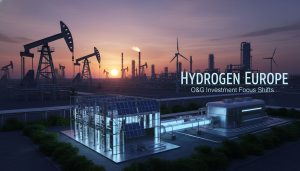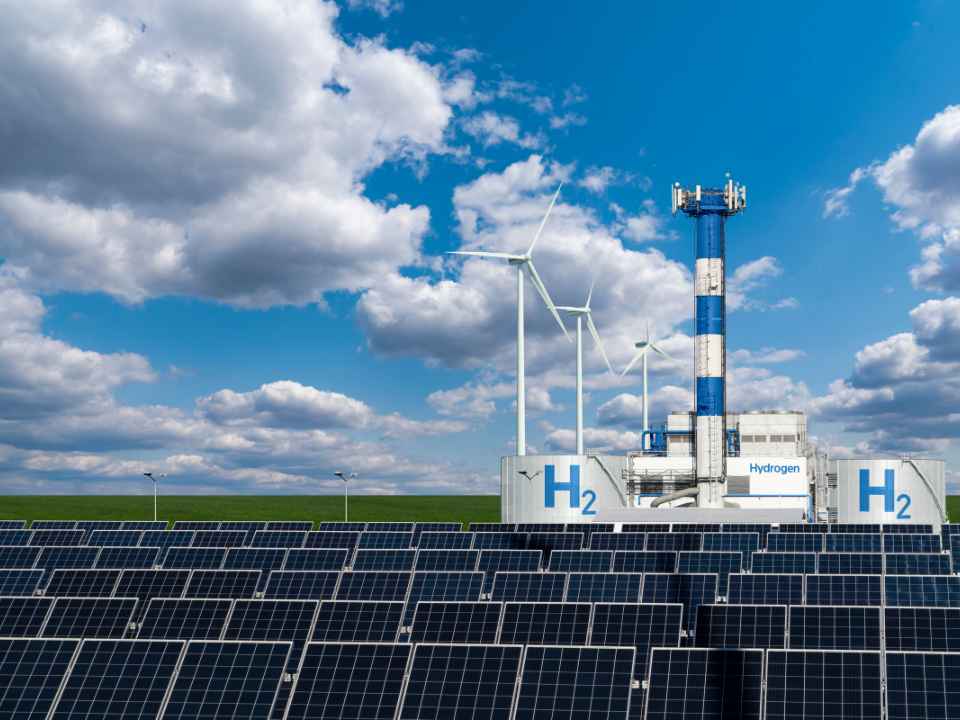
Poland’s latest strategic energy initiative, spearheaded by Bank Gospodarstwa Krajowego (BGK), marks a significant inflection point in Europe’s accelerating energy transition. The allocation of approximately PLN 2.7 billion (USD 733 million/EUR 633 million) towards six high-capacity hydrogen production facilities is not merely a regional development; it represents a clear signal to global energy investors that the shift towards decarbonization is gaining substantial financial and political momentum. For oil and gas investors, this move underscores the dual challenge and opportunity within the sector: navigating persistent fossil fuel market dynamics while strategically positioning for the inevitable rise of alternative energy sources like green hydrogen.
Poland’s Strategic Pivot: Fueling the Hydrogen Economy
The Polish government, through BGK, is leveraging funds from the National Recovery and Resilience Plan (KPO) to catalyze a domestic hydrogen industry. This substantial investment directly supports the ambitious targets set by the amended Renewable Energy Directive (RED III), which mandates that at least 42% of hydrogen used in the industrial sector must be renewable by 2030, rising to 60% by 2035. Furthermore, the transport sector faces a minimum 1% renewable hydrogen requirement. The scale of this commitment is evident in the non-repayable subsidies being offered, with a maximum support ceiling of EUR 2 million per 1 MW of capacity. This direct financial injection significantly de-risks early-stage hydrogen projects, making them more attractive for private capital and accelerating market adoption. The focus on minimum 20 MW facilities highlights a strategic intent to develop projects of scale, crucial for achieving cost efficiencies and making hydrogen a viable industrial and transport fuel.
Orlen’s Green Gambit: A Hybrid Energy Strategy
A notable aspect of this funding round is the substantial allocation to the Orlen Group, a dominant player in Central Europe’s traditional oil and gas landscape. Orlen’s Hydrogen Eagle renewable hydrogen production project received the largest subsidy of PLN 1.215 billion, with its subsidiary, Lotos Green H2, securing an additional PLN 523 million. For investors tracking major integrated energy companies, this move by Orlen is highly indicative of a broader industry trend. Traditional oil and gas conglomerates are increasingly diversifying their portfolios to include significant renewable energy assets, viewing hydrogen as a critical component of future energy mixes. This strategic pivot allows companies like Orlen to mitigate long-term climate transition risks, secure future revenue streams, and maintain relevance in an evolving energy ecosystem. While some investors might remain focused on the near-term profitability of conventional refining operations or upstream exploration, companies actively pursuing these green investments are signaling a commitment to a more resilient and sustainable business model, a factor that is increasingly influencing institutional investment decisions.
Market Dynamics and the Energy Transition Headwind
The backdrop for these strategic shifts in Poland is a global energy market characterized by persistent volatility and evolving demand signals. As of today, Brent crude trades at $95.44, registering a modest daily gain of 0.69% within a day range of $91-$96.89. WTI crude follows suit at $91.63, up 0.38%, while gasoline prices have seen a slight dip to $2.96. This relative stability, however, comes after a significant dip, with the 14-day trend showing Brent shedding nearly 8.8% from $102.22 on March 25th to $93.22 on April 14th. Such fluctuations underscore the ongoing sensitivity of crude prices to geopolitical events, supply adjustments, and global economic sentiment. While these traditional market drivers dictate short-to-medium term investment returns for many oil and gas plays, the substantial investments in green hydrogen, such as those by BGK, represent a significant long-term structural shift. For European nations like Poland, hydrogen also offers a path to enhanced energy security, reducing reliance on external fossil fuel imports and aligning with broader EU decarbonization mandates. This dual imperative of market volatility management and strategic energy transition dictates a nuanced approach for investors.
Navigating Future Shifts: Upcoming Events and Investor Focus
For investors charting their course in the dynamic energy sector, upcoming calendar events will provide critical signals for both traditional and emerging segments. Our data indicates that many investors are keenly asking for a base-case Brent price forecast for the next quarter and the consensus 2026 Brent forecast, underscoring the enduring importance of crude market fundamentals. Against this backdrop, the upcoming OPEC+ Joint Ministerial Monitoring Committee (JMMC) meeting on April 18th, followed by the Full Ministerial Meeting on April 20th, will be pivotal. These gatherings are expected to provide clarity on potential supply adjustments, directly influencing crude price trajectories. Parallel to this, the Baker Hughes Rig Count reports on April 17th and 24th will offer vital insights into upstream activity and future production capacity in key regions. Weekly API and EIA crude inventory reports scheduled for April 21st, 22nd, 28th, and 29th will further inform demand-side analysis and market sentiment. While these events primarily impact the fossil fuel segment, their outcomes indirectly influence the economic viability and competitive landscape for alternative energy investments. As nations like Poland commit substantial capital to green hydrogen, investors must increasingly evaluate the interplay between these traditional market catalysts and the accelerating momentum of the energy transition, positioning portfolios for resilience and growth across both established and emerging energy verticals.