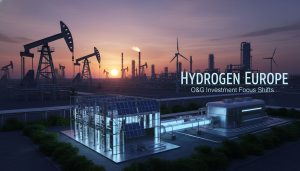
Rotterdam Ignites Green Hydrogen Future with Inaugural Backbone Section
Dutch infrastructure giant Gasunie has marked a significant milestone in the European energy transition, officially commissioning the critical first segment of its hydrogen backbone network within the bustling Port of Rotterdam. This strategic 32-kilometer pipeline, a vital artery entirely contained within the industrial port footprint in South Holland, fundamentally strengthens the region’s burgeoning clean energy ecosystem and offers compelling investment signals for the hydrogen economy.
For investors tracking the shift away from fossil fuels, this development signals tangible progress in scaling up hydrogen infrastructure. The newly operational conduit establishes a crucial link between the Maasvlakte area, particularly the Maasvlakte 2 expansion situated on the North Sea coast, and Pernis, a powerhouse petrochemical and refining hub located further inland along the Nieuwe Maas river. This connection is not merely geographical; it’s a strategic bridge between future supply and established demand.
Forging Connections: From Green Production to Industrial Consumption
The strategic placement of this pipeline effectively bridges two pivotal energy zones within the extensive Port of Rotterdam complex. At Maasvlakte, the region is rapidly evolving into a nexus for large-scale green hydrogen production. Key projects, many slated to be powered by the abundant offshore wind energy resources of the North Sea, are currently taking shape here, promising a significant influx of decarbonized hydrogen into the system. This positions Maasvlakte as a critical future supply hub for low-carbon energy.
Conversely, Pernis and the broader Energy and Chemicals Park Rotterdam represent a substantial and established demand center. Hydrogen is an indispensable component in numerous industrial processes within this complex, particularly in refining operations and various chemical manufacturing applications. Traditionally, this demand has been met by hydrogen produced using conventional fossil fuels, contributing to the industrial carbon footprint. The new infrastructure directly addresses this legacy challenge.
Driving Decarbonization: Replacing Fossil-Based Hydrogen
The primary strategic imperative behind this investment is enabling the seamless transport of low-carbon hydrogen from these forthcoming production facilities directly to existing industrial consumers. This direct connectivity is paramount for accelerating the replacement of conventional, carbon-intensive hydrogen sources with cleaner alternatives. For companies operating in the Port of Rotterdam, this pipeline offers a clear pathway to decarbonize their industrial processes, a crucial step towards meeting stringent climate targets and enhancing their environmental, social, and governance (ESG) profiles.
Investors should recognize the dual benefit: it de-risks future green hydrogen production projects by guaranteeing off-take capacity, and it provides existing heavy industries with a viable, scalable solution for emissions reduction. This symbiotic relationship is critical for the economic viability and rapid scaling of the hydrogen economy, turning ambitious decarbonization goals into actionable infrastructure projects with clear financial implications.
Netherlands’ National Hydrogen Vision Takes Shape
This 32-kilometer pipeline segment represents more than just a local triumph; it’s a foundational component of the Netherlands’ ambitious national hydrogen network. Gasunie commenced the construction of this broader national network in October 2023, underscoring a concerted effort to establish a robust framework for hydrogen distribution across the country. The Rotterdam pipeline serves as a proof-of-concept and a critical first step, demonstrating the feasibility and strategic importance of such infrastructure.
The Dutch government and key energy players are positioning the nation as a leading hub for hydrogen production, import, and distribution in Northwest Europe. This proactive investment in backbone infrastructure is essential for attracting further private capital into hydrogen production, storage, and end-use applications. Companies eyeing the European energy transition will find the Netherlands’ commitment to hydrogen infrastructure a compelling factor in their strategic planning and capital allocation decisions.
Investment Horizon: Opportunities in the Hydrogen Economy
The commissioning of this Gasunie pipeline in Rotterdam illuminates the burgeoning investment opportunities within the hydrogen economy. It signals a maturation of the market from conceptual planning to tangible asset deployment. Investors should evaluate companies involved in hydrogen production technologies, particularly electrolysis powered by renewables, as well as those specializing in hydrogen transport and storage solutions. Gasunie’s initiative is a clear indicator of the massive capital expenditure required to build out this new energy value chain.
Furthermore, the long-term implications for traditional oil and gas players are significant. As hydrogen increasingly displaces fossil fuels in industrial applications, companies with established infrastructure and logistical expertise, like Gasunie, are uniquely positioned to pivot and capitalize on this transition. The financial models underpinning these projects, including potential public-private partnerships and regulatory frameworks, are evolving, creating a dynamic landscape for strategic investments.
Charting the Future: A Blueprint for European Energy Transition
The successful inauguration of this pipeline segment in the Port of Rotterdam provides a vital blueprint for other industrial clusters across Europe aiming to decarbonize. It demonstrates that the transition to a hydrogen-centric energy system is not a distant vision but an unfolding reality, driven by strategic infrastructure investments. The challenges remain substantial, encompassing scaling up production, reducing costs, and establishing comprehensive regulatory frameworks, but the progress in Rotterdam offers a powerful counter-narrative to skepticism.
As an expert observer of oil and gas markets, OilMarketCap.com views this development as a pivotal indicator of momentum in the global energy transition. It showcases the commitment of key players to building out the physical assets required for a low-carbon future. Investors focused on long-term growth and sustainable returns should closely monitor further developments in the Netherlands’ hydrogen network and similar initiatives globally, as these projects represent the leading edge of a profound shift in industrial energy consumption.