Australia Unveils Green Taxonomy: A New Compass for Oil & Gas Capital Allocation
Australia’s financial landscape is undergoing a significant transformation with the introduction of its new sustainable finance taxonomy. Developed by the Australian Sustainable Finance Institute (ASFI), this voluntary framework offers a clear classification system for economic activities deemed “green” or “transition-focused,” fundamentally reshaping how capital flows towards the nation’s ambitious climate objectives.
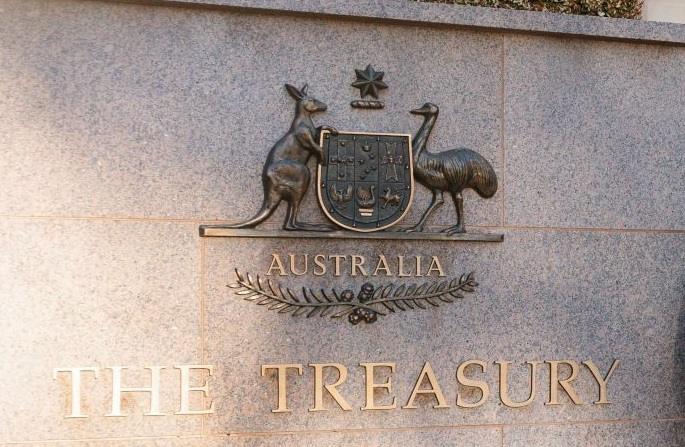
This initiative is a cornerstone of the Australian Government’s Treasury department’s Sustainable Finance Roadmap, launched in 2023, which aims to leverage financial markets to mobilize private investment crucial for achieving a net-zero economy. ASFI, in close collaboration with government bodies and the broader finance sector, was tasked with developing this pivotal taxonomy. Its release places Australia alongside other global economic powerhouses like the European Union, United Kingdom, Singapore, Hong Kong, Canada, and India, all of whom are establishing similar systems to define sustainable economic activities.
For investors navigating the complexities of the energy transition, this taxonomy provides essential clarity. ASFI emphasizes that the framework will empower market participants to accurately gauge how specific economic activities and investments align with or contribute to climate and broader sustainability outcomes. This, in turn, establishes a robust foundation for informed capital allocation decisions, directly influencing where billions in investment dollars will be directed.
Defining Green and Transition: The Oil & Gas Imperative
The Australian taxonomy introduces distinct classifications for both “green” and “transition” activities. Green activities are those that meet stringent criteria aligned with Paris Agreement decarbonization scenarios or directly facilitate the decarbonization of other sectors. This category will primarily attract capital towards established renewable energy projects, energy efficiency initiatives, and other unequivocally low-carbon solutions.
However, for the oil and gas sector, the “transition activities” category holds particular significance. This classification encompasses activities that contribute to decarbonizing emissions-intensive operations, moving them closer to a 1.5°C pathway, especially in scenarios where immediate, full substitutes for emissions reduction are not yet commercially viable or widely available. This nuanced definition offers a potential pathway for certain natural gas projects, carbon capture, utilization, and storage (CCUS) initiatives, and blue hydrogen developments to secure sustainable financing. Investors will keenly evaluate projects that demonstrate a clear trajectory towards emissions reduction, even if they involve fossil fuels in the interim, recognizing their role as bridge fuels or enablers of industrial decarbonization.
Sectoral Scope and Investor Implications for Australia’s Resource Economy
In its inaugural phase, the new taxonomy targets six key emissions-intensive sectors: Agriculture and Land, Minerals, Mining and Metals, Manufacturing and Industry, Electricity Generation and Supply, Construction and Buildings, and Transport. While “Oil and Gas” isn’t explicitly listed as a standalone category, its deep interconnections with these sectors mean the taxonomy will profoundly impact energy investment decisions.
The inclusion of “Minerals, Mining and Metals” is particularly noteworthy and described by ASFI CEO Kristy Graham as a “world-first.” Given Australia’s status as a global mining powerhouse, this classification will guide investment into projects that enhance resource efficiency, reduce operational emissions, or produce critical minerals vital for the clean energy transition. For oil and gas investors, this translates into opportunities to finance infrastructure, energy supply (including natural gas), and technological solutions that support the decarbonization efforts of Australia’s vast mining sector. Similarly, the “Manufacturing and Industry” and “Transport” sectors represent significant consumers of energy, offering avenues for O&G companies to invest in projects that supply lower-carbon fuels or advanced CCUS solutions to these industries.
Graham also underscored the taxonomy’s dual mandate: to be both “internationally credible and locally relevant.” This balance is critical for attracting global institutional capital while addressing Australia’s unique economic structure and environmental context. For the energy sector, this means projects must not only meet global sustainability benchmarks but also align with Australia’s specific decarbonization challenges and opportunities.
Social License and the Path to Project Viability
A distinctive feature of the Australian taxonomy is its explicit requirement for engagement with First Nations peoples and robust cultural heritage management. For any major infrastructure or resource project, including those in the oil and gas sector, securing a social license to operate is paramount. Investors are increasingly scrutinizing environmental, social, and governance (ESG) factors, and adherence to these engagement principles will become a critical determinant of project bankability and long-term success. This requirement adds another layer of due diligence for capital providers, ensuring that investments contribute positively to local communities and respect Indigenous heritage.
Pilot Program Signals Future Adoption
Following its launch, ASFI will initiate a pilot program, engaging a diverse group of prominent financial institutions to test the taxonomy across various real-world use cases. Participants include major Australian banks like ANZ, Commonwealth Bank of Australia, NAB, and Westpac, alongside the Clean Energy Finance Corporation (CEFC), HESTA, Moody’s Ratings, Rabobank, and Rest. The involvement of such influential players signals strong industry commitment and provides a crucial testing ground for the taxonomy’s practical application and scalability. This pilot phase will be instrumental in refining the framework, ensuring its efficacy in guiding capital towards genuinely sustainable and transition-oriented projects across the Australian economy.
The Australian sustainable finance taxonomy represents a significant step forward in directing investment towards a lower-carbon future. For oil and gas investors, it redefines the parameters of what constitutes a financeable project, emphasizing decarbonization pathways and the strategic role of transition fuels and technologies. Understanding and aligning with this framework will be essential for accessing capital, managing risk, and securing a competitive edge in Australia’s evolving energy market.