Revolutionary Catalyst Paves Way for Profitable CO2 Conversion
In a significant development poised to reshape the industrial chemicals landscape and offer new avenues for carbon utilization, groundbreaking research has unveiled a novel catalyst technology capable of efficiently transforming carbon dioxide into valuable chemical feedstocks. This innovative approach, drawing parallels with nature’s own photosynthesis, promises enhanced selectivity and operational stability, presenting compelling investment opportunities within the broader energy and chemical sectors.
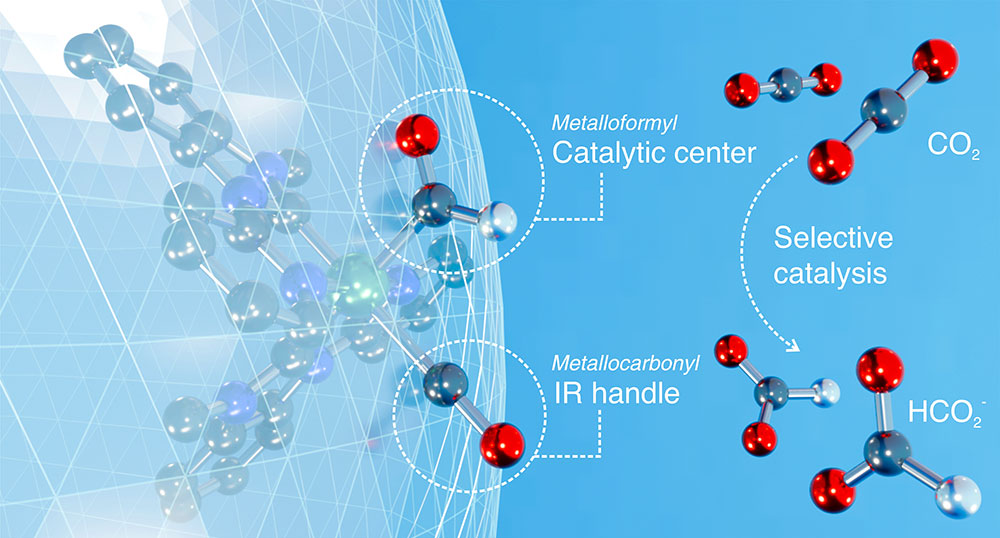
For investors keenly observing the energy transition and the burgeoning carbon capture, utilization, and storage (CCUS) market, this breakthrough offers a tangible pathway to convert an abundant waste product—CO2—into a highly sought-after chemical, formate. The underlying mechanism employs a light-activated, metal-centered catalyst engineered to precisely facilitate the electron and proton transfers necessary for this chemical transformation. As one of the lead researchers, Sai Puneet Desai, noted in the Journal of the American Chemical Society, the core concept revolves around leveraging readily available CO2 and infusing it with electrons and protons to yield a commercially beneficial product.
Engineered for Efficiency: The Ligand Advantage
What truly sets this new catalytic system apart from previous attempts at CO2 conversion is a sophisticated design modification: the strategic integration of ligands around the catalyst’s metal center. Historically, CO2 conversion processes often involved the direct binding of carbon dioxide molecules to the central metal atom of the catalyst. This conventional method frequently led to undesirable outcomes, including competing side reactions, accelerated catalyst degradation, and a significant limitation on the specificity of the end products generated.
However, the team, including co-author Andressa Müller, conceptualized the catalyst’s structure akin to a flower, where the metal forms the core and the ligands act as protective petals. By surrounding the metal center with these carefully designed ligands, scientists have achieved unprecedented control and protection. All active binding sites on the metal are now occupied, effectively shielding the metal from engaging in unwanted chemical interactions. Crucially, the chemical reactions themselves are redirected to occur at one of the ligands, rather than at the metal itself.
This ingenious ligand-based mechanism delivers a crucial advantage for industrial applications: unparalleled product selectivity. As group leader Javier Concepcion emphasized, this process exclusively yields formate. In many conventional CO2 conversion reactions, a common challenge involves the simultaneous production of hydrogen, carbon monoxide, or other undesirable byproducts, making product isolation and purification both complex and costly. The new catalyst eliminates this competition entirely, ensuring a pure formate stream and thereby streamlining downstream processing and reducing operational expenses for chemical manufacturers.
Beyond Ruthenium: Expanding Material Possibilities
The current research, detailed in the scientific paper, primarily showcases findings utilizing a ruthenium-centered catalyst. While ruthenium is effective, it is also a precious and expensive metal. A further strategic advantage of this ligand-driven chemistry is its potential to liberate manufacturers from reliance on such costly inputs. Given that the primary chemical activity now resides on the ligands rather than the metal core, the door is open to exploring and integrating more affordable and abundant metals at the catalyst’s heart.
The research team has already initiated successful trials employing similar ligand-based approaches with significantly less expensive alternatives like iron. This flexibility extends to other earth-abundant metals such as manganese, nickel, and cobalt. The ability to substitute high-cost materials with economical counterparts could drastically reduce the capital expenditure and ongoing operational costs associated with large-scale industrial CO2 conversion plants, making the technology far more attractive for broad commercial deployment and boosting potential returns for investors in the CCU space.
Harnessing Nature’s Blueprints for Industrial Gains
The innovative process bears a striking resemblance to photosynthesis, nature’s elegant mechanism for converting carbon dioxide and water into sugars, the foundational energy source for plants. Just as plants store solar energy within chemical bonds, this artificial photosynthesis system effectively captures and stores light energy in the newly formed chemical bonds of formate. This biomimetic design not only highlights the ingenuity of the scientific approach but also suggests a pathway towards highly energy-efficient chemical production, a critical factor for long-term sustainability and profitability in industrial operations.
For energy investors, the convergence of sustainable practices with economic viability is paramount. This technology aligns perfectly with the growing demand for green chemistry solutions and the global imperative to decarbonize industrial processes. By transforming a greenhouse gas into a valuable chemical, it offers a dual benefit: mitigating environmental impact while creating new revenue streams.
Investment Horizon: A Catalyst for Growth
The implications for the oil and gas sector, particularly for companies with downstream chemical operations or those investing heavily in environmental, social, and governance (ESG) initiatives, are substantial. This technology could provide a new, sustainable source for formate, a chemical with diverse applications in industries ranging from agriculture and animal feed to de-icing agents and chemical synthesis. Moreover, for oil and gas giants looking to diversify their portfolios beyond traditional fossil fuels, investing in or adopting such CO2 utilization technologies represents a strategic move into the future of sustainable chemicals.
The ability to convert CO2 with such high selectivity and using potentially inexpensive metals fundamentally shifts the economic calculus of carbon capture and utilization. This development positions itself as a powerful catalyst for innovation, inviting further investment in scaling up these processes from laboratory demonstrations to industrial-scale facilities. As the world continues its drive towards decarbonization, technologies that can economically valorize CO2 will command increasing attention and capital, making this a compelling area for forward-thinking energy investors.
The promise of stable catalysts, precise product control, and reduced material costs paints a clear picture of a technology ready for significant commercial advancement. Investors should closely monitor the progression of this and similar innovations, as they represent not just scientific achievements, but concrete opportunities to capitalize on the evolving energy and chemical markets.