Commodity markets are currently navigating a complex landscape shaped by evolving demand dynamics in China, escalating international trade tensions, and significant macroeconomic shifts. While steel and iron ore prices have shown resilience, particularly driven by increased crude steel production in the world’s largest consumer, China, underlying concerns regarding global trade policies and the health of China’s property sector are tempering investor sentiment. These factors create a nuanced environment for resource-focused investors, with implications that extend beyond industrial metals to broader commodity complex, including the energy sector.
China’s Industrial Engine: A Closer Look at Steel Demand
The steelmaking material complex witnessed an uptick in Monday trading, primarily buoyed by robust crude steel output figures emanating from China. The most actively traded September iron ore futures contract on the Dalian Commodity Exchange (DCE) concluded the session 0.28 percent higher, settling at 705 yuan per metric ton, equivalent to approximately $98.13. Concurrently, the benchmark July iron ore contract on the Singapore Exchange also registered a gain, rising 0.25 percent to reach $94.4 per ton. This positive movement underscores a prevailing sentiment that China’s industrial activity continues to underpin demand for key raw materials.
May data revealed a 0.6 percent increase in China’s crude steel production compared to April levels. This expansion was largely attributed to domestic mills elevating their operational rates, strategically capitalizing on healthy profit margins, which have been significantly boosted by strong export performance. Industry consultancy Mysteel reported that as of June 12, roughly 60 percent of China’s blast-furnace steel mills were operating at positive profit margins, indicating a favorable environment for producers.
However, a deeper dive into the demand metrics presents a more mixed picture. Mysteel’s tracking of average daily hot metal output, a crucial indicator of actual iron ore consumption, showed a marginal decline of approximately 0.1 percent week-on-week, settling at 2.416 million tons as of June 13. This slight contraction in hot metal production suggests that while crude steel output is up, there might be inventory adjustments or a nuanced shift in operational strategies among some mills, preventing a full reflection of increased steel production in immediate iron ore demand metrics. Investors should carefully monitor whether this divergence represents a temporary fluctuation or an early sign of underlying demand softening.
Trade Headwinds and Property Sector Stagnation
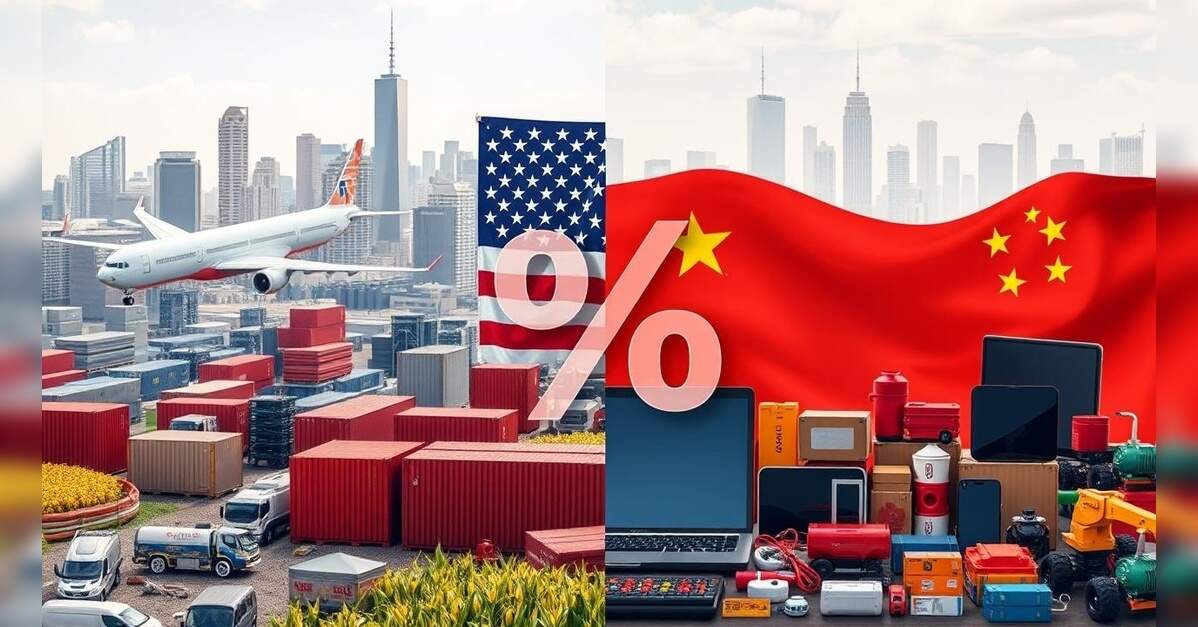
Beyond the immediate supply-demand dynamics within the steel sector, broader macroeconomic and geopolitical factors are exerting significant pressure on the overall commodity outlook. A key development on the trade front involves the reintroduction of substantial tariffs by the United States. Effective June 23, a 50 percent tariff will be levied on a range of imported household appliances, including dishwashers, washing machines, and refrigerators, among others. Such protectionist measures can disrupt global supply chains, increase production costs, and potentially dampen international trade volumes, creating ripple effects across various industrial sectors and, by extension, energy demand.
Compounding these trade concerns is the persistent stagnation within China’s critical property sector. Official data released on Monday confirmed that new home prices in China experienced a 0.2 percent decline in May compared to the preceding month. This contraction, despite multiple rounds of policy support measures from Beijing, highlights the ongoing structural challenges faced by the country’s real estate market. Given the property sector’s substantial contribution to China’s GDP and its role as a primary consumer of steel, its continued weakness poses a significant headwind for future raw material demand and broader economic growth prospects.
Furthermore, the strengthening U.S. dollar is adding another layer of complexity to commodity pricing. The greenback has seen a notable surge, fueled by safe-haven buying amid intensifying geopolitical tensions, particularly in the Middle East. A more robust dollar inherently makes dollar-denominated commodities, such as oil and most industrial metals, more expensive for holders of other currencies. This currency dynamic can effectively dampen demand from international buyers and place downward pressure on prices, irrespective of underlying physical market fundamentals. For energy investors, a strong dollar often translates to a more challenging environment for crude oil and natural gas prices.
Broader Commodity Complex: Mixed Signals
Despite the varied headwinds, other key steelmaking ingredients on the Dalian Commodity Exchange demonstrated positive movement. Coking coal futures advanced by 1.81 percent, while coke futures also saw a respectable gain of 1.04 percent. This upward trend in input materials suggests sustained demand from the steel production sector, even with the aforementioned concerns.
Similarly, steel benchmarks traded on the Shanghai Futures Exchange largely strengthened. Rebar futures increased by 0.81 percent, hot-rolled coil futures climbed 0.88 percent, wire rod futures edged up 0.3 percent, and stainless steel futures recorded a modest rise of 0.04 percent. The widespread gains across various steel products indicate that despite the property market’s woes and tariff threats, there is still underlying demand supporting prices, potentially from infrastructure projects or export-driven manufacturing.
Investor Outlook: Navigating Uncertainty
The current commodity market environment is characterized by a delicate balance of supportive industrial activity in China and significant external pressures from trade policy and a strengthening dollar. While China’s crude steel production offers a near-term demand anchor for iron ore and other steelmaking inputs, the enduring weakness in its property sector and the looming impact of new U.S. tariffs introduce considerable uncertainty. Geopolitical developments in the Middle East continue to drive safe-haven flows into the dollar, posing a persistent challenge for global commodity pricing.
For investors in the oil and gas sector, these broader commodity market trends serve as crucial indicators. China’s economic health, its industrial output, and the stability of its property market are direct determinants of global energy demand. Trade conflicts can disrupt supply chains, slow economic growth, and ultimately reduce crude oil consumption. Meanwhile, a strong dollar directly impacts the profitability of oil exports and the affordability of imports. Navigating this intricate web of interconnected factors will require a vigilant approach, closely monitoring policy shifts in Beijing, the evolution of international trade relations, and the trajectory of global economic growth. The interplay of these forces will ultimately shape the investment landscape for energy and industrial commodities alike.


