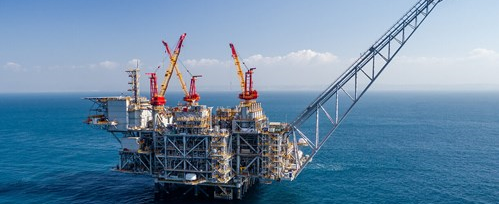
The halt of Israel’s Leviathan gas field production in June 2025 following airstrikes against Iran served as a stark, immediate reminder of the profound impact geopolitical tensions wield over global energy markets. While nearly a year has passed since that specific incident, its echoes resonate, continually highlighting the fragility of supply chains and the ever-present risk premium embedded in energy asset valuations. For investors navigating the complex landscape of oil and gas, understanding these flashpoints — and their enduring strategic implications — is paramount. This analysis delves into the long shadow cast by such events, examines current market dynamics, and provides forward-looking insights crucial for informed investment decisions in a volatile environment.
The Enduring Shadow of Geopolitical Risk on Gas Supply
The Leviathan field shutdown, alongside Energean’s production suspension, was a clear demonstration of how quickly regional conflicts can disrupt vital energy infrastructure. The immediate cessation of 35 million cubic meters per day (mcm/day) of gas exports to import-dependent Egypt and Jordan created instant ripples. Egypt, facing rising summer demand and a domestic production slump, was forced to cut industrial gas deliveries and ramp up diesel consumption for power generation to avert blackouts. This vulnerability underscored how reliant key regional players are on Israeli gas, and the subsequent strain on regional energy balances remains a significant concern. Analysts estimated that a prolonged outage would necessitate an additional 10-12 LNG cargoes per month for Egypt and Jordan combined, highlighting the critical role of liquefied natural gas as a flexible, albeit more costly, alternative when pipeline flows are compromised. While the immediate crisis from that specific shutdown may have been mitigated, the precedent for rapid, geopolitically driven supply interruptions continues to shape investment theses for natural gas assets in the Eastern Mediterranean and beyond.
Crude Markets Grapple with Broader Uncertainty Amidst Geopolitical Volatility
While the Leviathan incident directly impacted natural gas, the underlying geopolitical instability it represented has broader implications, often manifesting in crude oil market volatility. As of today, April 18, 2026, Brent Crude trades at $90.38 per barrel, marking a significant 9.07% decline today, with WTI Crude similarly down 9.41% at $82.59. These dramatic single-day movements, occurring within a broader trend that saw Brent plunge from $112.78 on March 30th to $91.87 just yesterday, April 17th, underscore a market grappling with complex forces. The current sharp decline, while not directly attributable to a new gas field shutdown, reflects an overarching de-risking sentiment or a re-evaluation of the risk premium in response to recent broader geopolitical shifts and global economic signals. Even without direct physical disruptions to crude supply, the potential for escalation in the Middle East, first highlighted by events like the Leviathan halt, continues to factor into pricing. Downstream, gasoline prices are also feeling the impact, currently at $2.93 per gallon, down 5.18% today, illustrating how crude volatility quickly translates to consumer costs.
Navigating Near-Term Volatility: Upcoming Events and Investor Focus
Our proprietary reader intent data reveals a consistent focus among investors on future oil prices and OPEC+ strategies, with frequent questions such as “what do you predict the price of oil per barrel will be by end of 2026?” and “What are OPEC+ current production quotas?”. These forward-looking queries are particularly pertinent given the current market volatility and a packed calendar of upcoming energy events. The market is keenly awaiting the OPEC+ Joint Ministerial Monitoring Committee (JMMC) and the full Ministerial Meetings scheduled for this weekend, April 18th and 19th. Any signals from these gatherings regarding production quotas or supply management will be critical in shaping short-to-medium term price trajectories and addressing investor uncertainty. Furthermore, the API Weekly Crude Inventory (April 21st, 28th) and the EIA Weekly Petroleum Status Reports (April 22nd, 29th) will provide crucial demand-side insights, especially in light of recent price movements and the ongoing geopolitical backdrop. Investors will also be watching the Baker Hughes Rig Count on April 24th and May 1st for indications of future supply intentions from non-OPEC producers. These events, against a backdrop of enduring geopolitical risk, will be pivotal in shaping the outlook for the remainder of 2026.
Strategic Implications for Energy Portfolios
For investment analysts and portfolio managers, the lessons from events like the Leviathan shutdown are clear: geopolitical risk is not an abstract concept but a tangible factor that can swiftly impact asset values and supply chain stability. Companies operating in volatile regions, such as Chevron and Energean, must prioritize robust security protocols and diversified operational footprints. The reliance on pipeline gas in the Eastern Mediterranean, highlighted by Egypt’s predicament, underscores the increasing strategic importance of liquefied natural gas (LNG) as a flexible, though often more expensive, alternative. Egypt’s expedited connection of LNG import facilities post-Leviathan incident serves as a blueprint for enhancing energy security. Investors should favor companies demonstrating resilience through geographical diversification, strong balance sheets to weather price volatility, and a proactive approach to managing geopolitical exposures. As the global energy transition progresses, the interplay between traditional fossil fuel supplies, geopolitical flashpoints, and the accelerating shift towards cleaner energy sources will continue to define the risk-reward profile of the oil and gas sector. Vigilance, adaptability, and a deep understanding of macro-geopolitical trends remain indispensable for navigating these complex markets.


