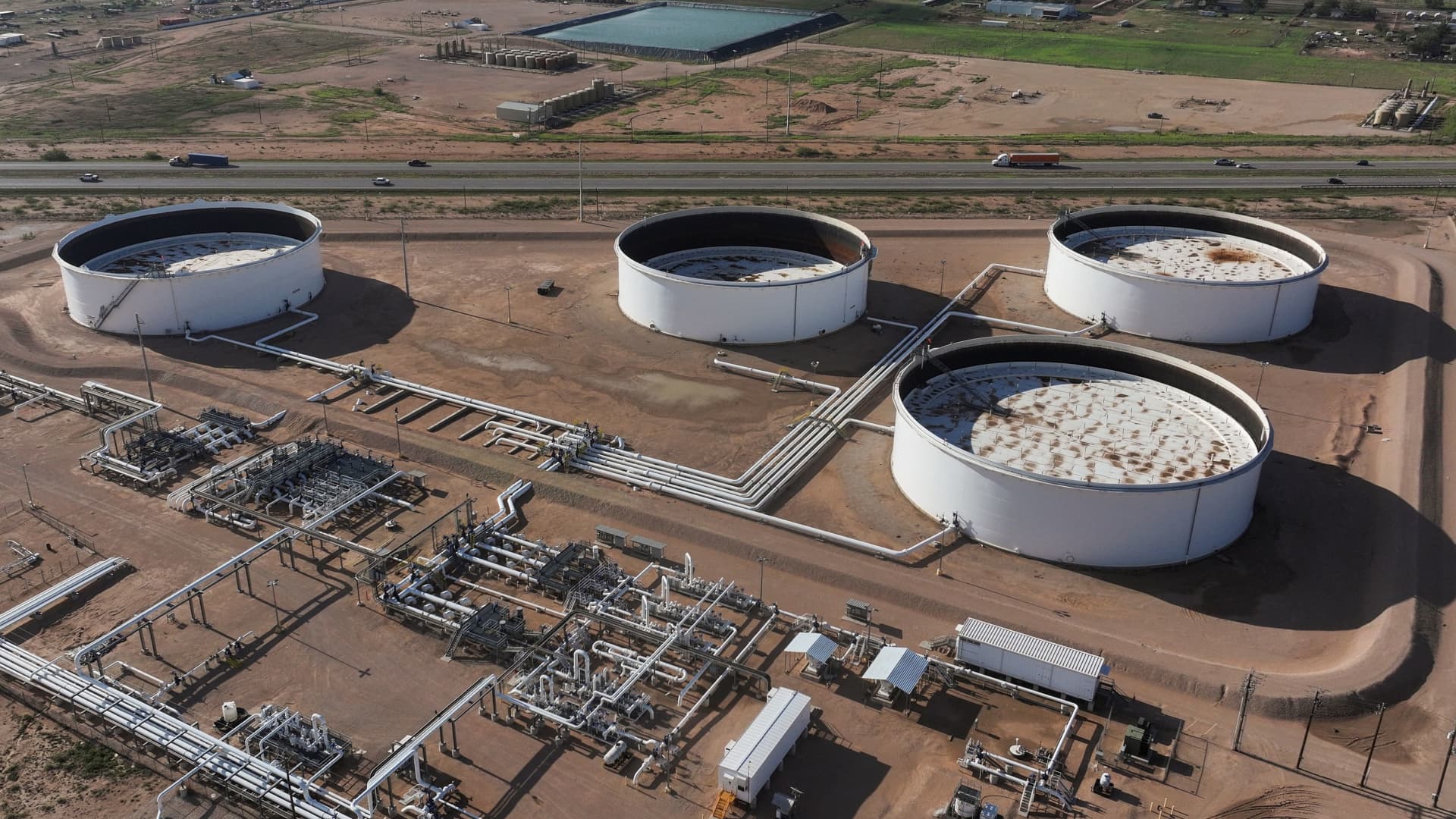
The recent geopolitical tremors emanating from the Middle East sent a predictable jolt through oil markets, with crude prices initially surging on fears of supply disruption. However, the market’s reaction proved notably transient, underscoring a prevailing investor sentiment that prioritizes physical supply integrity over regional rhetoric. While initial headlines pointed to a significant upward move, the subsequent days have seen a remarkable calming of nerves, suggesting Wall Street remains largely unswayed by anything short of tangible interruptions to the global oil flow. This analysis dives into the market’s measured response, the underlying factors contributing to this calm, and what key events investors should monitor in the coming weeks.
Geopolitical Sparks Fail to Ignite Sustained Price Rallies
The immediate aftermath of reported Israeli airstrikes against Iran saw an abrupt spike in crude oil futures, with U.S. West Texas Intermediate (WTI) and global benchmark Brent both experiencing their largest intraday gains since early 2022. This knee-jerk reaction reflected an understandable fear premium being priced in. However, that premium quickly deflated as clarity emerged that Iran’s critical energy infrastructure remained untouched. As of today, Brent crude trades at $90.38 per barrel, marking a significant -9.07% decline from its daily high, with WTI crude similarly down -9.41% to $82.59 per barrel. This rapid de-escalation from intra-day highs illustrates the market’s sophisticated assessment: fear alone is insufficient to sustain elevated prices. Energy analysts widely echoed this sentiment, emphasizing that only concrete disruptions to physical barrels entering the market would justify a prolonged rally. The current price levels, despite regional tensions, actually sit within a broader bearish trend; Brent has fallen by approximately 18.5% over the last 14 days, from $112.78 on March 30th to $91.87 on April 17th, indicating that underlying supply-demand dynamics are exerting more gravitational pull than short-term geopolitical noise.
The Resilient Supply Outlook and Extreme Scenario Limitations
The market’s subdued reaction is deeply rooted in an assessment of supply resilience and the perceived unlikelihood of extreme disruption scenarios. Investment banks, including Goldman Sachs and Citi, have maintained their long-term forecasts and largely dismissed the prospect of severe energy flow interruptions. Even during previous exchanges of hostilities between Israel and Iran, energy supplies were spared, reinforcing the view that both sides have a vested interest in avoiding direct hits to global energy infrastructure. Furthermore, Iran’s improving diplomatic ties with its Gulf Arab neighbors make it highly improbable that Tehran would target their energy assets, which would alienate key regional partners and invite broader condemnation. While extreme scenarios, such as 1.75 million barrels per day being knocked offline for six months, could push Brent to $90 per barrel, or a closure of the Strait of Hormuz could send prices above $100, these are viewed as highly improbable. The significant presence of the U.S. Fifth Fleet in Bahrain, which safeguards crucial shipping lanes through which about one-fifth of the world’s oil flows, serves as a powerful deterrent against any attempt to disrupt trade in the Strait of Hormuz. Investors are clearly factoring in these geopolitical guardrails, leading to a much calmer trading environment than the headlines might suggest.
Investor Focus Shifts: Beyond Geopolitics to Fundamentals and Long-Term Value
Our proprietary reader intent data reveals a telling shift in investor focus this week. While geopolitical events grab headlines, the questions flooding our platform indicate a strong underlying desire for fundamental analysis and forward-looking projections. Investors are actively asking about the long-term outlook, with queries like “What do you predict the price of oil per barrel will be by end of 2026?” taking precedence. This suggests a sophisticated view that short-term spikes are noise, and sustained value depends on deeper market drivers. Indeed, long-term forecasts from major institutions, such as Goldman Sachs’ 2026 projections of $56 per barrel for Brent and $52 per barrel for U.S. crude, reflect a baseline assumption of stable supply and demand, detached from immediate Mideast tensions. Furthermore, the interest in “What are OPEC+ current production quotas?” highlights a focus on supply-side management, which remains a more tangible driver of price stability than regional skirmishes. Questions about specific company performance, such as “How well do you think Repsol will end in April 2026,” underscore a commitment to bottom-up analysis and asset-level performance, indicating that investors are looking for value in robust balance sheets and efficient operations rather than purely riding geopolitical waves.
Navigating the Near-Term: Key Calendar Events for Oil Market Direction
While the market has shrugged off immediate geopolitical fears, the coming fortnight presents several pivotal events that could significantly influence crude oil prices and investor sentiment. Foremost among these are the critical OPEC+ Meetings. The Joint Ministerial Monitoring Committee (JMMC) convenes on April 18th, followed by the Full Ministerial Meeting on April 19th. These gatherings will provide crucial insights into the cartel’s production strategy, especially given the recent price volatility and the ongoing investor interest in current production quotas. Any unexpected adjustments to output targets, or even strong signals about future policy, could trigger market movements. Beyond OPEC+, the consistent flow of inventory data remains vital. The API Weekly Crude Inventory reports on April 21st and 28th, alongside the EIA Weekly Petroleum Status Reports on April 22nd and 29th, will offer a granular view of U.S. supply and demand balances, providing essential context for global inventory levels. Finally, the Baker Hughes Rig Count on April 24th and May 1st will serve as a key indicator of North American drilling activity and potential future supply trajectories. Investors should closely monitor these scheduled events, as they represent the fundamental levers that will likely dictate oil price direction far more than the transient anxieties of geopolitical headlines.


