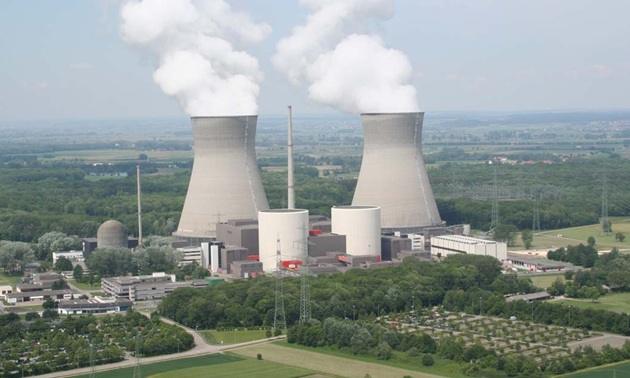
The European Union’s ambitious plan to funnel over €240 billion into its nuclear energy sector by 2050 marks a pivotal moment in the global energy transition, sending ripples across the traditional oil and gas landscape. This staggering investment, detailed in the European Commission’s updated nuclear illustrative programme (PINC), underscores a serious commitment to decarbonization, industrial competitiveness, and energy security. For oil and gas investors, this isn’t merely a headline about a competing energy source; it’s a profound signal about the long-term structural shifts in energy demand and capital allocation, demanding a re-evaluation of portfolio strategies.
EU’s Nuclear Pivot: A €241 Billion Bet on Decarbonization
The core of the EU’s strategy involves an estimated €241 billion in nuclear capacity investments through 2050. This substantial sum is primarily allocated to two key areas: €205 billion for the construction of new large-scale reactors and €36 billion for extending the operational lifetimes of existing facilities. The Commission projects an increase in installed nuclear capacity from the current 98 GW to approximately 109 GW in a base-case scenario, potentially reaching as high as 144 GW under an optimistic scenario where new builds are delivered on schedule and existing reactors maximize their service life. Currently, nuclear power accounts for roughly 23% of the EU’s electricity generation, highlighting its existing, significant contribution. This commitment to expansion, even as some member states phase out nuclear, signals a strategic shift that will directly impact the demand profile for natural gas in power generation, presenting both challenges and opportunities for gas producers and infrastructure providers.
Navigating Volatility: Nuclear Investment Amidst Crude Market Swings
The EU’s long-term nuclear commitment emerges against a backdrop of significant volatility in the crude oil markets, a dynamic that profoundly influences investor sentiment and capital availability for all energy projects. As of today, Brent crude trades at $90.38, marking a sharp 9.07% decline on the day. This recent downturn is even more pronounced when looking at the broader trend, with Brent having plummeted from $112.78 on March 30th to $91.87 just yesterday, representing an 18.5% drop in less than three weeks. WTI crude mirrors this sentiment, trading at $82.59, down 9.41%. Such rapid price swings underscore the inherent risks and rewards in fossil fuel investments, simultaneously highlighting the EU’s drive for energy independence and stability through nuclear. For oil and gas investors, this market instability accentuates the need for diversified portfolios and a keen eye on how long-term structural shifts, like the nuclear renaissance, could reshape future energy demand and commodity price equilibrium.
Investor Questions: Bridging Short-Term Returns and Long-Term Energy Transition
Our proprietary reader intent data reveals a clear dichotomy in investor focus: immediate market performance versus long-term strategic positioning. Many investors are keenly asking, “What do you predict the price of oil per barrel will be by the end of 2026?” and “How well do you think Repsol will end in April 2026?” These questions reflect a primary concern with short-to-medium term commodity price trajectory and the performance of integrated oil and gas majors. However, the EU’s €241 billion nuclear plan directly addresses the long-term energy landscape. While not a direct competitor to crude oil in transportation, nuclear power’s expansion in electricity generation will displace fossil fuels, particularly natural gas, in the power mix. This long-term structural change requires oil and gas investors to consider how companies are adapting their portfolios for a decarbonized future, whether through investments in carbon capture, hydrogen, or even specialized services supporting the nuclear build-out. The Commission’s emphasis on “diverse sources of both public and private financing” for nuclear also means increased competition for capital that might otherwise flow into traditional energy projects.
Upcoming Catalysts and the Evolving Energy Investment Landscape
While the EU’s nuclear strategy is a multi-decade endeavor, immediate market catalysts continue to shape the investment environment for oil and gas. The upcoming OPEC+ Joint Ministerial Monitoring Committee (JMMC) and Full Ministerial meetings on April 18th and 19th, respectively, are critical events. Any decisions on production quotas will have an immediate and significant impact on crude supply and, consequently, price stability. These short-term supply-side dynamics, combined with weekly inventory data from the API and EIA, provide the immediate trading signals against which long-term energy transition investments are evaluated. For savvy investors, understanding these short-term market movers is essential, but equally important is recognizing how the EU’s sustained push into nuclear, alongside the development of Small Modular Reactors (SMRs) and Advanced Modular Reactors (AMRs), signals a fundamental shift in energy infrastructure. This shift will ultimately influence global energy demand patterns, requiring oil and gas companies to adapt their strategies to remain competitive in a rapidly evolving energy mix.


