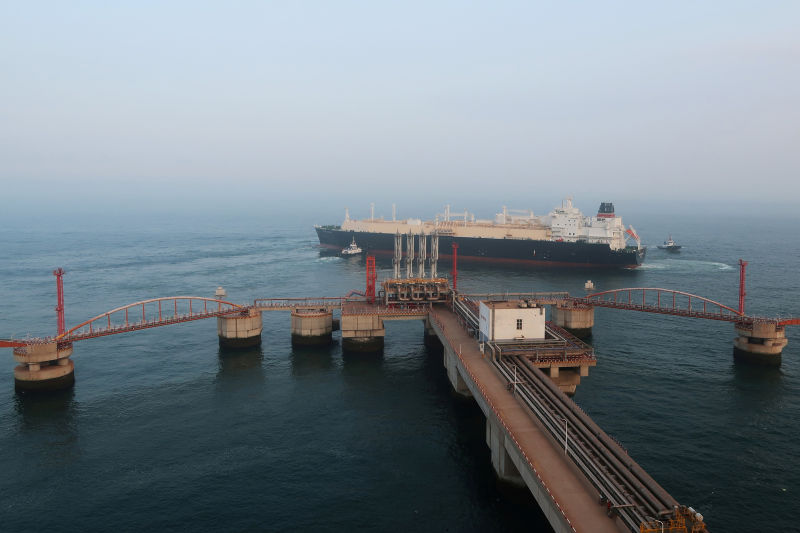
China LNG Dip Signals Demand Weakness: What Investors Need to Know
The unexpected decline in China’s liquefied natural gas (LNG) imports marks a significant turning point in global energy markets, challenging the long-held narrative of uninterrupted growth from the world’s largest buyer. This shift, driven by a confluence of economic headwinds and strategic domestic supply increases, has direct implications for investors tracking global demand dynamics, commodity pricing, and the viability of future LNG projects. Our analysis reveals a market grappling with oversupply and a re-evaluation of demand fundamentals, urging a closer look at the forces shaping the energy landscape for the remainder of 2026.
China’s Demand Contraction and Its Drivers
China’s LNG imports are projected to fall for the first time in three years, with revised forecasts predicting a 6% to 11% decline from the 76.65 million metric tons shipped last year. This contraction is starkly evident in the first four months of this year, during which imports plummeted to 20 million metric tons, a significant drop from nearly 29 million tons in the corresponding period last year. This downturn stems from a perfect storm of factors: the lingering impact of US tariffs on China’s exports, persistent weakness in industrial demand, and a milder winter that reduced heating requirements. Furthermore, Chinese consumers and industries are increasingly opting for cheaper, domestically produced natural gas and pipeline imports, fundamentally altering the demand profile for seaborne LNG. This isn’t merely a temporary blip; it represents a structural shift that energy investors must carefully consider, as even a sharp rebound in the second half of the year is unlikely to offset the weakness seen so far.
Broader Market Reverberations and Price Pressure
The softening in China’s LNG demand is not an isolated event; it resonates across the broader energy market, contributing to a prevailing bearish sentiment. As of today, Brent crude trades at $90.38, reflecting a notable 9.07% decline within the trading day, with a range between $86.08 and $98.97. This sharp intraday drop follows an already significant downward trend, with Brent shedding over 18.5% from $112.78 just two weeks ago. This broad weakness in crude prices underscores global concerns about demand, of which China’s industrial health is a critical component. The pressure extends directly to the LNG sector, where Asian spot prices have already fallen 12% year-to-date. An oversupplied global market, coupled with China’s reduced appetite, is creating a challenging environment for energy commodity prices. Investors must recognize this interconnectedness; a slowdown in the world’s second-largest economy impacts the entire energy complex.
Supplier Shifts and Investor Scrutiny
The pivot in China’s demand has immediate and tangible consequences for key LNG suppliers. Our proprietary reader intent data reveals a keen interest among investors in the trajectory of crude prices by year-end 2026 and the implications of OPEC+ production quotas, underscoring a broader uncertainty in the energy sector. This macro-level concern is mirrored in the specifics of the LNG market. Chinese buyers have already curtailed purchases from major producers, with imports from Australia, Malaysia, and Russia all experiencing declines of over 20% year-on-year during the January-to-April period. Australia, China’s top LNG supplier, saw its shipments to China fall by 24% to 6.38 million tons in the first four months of this year. Notably, this decline primarily affected long-term contract volumes, while spot purchases remained relatively steady, indicating a strategic shift by Chinese buyers to leverage market conditions. This trend forces a re-evaluation of the stability of long-term supply agreements and the financial viability of new liquefaction projects. Investors are actively asking which energy companies are best positioned to navigate these shifting demand dynamics and potential contract renegotiations.
Navigating Upcoming Catalysts and the Path Forward
For energy investors, the immediate future holds several critical events that could further shape market sentiment. The upcoming OPEC+ Joint Ministerial Monitoring Committee (JMMC) and Full Ministerial meetings on April 18th and 19th, respectively, will be pivotal. While primarily focused on crude oil production quotas, their decisions on global supply can significantly influence overall energy market sentiment and investment flows, indirectly impacting the gas sector. Beyond these key gatherings, sustained monitoring of China’s economic stimulus measures and industrial output will be crucial indicators for any potential recovery in LNG demand. The current trajectory suggests significant headwinds for the remainder of 2026, making strategic positioning essential. Companies with diversified portfolios, agile supply chains, and robust financial health will be better equipped to withstand these demand shocks. Investors should prioritize firms demonstrating adaptability in a market increasingly defined by regional supply dynamics and evolving global trade relationships.