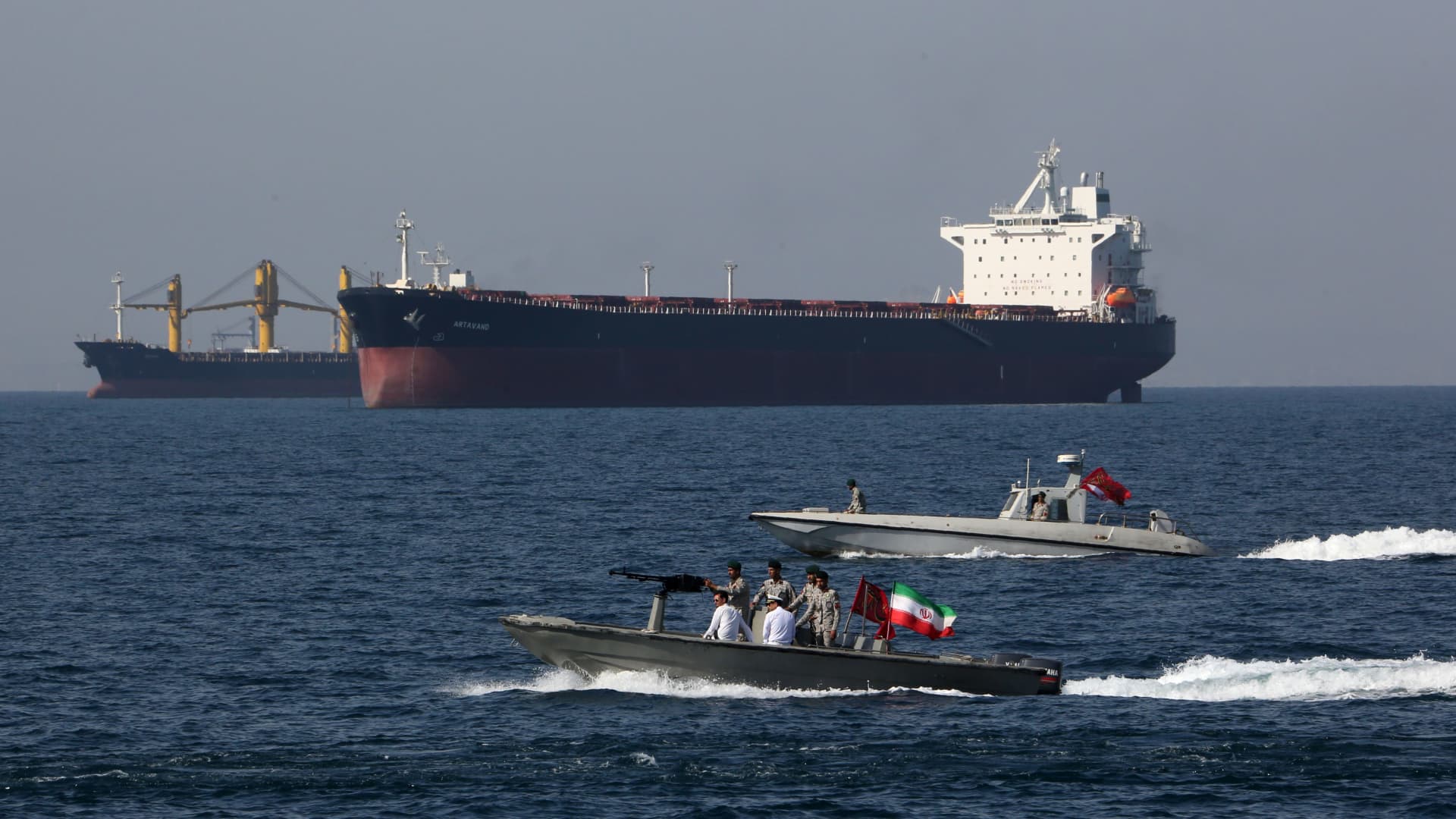
Recent geopolitical flare-ups in the Middle East inevitably cast a shadow over energy markets, with the Strait of Hormuz frequently emerging as a focal point of investor concern. For a waterway through which nearly 20 million barrels of oil and products transit daily, accounting for roughly one-fifth of global shipments, any perceived threat rightly commands attention. However, our proprietary analysis, combining expert insights with real-time market data, indicates that the risk of a full-scale disruption to this vital artery is significantly overstated. While headlines may drive momentary jitters, a deeper examination reveals that strategic realities and economic imperatives make a closure highly improbable, allowing investors to focus on more tangible market drivers and a stable oil supply outlook.
The Geopolitical Reality Check: Why Hormuz Stays Open
Despite recurring rhetoric from Tehran during periods of heightened tension, the notion of Iran physically closing the Strait of Hormuz remains largely a theoretical threat. Our assessment aligns with the consensus that such an action would yield no net benefit for Iran and likely incur severe consequences. Blocking the Strait, which is 35 to 60 miles wide and largely falls under Omani jurisdiction, is not only a complex physical undertaking but also a strategic blunder. Experts consistently highlight that Iran’s own economic lifeline heavily depends on unimpeded maritime access, as a substantial portion of its daily consumption goods arrive via this very route. Any disruption would inflict self-harm before significantly impacting adversaries, making it an irrational move in the grand strategic calculus. Past threats in 2011-2012 and 2018, while potent enough to generate headlines, ultimately never materialized, reinforcing the view that this is a rhetorical tool rather than a viable operational strategy.
Market Data Signals: Shrugging Off Geopolitical Noise
Observing the immediate market reaction provides further evidence of receding Hormuz fears. As of today, Brent Crude trades at $95.67 per barrel, posting a modest gain of 0.93% within a daily range of $91-$96.89. Similarly, WTI Crude stands at $92.33, up 1.15% for the day. While these are positive movements, the broader trend reveals a market that has largely absorbed and discounted the initial geopolitical risk premium. Over the past 14 days, Brent crude has actually seen a notable decline, moving from $102.22 on March 25th down to $93.22 by April 14th, representing an 8.8% decrease. This downward correction, despite ongoing regional tensions, indicates that traders are increasingly looking past the headline-grabbing threats and focusing on fundamental supply-demand dynamics. Even gasoline prices, at $2.96 per gallon, show a slight daily dip of 0.34%, suggesting that downstream markets are also not pricing in any immediate, large-scale supply disruptions from the Middle East. The current price action suggests that the market is prioritizing stable supply narratives over speculative geopolitical risk, maintaining a focus on underlying economic indicators.
China’s Unseen Hand: A Key Deterrent and Investor Focus
One of the most potent, yet often understated, deterrents against any Iranian move to disrupt the Strait of Hormuz is the considerable influence of China. Our proprietary reader intent data reveals a strong investor interest in understanding China’s role in global energy markets, particularly queries like “How are Chinese tea-pot refineries running this quarter?” and “Build a base-case Brent price forecast for next quarter.” These questions inherently acknowledge China’s immense leverage. As Iran’s number one oil importer, reportedly accounting for over three-quarters of its crude exports, and its largest overall trade partner, China wields significant economic power. Beijing has no interest in seeing its vital energy lifelines from the Persian Gulf disrupted or global oil prices surge. Any Iranian action threatening Hormuz would undoubtedly trigger a strong economic and diplomatic backlash from China, effectively turning “friends” into powerful adversaries. This strategic reality significantly constrains Iran’s options and reinforces the stability of global oil flows, providing a crucial underpinning for our base-case Brent forecast which anticipates a relatively stable, albeit volatile, price environment for the coming quarter, barring unforeseen fundamental shifts.
Upcoming Events: The True Drivers of Future Oil Prices
With the Strait of Hormuz risk largely mitigated, investors should turn their attention to the upcoming calendar events that hold far more tangible implications for oil price trajectories. Over the next two weeks, the market will gain critical insights from several key data points and meetings. The Baker Hughes Rig Count, scheduled for April 17th and 24th, will offer a fresh look at North American drilling activity, signaling potential shifts in future supply. More significantly, the OPEC+ Joint Ministerial Monitoring Committee (JMMC) meets on April 18th, followed by the full OPEC+ Ministerial Meeting on April 20th. These gatherings are paramount for assessing the group’s production strategy and commitment to current output cuts. Any deviation from the agreed-upon quotas or signals of future policy shifts could significantly impact global supply. Furthermore, the weekly API Crude Inventory reports (April 21st and 28th) and the EIA Weekly Petroleum Status Reports (April 22nd and 29th) will provide crucial real-time snapshots of U.S. inventory levels and demand trends. These regular, data-driven releases, rather than abstract geopolitical threats, will be the primary catalysts shaping investor sentiment and the outlook for Brent and WTI crude in the immediate future, solidifying a consensus 2026 Brent forecast that leans on fundamentals.