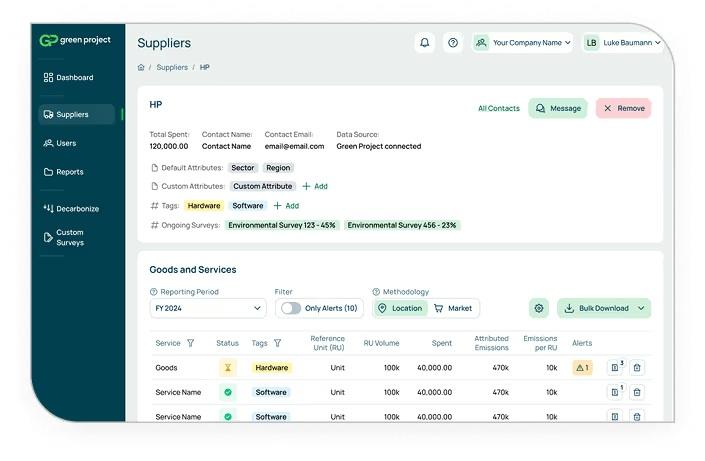
The energy investment landscape continues its rapid evolution, marked by an accelerating focus on decarbonization across the entire value chain. While much attention traditionally fixates on Scope 1 and 2 emissions from direct operations, the formidable challenge of Scope 3 emissions, those generated indirectly by a company’s upstream and downstream activities, is increasingly coming into sharp relief. The recent launch of a new digital renewable energy marketplace and supplier engagement platform, act50, by Green Project Technologies, signals a significant step in this direction, offering enterprises a granular tool to manage and track these indirect emissions. For oil and gas investors, this development is more than just a headline in the green tech space; it represents a tangible manifestation of the growing pressure on global supply chains to reduce their carbon footprint, directly influencing long-term demand dynamics and investment strategies within traditional energy sectors.
The Scope 3 Imperative: A Growing Investment Factor
Scope 3 emissions represent the vast majority of many companies’ total carbon footprint, particularly for those in manufacturing, retail, and even parts of the energy sector. Addressing them is no longer a niche ESG concern but a mainstream business imperative, driven by regulatory pressures, investor demands, and consumer preferences. Platforms like act50, which aim to simplify the procurement of traceable clean energy and automate Renewable Energy Certificate (EAC) transactions in collaboration with ACT Group’s CerQlar registry, are critical enablers for this shift. By providing a clear pathway for companies to help their suppliers, regardless of size, to purchase green energy and track associated emissions reductions, these solutions directly impact the operating environment for every link in the global supply chain. For oil and gas companies, whose products are often integral to these supply chains, understanding and adapting to this push for Scope 3 reduction is paramount. It influences long-term contract negotiations, partnership potential, and ultimately, the enduring demand for their offerings as end-users increasingly prioritize decarbonized inputs.
Navigating Volatility: Market Signals Amidst Transition
The urgency to address Scope 3 emissions exists within a dynamic and often volatile energy market. As of today, Brent Crude trades at $95.62, marking a modest gain of 0.88% within a day range of $91 to $96.89. WTI Crude mirrors this sentiment at $92.06, up 0.85%, with a daily range of $86.96 to $93.3. However, this short-term uptick follows a notable downward trend, with Brent shedding nearly 9% in the past 14 days, falling from $102.22 on March 25th to $93.22 by April 14th. Gasoline prices, currently at $2.96 per gallon, have seen a slight dip of 0.34% today. This market fluidity underscores the complex interplay of geopolitical events, demand fluctuations, and the accelerating energy transition. While platforms like act50 are working to decarbonize supply chains, the immediate energy market continues to react to conventional supply-demand fundamentals. Investors must balance the long-term implications of these green technology advancements with the immediate realities of market price discovery driven by traditional factors.
Upcoming Events and Forward-Looking Analysis
The next few weeks promise critical data points that will further shape the energy market and inform investment decisions. On April 17th and again on April 24th, the Baker Hughes Rig Count will offer insights into North American drilling activity, signaling potential shifts in future supply. More significantly for global oil markets, the OPEC+ Joint Ministerial Monitoring Committee (JMMC) convenes on April 18th, followed by the full Ministerial Meeting on April 20th. These gatherings are pivotal for setting production policy and will undoubtedly influence crude prices in the short to medium term. Additionally, investors will closely watch the API Weekly Crude Inventory report on April 21st and 28th, along with the EIA Weekly Petroleum Status Report on April 22nd and 29th, for key insights into U.S. inventory levels and demand trends. While these events primarily address the supply-side of the traditional energy equation, the growing adoption of Scope 3 management platforms like act50 provides a consistent, albeit slower, pressure on the demand side, encouraging greater efficiency and a shift towards cleaner energy sources within industrial supply chains over time. Astute investors will monitor these short-term supply signals while keeping an eye on the persistent, long-term demand shaping influence of decarbonization efforts.
Investor Focus: Bridging Traditional Energy and Green Transition
Our proprietary reader intent data highlights a persistent investor interest in forecasting Brent crude prices for the next quarter and year, alongside granular questions about regional demand drivers like Chinese refinery runs and Asian LNG spot prices. These inquiries reflect a fundamental truth: despite the accelerating energy transition, the global economy remains heavily reliant on traditional hydrocarbons, and their price trajectory is paramount for portfolio performance. The emergence of robust Scope 3 platforms like act50, however, offers a crucial lens through which to view the evolving demand picture. While not directly impacting next week’s crude inventory, these tools facilitate a systemic shift. As more companies adopt such platforms to transparently track and reduce their indirect emissions, the pressure intensifies on every supplier, including those in the oil and gas sector, to demonstrate their own decarbonization efforts. Investors should consider how these technological advancements contribute to the long-term erosion of demand for high-carbon intensity products, even as near-term price forecasts remain complex and subject to geopolitical and economic forces. Integrating an understanding of these green supply chain developments into a comprehensive investment thesis allows for a more robust assessment of risk and opportunity in both traditional and transitional energy plays.


