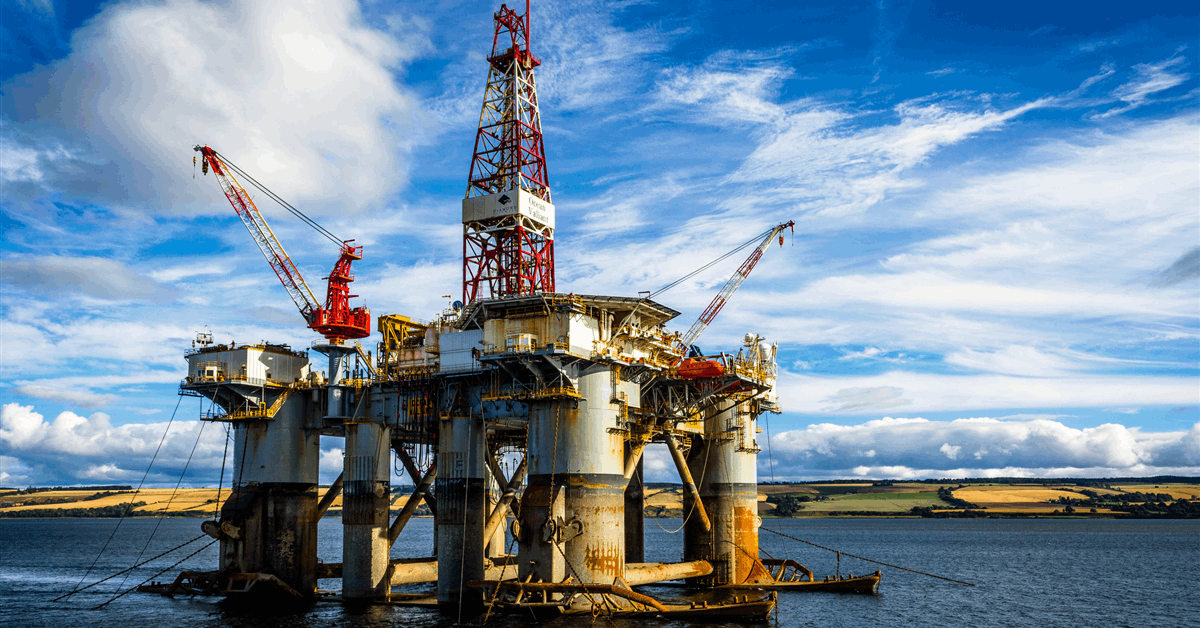
Gran Tierra Energy’s recent announcement regarding the sale of its wholly-owned subsidiary, Gran Tierra North Sea Limited (GTNSL), to NEO Energy for $7.5 million, signals a targeted strategic pivot. This divestment, which includes the 100 percent equity interest in UK Continental Shelf (UKCS) license P2358 containing the Serenity Discovery, underscores a clear focus on portfolio optimization and capital discipline for the South America-focused E&P operator. While the transaction value itself is modest, its implications for Gran Tierra’s balance sheet, operational focus, and future investment strategy are significant for investors tracking the company’s trajectory in a dynamic energy market.
Gran Tierra’s Strategic Divestment in a Shifting Portfolio
The sale of GTNSL for $7.5 million, encompassing the UKCS license P2358 and its Serenity Discovery, is more than a simple asset transaction; it represents Gran Tierra’s sharpened focus on its core South American assets. This move aligns with a broader industry trend where companies are streamlining their portfolios, shedding non-core or geographically disparate assets to concentrate capital and expertise on regions offering higher returns or more strategic fit. For Gran Tierra, divesting from the mature UKCS basin allows for a deeper commitment to its established operations in Colombia and the promising exploration plays in Ecuador, where the company has recently seen notable success.
The transaction is slated for completion in the third quarter, contingent upon customary conditions, including the essential consent from the North Sea Transition Authority for the change of control. This divestment, while not generating substantial immediate cash flow, is a clear signal of management’s commitment to disciplined financial management and debt reduction, as articulated by the company’s leadership. By shedding an asset that may have required disproportionate management attention relative to its strategic contribution, Gran Tierra aims to free up resources to accelerate development and exploration in its key regions, enhancing capital efficiency across its remaining portfolio.
Operational Momentum and Focused Growth in Core Regions
Amidst this portfolio reshaping, Gran Tierra has demonstrated robust operational performance. The first quarter saw the company achieve an average working interest production of 46,647 barrels of oil equivalent per day (boepd), marking a substantial 14 percent increase over the previous quarter and an impressive 45 percent surge year over year. This growth was primarily fueled by the full three months of production from its Canadian assets and, critically, by successful exploration well results in Ecuador.
The company’s Ecuadorian exploration campaign stands out, with the successful drilling of two additional oil discoveries, the Iguana B1 and Iguana B2 wells on the Iguana Block. These wells collectively delivered an average oil production rate of approximately 1,684 barrels of oil per day over a 30-day period from the U-Sand formation. Significantly, the Iguana B1 well was completed in record time and under budget, setting a new benchmark for efficiency in Gran Tierra’s exploration efforts. This operational prowess, combined with a front-loaded 2025 capital program that saw up to five rigs active and delivered record drilling times, reinforces the company’s ability to execute on its strategy. With current production holding steady at around 48,400 boepd, Gran Tierra is demonstrating it can generate growth while simultaneously optimizing its asset base, positioning itself for sustainable value creation.
Navigating Commodity Volatility: Price Trends and Investor Focus
Gran Tierra’s strategic moves unfold against a backdrop of fluctuating global crude oil prices, a key factor for any E&P company. As of today, Brent crude trades at $95.62 per barrel, reflecting a modest gain of 0.88 percent within a daily range of $91 to $96.89. West Texas Intermediate (WTI) crude follows a similar trajectory, priced at $92.06 per barrel, up 0.85 percent, with a daily range between $86.96 and $93.30. These figures, while representing a daily uptick, come after a period of recent softness; Brent crude has seen an 8.8 percent decline, or approximately $9 per barrel, over the past fourteen days, falling from $102.22 on March 25th to $93.22 on April 14th.
This recent volatility directly impacts investor sentiment, and we observe that our readership is keenly focused on understanding the future. Investors are actively asking for a base-case Brent price forecast for the next quarter and seeking consensus 2026 Brent forecasts. Gran Tierra’s management is acutely aware of this environment, noting their strong hedge position for the remainder of the year. This hedging strategy is crucial for mitigating the impact of price swings and providing a degree of revenue predictability, especially for a company prioritizing debt reduction. Despite reporting a net loss of $19 million in the first quarter (an improvement from a $34 million net loss in the prior quarter), Gran Tierra’s focus on operational efficiencies and financial discipline, including ongoing share buybacks and debt reduction, is a direct response to investor demand for resilience amidst commodity price uncertainty.
Looking Ahead: Key Events Shaping Gran Tierra’s Outlook
The immediate future for crude oil markets is punctuated by several critical events that will undoubtedly influence Gran Tierra’s operating environment and, by extension, its investment thesis. Investors should particularly watch the upcoming OPEC+ meetings. The Joint Ministerial Monitoring Committee (JMMC) is scheduled for April 18th, followed closely by the Full Ministerial OPEC+ Meeting on April 20th. Decisions emanating from these gatherings regarding production quotas and supply management will be pivotal in shaping short-to-medium term crude price direction, directly impacting the profitability of E&P companies like Gran Tierra.
Beyond OPEC+, weekly data points offer continuous market insights. The Baker Hughes Rig Count reports, due on April 17th and April 24th, will provide a snapshot of North American drilling activity, hinting at future supply trends. Similarly, the API Weekly Crude Inventory (April 21st and April 28th) and the EIA Weekly Petroleum Status Report (April 22nd and April 29th) will offer crucial updates on U.S. inventory levels, a significant demand signal. Gran Tierra’s strategy, with its emphasis on “quick cycle returns” and maintaining flexibility to invest in high-return opportunities, positions it to react nimbly to the market shifts these events may trigger. The company’s disciplined capital allocation, including its $95 million in first-quarter capital expenditures focused on Canadian development and active Ecuadorian exploration, demonstrates a proactive approach to generating value regardless of the prevailing commodity price environment.


