The offshore energy sector stands at the precipice of a significant operational shift, driven by advancements in digital technology and the relentless pursuit of efficiency. A groundbreaking pilot project, spearheaded by maritime technology giant Kongsberg Maritime in collaboration with major industry players Solstad, Østensjø, DeepOcean, and Remota, aims to redefine offshore vessel operations by bringing Dynamic Positioning (DP) capabilities ashore. This initiative promises to unlock substantial financial and operational benefits, heralding a new era for offshore asset management and investment.
Revolutionizing Offshore Operations with Remote DP
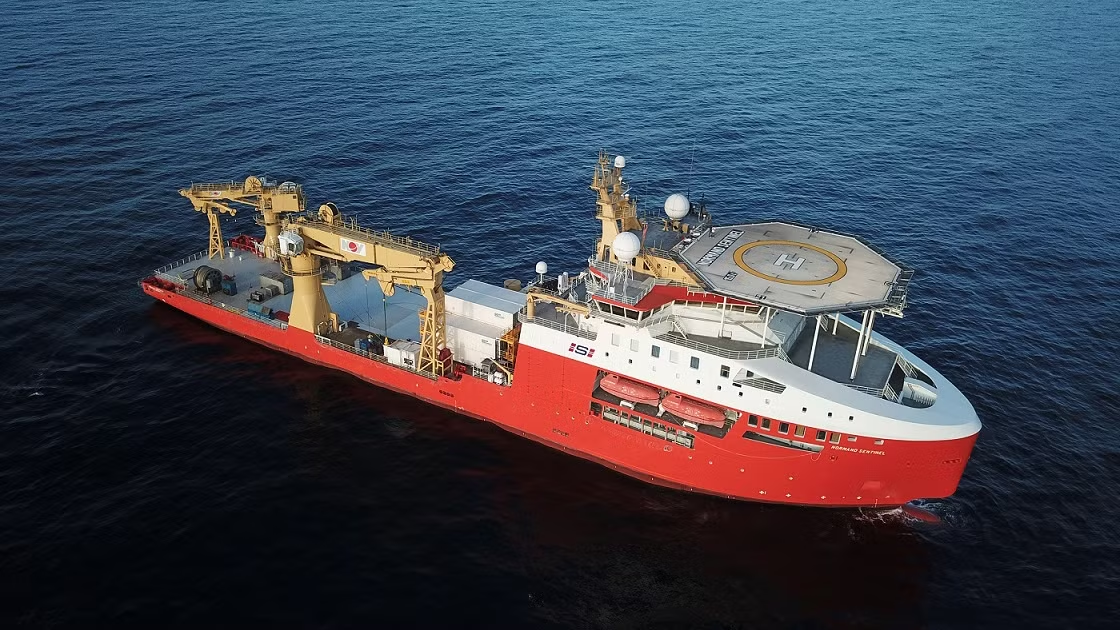
Kongsberg Maritime recently announced this ambitious partnership, which will explore the viability and benefits of remote Dynamic Positioning operations. The project, set to commence later this year, will first equip Solstad’s offshore vessel, the Normand Sentinel, with advanced remote capabilities. This move signifies a pivotal step towards a more centralized, data-driven approach to complex maritime tasks, potentially reshaping the economic landscape for offshore service providers and energy companies.
The core concept involves enabling a shore-based DP operator to manage vessel positioning from a Remote Operations Centre (ROC) run by Remota. This command center will leverage state-of-the-art connectivity and robust cybersecurity infrastructure, ensuring seamless and secure control. The implications for investor portfolios are substantial: reduced operational expenditures, enhanced safety protocols, and a more agile response to dynamic offshore conditions could translate directly into improved profitability and shareholder value.
Driving Efficiency and Cost Reductions
One of the most compelling aspects of remote DP technology for investors is its potential to significantly curb operational costs. By centralizing DP operations onshore, companies can reduce the number of personnel required offshore (P.O.B.). This directly translates into lower expenses associated with helicopter transfers, accommodation, catering, and other logistical overheads inherent in traditional offshore staffing models. Furthermore, a more streamlined crew structure could optimize vessel utilization, minimizing idle time and maximizing revenue-generating operational hours.
The pilot also seeks to enhance operational flexibility. Remote control allows for expert DP operators to manage multiple vessels or easily transition between projects without the logistical complexities of physical crew changes offshore. This agility is critical in the volatile oil and gas market, enabling companies to respond rapidly to changing project demands or urgent operational requirements. For investors, this translates into a more resilient and adaptable business model, less susceptible to the logistical bottlenecks and costs that have historically plagued offshore ventures.
Expanding the Talent Pool and Fostering Sustainability
Beyond the immediate financial gains, remote DP operations offer a strategic advantage in talent acquisition and retention. The traditional offshore lifestyle, characterized by extended periods away from home, presents significant recruitment challenges. By shifting DP responsibilities onshore, the industry can tap into a wider and more diverse talent pool, including individuals seeking a better work-life balance or those with specialized skills who might otherwise be disinclined to work offshore. This expansion of the recruitment base addresses a critical industry challenge, ensuring a sustainable supply of skilled professionals.
Moreover, this initiative aligns perfectly with the growing emphasis on environmental, social, and governance (ESG) factors in investment decisions. By reducing the number of helicopter flights and vessel support trips offshore, the project contributes to a smaller carbon footprint. Optimized vessel movements, facilitated by precise remote DP control, can also lead to more fuel-efficient operations. For ESG-conscious investors, this demonstrates a commitment to sustainable practices and positions the partner companies favorably within an increasingly scrutinized energy sector.
The Pilot’s Phased Approach and Future Prospects
The pilot project will unfold in two distinct phases, commencing with Solstad’s Normand Sentinel and subsequently expanding to Østensjø’s Edda Freya. Crucially, both vessels will maintain their full onboard DP teams throughout the pilot. This dual-team approach is designed to ensure maximum safety while providing invaluable comparative data. This robust testing methodology is essential for validating the reliability and efficacy of remote DP operations, instilling confidence in future broader adoption.
A key objective of the pilot is to assess the viability of remote DP2 operations, a more advanced and critical form of Dynamic Positioning. Success in this area would significantly broaden the scope of remotely operable offshore tasks. The project will also evaluate a more flexible operational model for the future, exploring how remote capabilities can be integrated into existing workflows to achieve optimal efficiency and safety. The insights gained from this pilot will be instrumental in shaping the next generation of offshore operational standards.
Industry Leaders Championing Innovation
The consortium behind this venture comprises some of the most respected names in maritime and offshore services. Lisa Edvardsen Haugan, President of Kongsberg Maritime, emphasized the collaborative spirit, stating the aim is to “challenge established norms in the maritime industry through innovative remote technology.” This sentiment was echoed by Lars Peder Solstad, CEO of Solstad, who highlighted the opportunity to “transfer functions such as DP operations from offshore to onshore” by combining new technologies with operational experience.
Kristian H. Vea, CEO of Østensjø, underscored the importance of mindset and partnerships in achieving true progress, positioning the collaboration at the “forefront of remote offshore operations.” Øyvind Mikaelsen, CEO of DeepOcean, further articulated that these aligned goals and combined technologies will support DeepOcean’s vision of being a world-leading ocean service provider, enabling significant efficiency gains for offshore energy operators. Finally, Sveinung Soma, CEO of Remota, projected that successful development and proving of remote DP operations will enable Remota to offer these services to the wider DP market, signifying a potential market disruption.
Investment Implications and Outlook
For investors monitoring the offshore energy sector, this remote DP pilot represents a powerful indicator of future growth and technological transformation. Companies like Kongsberg Maritime, Solstad, Østensjø, DeepOcean, and Remota are positioning themselves at the vanguard of this digital revolution. Successful implementation of remote DP could lead to a competitive advantage, attracting more contracts and improving profit margins in a notoriously capital-intensive industry.
The broader adoption of remote operations across the offshore landscape promises a paradigm shift, driving down costs, enhancing safety, and promoting sustainability. Investors should closely watch the progress of this pilot, as its outcomes will likely influence strategic investments in maritime technology, offshore services, and digital infrastructure for years to come. This collaborative effort is not merely an experiment; it is a strategic investment in the future resilience and profitability of the global offshore energy market.


