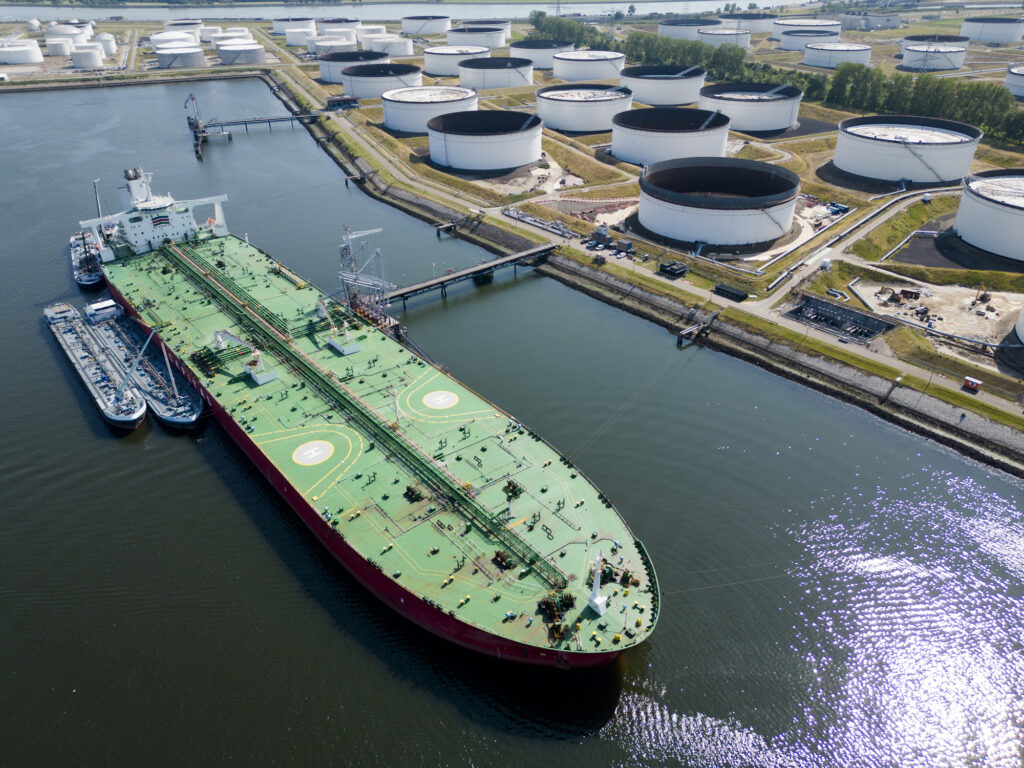
OPEC+ Hikes: Tanker Shipping Sector Outlook
The global oil market is at a fascinating crossroads, with OPEC+ navigating a delicate balance between market share and price stability. While the cartel has publicly committed to unwinding its voluntary production cuts, the actual on-the-water impact on the tanker shipping sector, particularly for Very Large Crude Carriers (VLCCs), remains muted. This disconnect presents both challenges and potential opportunities for investors. Our analysis delves into the underlying dynamics, leveraging proprietary market data and upcoming catalysts to provide a forward-looking perspective on how these production shifts might finally translate into tangible benefits for the crude oil transportation industry.
The OPEC+ Production Paradox and Immediate Market Impact
Since April, OPEC+ has announced production upticks totaling approximately 1.37 million barrels per day (bpd), representing a significant 62% of the 2.2 million bpd it plans to reintroduce into the market. This includes a confirmed 411,000 bpd increase for July, mirroring the adjustments seen in May and June. However, this aggressive signaling has yet to manifest in a corresponding surge of actual crude oil exports. This lag between announced policy and physical cargo movements has contributed to a noticeable softening in the VLCC spot market.
Indeed, our proprietary data pipeline reveals that VLCC spot rates have recently slipped below $30,000 per day, a considerable decline from the $40,000 – $60,000 daily range observed between February and May. This immediate pressure on shipping rates is exacerbated by broader market uncertainty. As of today, Brent Crude trades at $90.38, reflecting a substantial 9.07% drop within the day’s range of $86.08-$98.97. WTI Crude follows a similar trajectory, priced at $82.59, down 9.41% from its daily range of $78.97-$90.34. This significant downward price pressure, alongside a 14-day Brent trend showing an 18.5% decline from $112.78 to $91.87, indicates a market grappling with demand concerns. The combination of lower actual export volumes and a weaker crude price environment naturally translates into reduced chartering activity and downward pressure on shipping economics, creating a challenging near-term outlook for tanker operators.
Navigating Volatility: Investor Concerns and Crude Price Outlook
Investors are keenly observing these developments, with our reader intent signals highlighting a strong focus on the future trajectory of crude prices and OPEC+ quotas. A recurring question this week asks: “What do you predict the price of oil per barrel will be by end of 2026?” This reflects the pervasive uncertainty surrounding the market’s direction. While OPEC+ aims to recapture market share amidst global trade tensions and the ongoing energy transition, the actual impact on pricing remains volatile. The significant daily and bi-weekly crude price declines underscore this unpredictability, making long-term price forecasts complex.
Another common query, “What are OPEC+ current production quotas?”, points to the importance investors place on understanding the official supply framework. The 411,000 bpd July increase is a key piece of this puzzle. However, as our analysis shows, announced quotas don’t always equate to immediate export volumes. The strategic rationale behind these increases – to reassert market dominance – is clear, but its effectiveness in a price-sensitive environment where demand signals are mixed will be continuously evaluated. For the tanker sector, the critical factor isn’t just the quota itself, but the velocity and consistency with which these barrels flow from production facilities to export terminals and ultimately onto VLCCs.
Catalysts on the Horizon: Upcoming Events and the Q4 2025 Inflection Point
Despite the current headwinds, the forward-looking sentiment for the wider tanker industry remains positive, with many strategists pointing towards an improved outlook for VLCCs as the fourth quarter of 2025 approaches. This anticipated upswing hinges on a more consistent translation of OPEC+ production increases into actual seaborne exports. Several upcoming events on our proprietary calendar will be crucial in shaping this narrative and validating the long-term bullish outlook.
This weekend presents a critical juncture with the OPEC+ Joint Ministerial Monitoring Committee (JMMC) meeting on April 18th, followed by the Full Ministerial Meeting on April 19th. These gatherings are pivotal for confirming or adjusting production policies, which could directly influence future export volumes. Beyond the cartel’s internal deliberations, key data releases will provide further insights into global supply-demand balances. The API Weekly Crude Inventory reports on April 21st and 28th, alongside the EIA Weekly Petroleum Status Reports on April 22nd and 29th, will offer snapshots of U.S. crude stockpiles and refinery activity. A sustained draw in inventories, particularly if it signals robust demand, would be a strong indicator for increased shipping requirements. Furthermore, the Baker Hughes Rig Count on April 24th and May 1st will shed light on North American production trends, complementing the global supply picture. Should these data points begin to align with the higher OPEC+ output trajectory, the current disconnect between announced production and actual exports could narrow, paving the way for a stronger VLCC market later in the year.
Investment Implications: Identifying Opportunities in the Tanker Sector
For investors, the present environment calls for a nuanced approach. While the immediate pressures on VLCC spot rates are evident, the long-term thesis for the tanker sector, and VLCCs in particular, remains robust. The expectation is that a stronger VLCC market typically acts as a rising tide, lifting all segments of the tanker industry, including product carriers. This suggests a broad-based recovery when the underlying fundamentals align.
Companies like Frontline and DHT are frequently cited as potential beneficiaries of this eventual upswing. Their exposure to the VLCC segment positions them to capitalize once the anticipated increase in crude exports materializes. However, the prevailing sentiment indicates that this upswing will take “just a little while longer.” This implies that investors with a longer time horizon, perhaps aligning with the Q4 2025 outlook, may find compelling entry points. The current subdued spot rates could offer an attractive valuation window before the market fully prices in the expected surge in physical crude flows. Monitoring the translation of OPEC+ quotas into actual exports, alongside global demand indicators from the upcoming calendar events, will be paramount for timing investment decisions in this cyclical yet essential sector.