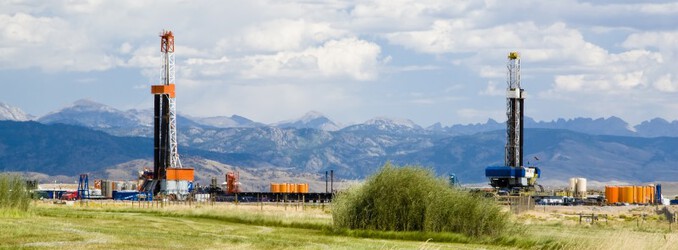
Vermilion Energy Finalizes U.S. Exit with $88 Million Asset Divestment
Vermilion Energy Inc. is strategically realigning its portfolio, announcing a definitive agreement for the sale of its entire U.S. asset base. This significant transaction, valued at approximately $88 million USD ($120 million CAD) in cash proceeds, marks a complete withdrawal from the American energy landscape for the Calgary-based producer. The move underscores Vermilion’s sharpened focus on its core gas-weighted operations across Canada and Europe, promising a strengthened balance sheet and a more streamlined operational footprint.
Strategic Deleveraging and Financial Fortification
The primary allocation of the $88 million cash infusion will target debt reduction, a critical step in Vermilion’s ongoing deleveraging strategy. In today’s volatile commodity markets, a robust financial position is paramount for upstream companies. Accelerating debt repayment not only enhances financial flexibility but also mitigates exposure to interest rate fluctuations and strengthens the company’s overall resilience. This commitment to balance sheet optimization sends a clear signal to investors about Vermilion’s disciplined capital management approach, aiming to create sustainable shareholder value.
For investors tracking the Canadian energy sector, the immediate impact of this cash injection on Vermilion’s debt profile will be a key metric. A leaner balance sheet typically translates into improved credit metrics, potentially lowering future borrowing costs and freeing up capital for strategic investments or shareholder returns in its preferred operating regions. This proactive financial engineering positions Vermilion more favorably against industry peers, particularly as the global energy transition continues to shape investment priorities.
Detailed Asset Profile and Valuation Insights
The divested U.S. assets represent a material, albeit non-core, portion of Vermilion’s former production base. The portfolio includes approximately 5,500 barrels of oil equivalent per day (boed) of production, with a significant liquids weighting of 81% oil and natural gas liquids. In terms of reserves, the package comprises an estimated 10 million barrels of oil equivalent (MMboe) of proved developed producing (PDP) reserves. These reserves were independently evaluated by McDaniel & Associates Consultants Ltd. as of December 31, 2024, lending credibility to the underlying asset value.
Analyzing the sale metrics, the transaction implies a valuation of roughly $16,000 per flowing boe and $8.80 per proved developed producing reserve barrel. While these figures can vary widely based on asset quality, operational costs, and commodity price outlooks specific to the region, they provide a benchmark for investors assessing the deal’s fairness and strategic logic. The predominantly oil and liquids production profile suggests a focus on higher-value commodities within the U.S. portfolio, making their divestment a clear indicator of Vermilion’s strategic pivot towards natural gas in other geographies.
Transaction Mechanics and Contingent Upside
The transaction is structured with an effective date of January 1, 2025, and is expected to reach completion during the third quarter of 2025. As with most significant asset sales, the closing remains subject to the satisfaction of customary conditions, which typically include regulatory approvals and other standard contractual stipulations. This timeline provides clarity for both parties and allows for an orderly transition of operations.
An interesting financial component of the deal involves contingent payments. The agreement includes provisions for an additional $10 million in payments, directly linked to West Texas Intermediate (WTI) crude oil prices over a two-year period commencing July 1, 2025. This clause introduces a potential upside for Vermilion, allowing the company to participate in any significant improvements in benchmark oil prices post-sale. For investors, this demonstrates a shrewd negotiation strategy, mitigating some of the risk associated with selling oil-weighted assets in a fluctuating market while still achieving a clean exit.
A Definitive Exit: Focusing on Core Strengths
This latest divestiture is not an isolated event but rather the culmination of a deliberate strategic shift. Vermilion’s management emphasized that this transaction, combined with the sale of its East Finn assets in 2023, definitively completes its departure from the United States. This strategic clarity allows the company to concentrate resources and capital entirely on its established, higher-conviction asset bases. The focus will now be squarely on its gas-weighted assets located across Canada and Europe.
The rationale behind this pivot is multi-faceted. Consolidating operations in specific regions can lead to enhanced operational efficiencies, reduced overhead, and a more focused allocation of technical expertise and capital. Furthermore, aligning with gas-weighted assets, particularly in Europe, positions Vermilion to capitalize on the continent’s long-term demand for natural gas as a transition fuel and a critical component of its energy security strategy. For Canadian operations, continued investment in gas-rich regions aligns with established infrastructure and market access, offering a predictable platform for growth.
Investor Implications and Forward Outlook
For investors, Vermilion’s strategic exit from the U.S. market represents a de-risking event and a commitment to a clearly defined operational mandate. The resulting improvement in the balance sheet, coupled with a sharper focus on core assets, could lead to more predictable financial performance and potentially enhanced shareholder returns over the medium to long term. The company’s future growth trajectory will now be intrinsically tied to its Canadian and European operations, where it can leverage existing infrastructure, expertise, and market relationships.
As Vermilion moves forward, its ability to execute on its renewed strategy in Canada and Europe will be key. Investors will be watching for further details on capital allocation plans within these core regions, production growth targets, and strategies for maximizing value from its gas-weighted portfolio. This strategic repositioning could pave the way for Vermilion to solidify its standing as a focused, financially robust international energy producer, offering a compelling investment proposition in a dynamic global energy market.


