India’s Private Refiners Pivot to Domestic Market Amid Global Energy Shifts
India’s dynamic oil and gas landscape is witnessing a significant strategic reorientation as the nation’s leading private-sector refiners, historically geared towards lucrative export markets, increasingly prioritize domestic fuel sales. This tactical shift by major players like Reliance Industries and Nayara Energy signals a profound response to evolving global energy demand patterns and intensifying competition abroad, all while capitalizing on India’s burgeoning $150 billion fuel retail sector.
The impetus for this domestic pivot stems from a confluence of international market pressures. Developed economies are experiencing a deceleration in fuel demand growth, exacerbated by the accelerating transition to electric vehicles (EVs) and broader energy efficiency initiatives. Concurrently, China, the world’s second-largest oil consumer, faces its own demand plateau, if not an outright peak. These factors collectively contribute to a softening global appetite for refined products.
Adding to the challenge, the global refining market is seeing an influx of new capacity, notably from facilities like Nigeria’s Dangote refinery, alongside a surge in refined product exports from China’s underutilized processors. This increased supply competition has exerted downward pressure on international refining margins, making offshore sales less attractive. In contrast, the Indian market offers distinct advantages, including savings on freight and reduced tax liabilities, thereby enhancing domestic profitability. Prashant Vasisht, a senior vice president at credit rating firm ICRA, observes that private refiners are naturally gravitating towards India’s robustly expanding internal market.
India: The Epicenter of Future Oil Demand Growth
The International Energy Agency (IEA) projects India to become the single largest contributor to global oil demand growth through 2030, a stark contrast to China’s trajectory where fuel consumption may have already reached its zenith. This optimistic outlook for Indian demand underpins the private refiners’ strategic adjustments. According to FGE analyst Dylan Sim, India’s gasoline consumption is poised for approximately 4 percent annual growth, while diesel demand is expected to expand by around 2 percent annually over the coming decade. Sim emphasizes that this sustained domestic growth, coupled with recent years’ market volatility and uncertainties, provides a compelling rationale for these private entities to diversify their business focus and solidify their positions within their home market.
Private Players’ Crude Advantage and Market Offensive
Reliance Industries, controlled by billionaire Mukesh Ambani, and Nayara Energy wield a crucial operational advantage that enables them to undercut the pricing of dominant state-owned refiners at the pump. Their modern, sophisticated refining complexes are equipped to process a broader spectrum of crudes, including cheaper, heavier grades. Critically, both companies have been major beneficiaries of discounted Russian crude, which became readily available to Indian buyers starting in 2022. This access to more economical feedstocks allows them to achieve superior refining economics compared to their state-owned counterparts, many of whom operate simpler, aging facilities.
While private refiners do not publicly disclose their refining margins, analysts at Jefferies estimate that Reliance’s margins are approximately $2 per barrel stronger than the benchmark Singapore refining margin. This premium is attributed to its strategic blending of cost-advantaged Russian and Canadian crudes, demonstrating a tangible financial benefit from their flexible crude sourcing strategies.
This competitive edge has translated into significant market share gains for the private sector. Government data reveals a notable expansion in their presence within India’s fuel retail landscape. In the fiscal year ending March 2025, private operators captured 11.5 percent of diesel sales, a substantial increase from 5.2 percent just two years prior. Similarly, their share of gasoline sales climbed to 9.2 percent in the same period, up from 6.7 percent previously. These gains have been fueled by aggressive market strategies, including offering competitive discounts and rapidly expanding their networks of modern service stations, which often feature expansive retail offerings beyond just fuel.
Reliance’s Strategic Expansion and Investment Outlook
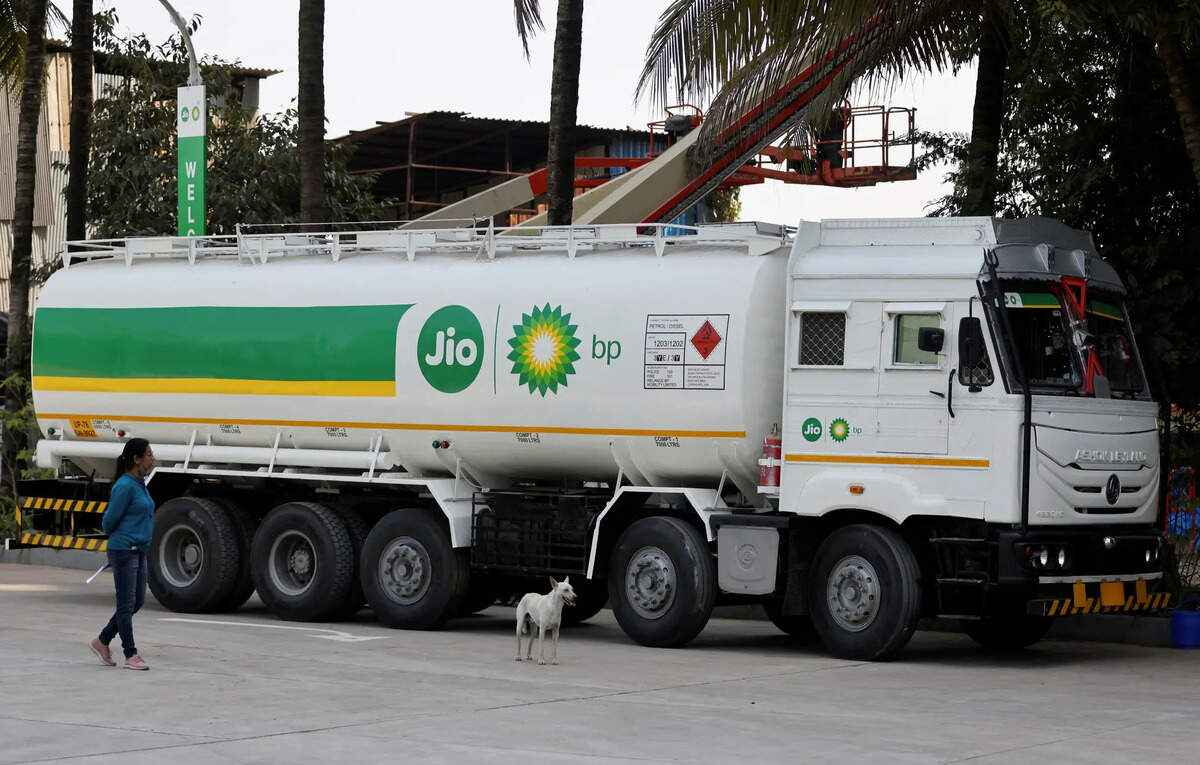
Reliance Industries, through its retailing joint venture Jio-BP with UK energy major BP, is at the forefront of this domestic expansion. The Jio-BP network currently boasts 1,916 retail outlets across India, strategically positioning it to capitalize on the country’s burgeoning demand. Reliance reported impressive growth in its domestic sales volumes for the quarter ending March, with diesel sales surging by 35 percent and gasoline sales increasing by 24 percent year-on-year. While specific volumes were not disclosed, these growth rates underscore the success of their refined products penetrating the local market.
Looking ahead, Jio-BP is committed to sustaining this growth trajectory, with plans to invest approximately 10 billion rupees (equivalent to $117 million) annually in expanding its local footprint. This significant capital allocation highlights the long-term strategic importance Reliance places on solidifying its position within India’s domestic fuel retail sector. For investors, this shift by major private players into the Indian retail market signifies a robust growth opportunity in a sector underpinned by strong domestic demand fundamentals, potentially offering attractive returns in a globally challenging refining environment.


