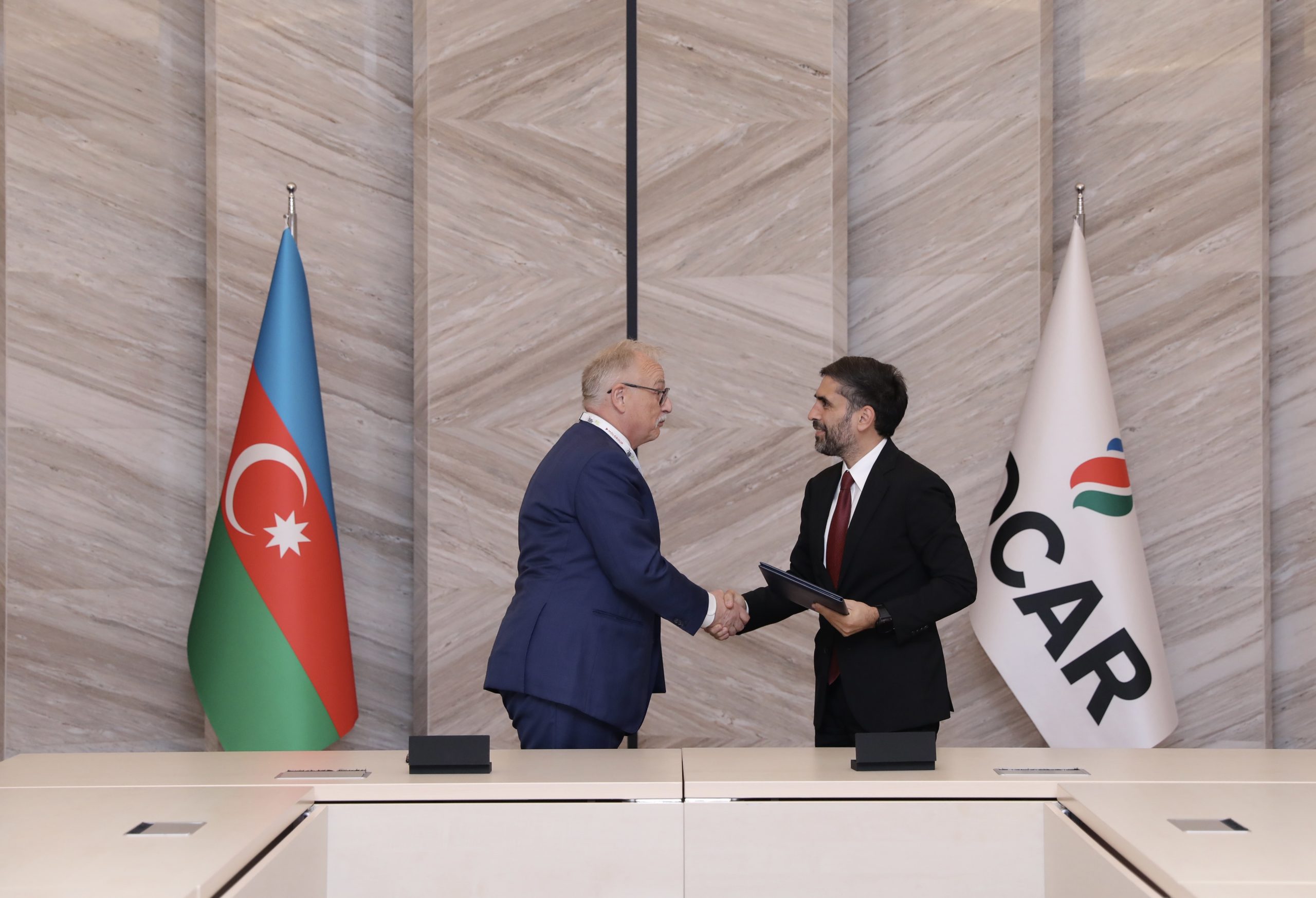
The recent agreement between MOL Group and SOCAR for an exploration, development, and production sharing agreement (EDPSA) in Azerbaijan’s Shamakhi-Gobustan region marks a significant strategic move in the evolving global energy landscape. This isn’t merely a regional upstream deal; it represents a calculated expansion of MOL’s international portfolio, a deepening of its critical partnership with SOCAR, and a tangible step towards enhancing Central Europe’s energy security. For investors, this development signals continued confidence in Azerbaijan’s hydrocarbon potential and MOL’s commitment to long-term value creation through diversified supply channels and strategic partnerships.
MOL’s Calculated Bet on Azerbaijani Upstream
This new EDPSA builds directly on a Memorandum of Understanding signed last September and solidifies MOL’s strategic presence in the Caspian region. The terms outline MOL as the operator with a 65% share, alongside SOCAR’s 35%. This operational control and significant stake underscore the Hungarian energy giant’s confidence in the Shamakhi-Gobustan area’s prospectivity. MOL is no stranger to Azerbaijan; it entered the market in 2020 by acquiring a 9.57% stake in the super-giant Azeri-Chirag-Gunashli (ACG) oil field and an effective 8.9% interest in the Baku-Tbilisi-Ceyhan (BTC) pipeline. These existing assets already contribute substantially to MOL’s global footprint, representing 14% of its total production and 25% of its total reserves as of 2024. The stated intention to potentially ship any oil produced from this new project to MOL Group’s core region directly addresses the critical imperative of securing Central Europe’s energy supply, offering strategic flexibility beyond pure market sales.
Navigating Current Market Dynamics and Investor Sentiment
The progression of this deal unfolds against a backdrop of dynamic crude oil markets. As of today, Brent crude trades at $96.08, marking a 1.36% gain within a day range of $91-$96.89. WTI crude follows suit, priced at $92.70 and up 1.56% for the day. This current uptick provides a favorable immediate environment, though it’s important to note the recent volatility; Brent experienced a nearly 9% dip over the past two weeks, falling from $102.22 on March 25th to $93.22 on April 14th before today’s rebound. Such fluctuations inherently influence the valuation and perceived risk of new upstream projects. Our proprietary investor intent data clearly indicates that market participants are keenly focused on the macro environment, with a significant number of inquiries centered around “base-case Brent price forecasts for next quarter” and the “consensus 2026 Brent forecast.” This highlights the critical importance of a stable and robust long-term price outlook for investors evaluating the capital commitment required for exploration and development ventures like the Shamakhi-Gobustan project.
The Road Ahead: Approvals and Upcoming Market Catalysts
While the signing of key terms is a significant milestone, investors must recognize that the finalization of a fully termed EDPSA remains “subject to further negotiations and regulatory approvals.” This means there are still hurdles to clear before the project moves into full-scale implementation. The timeline for these approvals will be critical for assessing the project’s momentum. Meanwhile, the broader energy market will offer several immediate catalysts that could influence the investment climate for such upstream ventures. Investors should keenly monitor the upcoming OPEC+ Joint Ministerial Monitoring Committee (JMMC) meeting on April 18th, followed by the full OPEC+ Ministerial Meeting on April 20th. These gatherings often dictate global supply strategy and could significantly impact crude price trajectories. Additionally, weekly data releases such as the API Weekly Crude Inventory reports on April 21st and 28th, and the EIA Weekly Petroleum Status Reports on April 22nd and 29th, will provide ongoing insights into demand-supply balances and inventory levels, offering further short-term price signals relevant to MOL’s new Azerbaijani commitment.
Strategic Implications for European Energy Security
MOL Group Chairman and CEO Zsolt Hernádi explicitly stated the project’s potential to be “an important puzzle to securing Central-Europe’s energy supply.” This emphasis is not to be underestimated. In an era where energy independence and diversification of supply sources are paramount for European nations, direct access to Caspian resources, with the flexibility to transport crude to MOL’s refining infrastructure, offers a strategic advantage. This deal underscores a broader trend of European energy companies seeking to bolster their own supply chains and reduce reliance on external, potentially volatile, sources. For investors, this layer of geopolitical significance adds a premium to the project’s long-term strategic value, potentially insulating it from some of the purely commercial pressures. MOL’s continued investment in Azerbaijan, therefore, should be viewed as a calculated, long-term play that aligns both commercial interests with critical national and regional energy security objectives.


