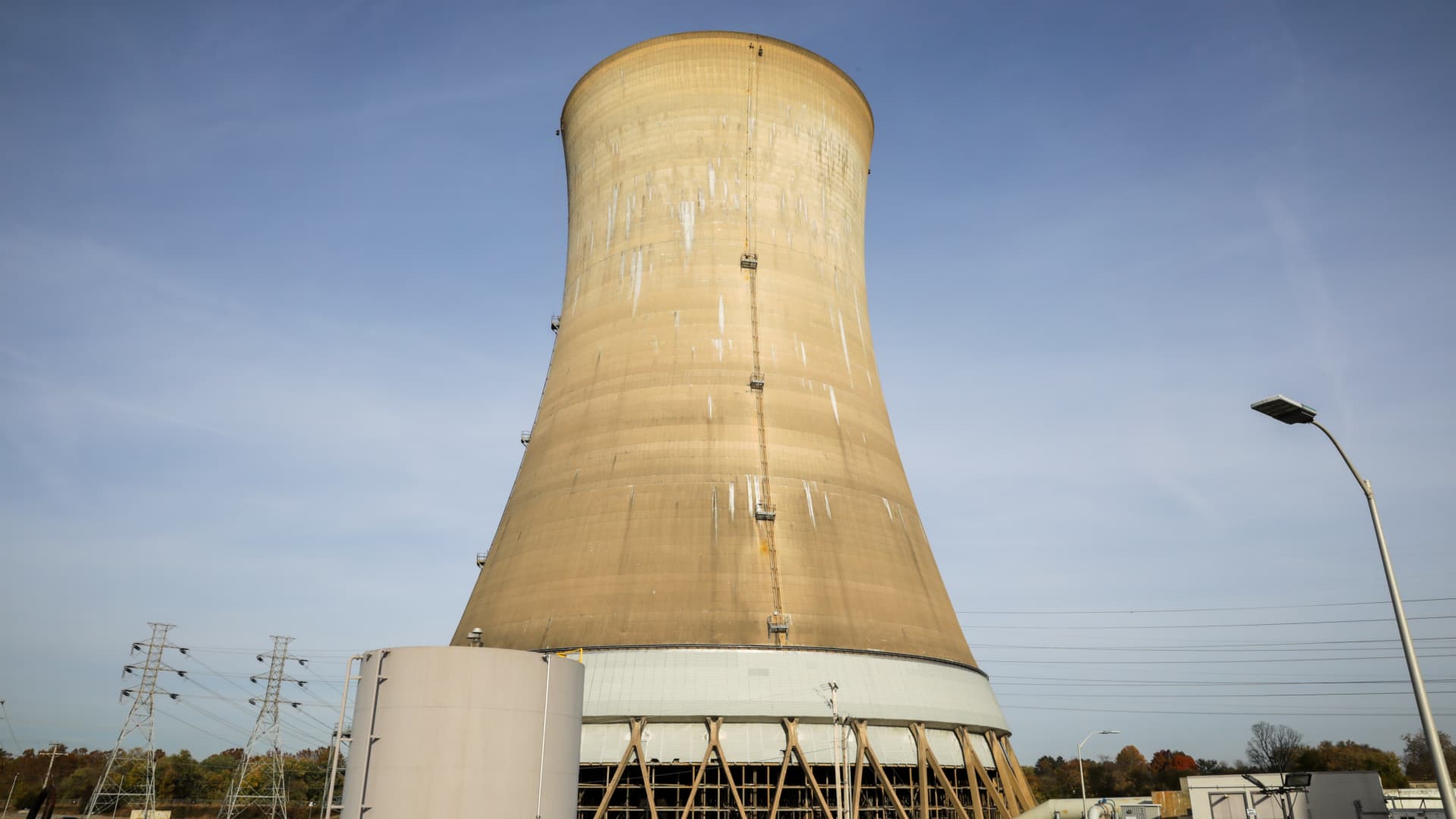
The energy investment landscape is rarely straightforward, and recent developments surrounding Constellation Energy provide a stark reminder of how rapidly market perceptions can pivot. What appeared to be a landmark deal for nuclear power with tech giant Meta, initially sparking an intraday surge, ultimately led to a significant analyst downgrade. This event not only recalibrates expectations for clean energy premiums but also underscores the inherent complexities and nuanced valuations within the broader energy sector. As investors navigate a market grappling with both a rapidly evolving energy transition and persistent volatility in traditional oil and gas, understanding these subtle shifts becomes paramount for strategic positioning.
The Nuclear Power Premium Disconnect
Constellation Energy’s recent agreement to supply Meta with approximately 1.1 gigawatts of power from its Clinton Clean Energy Center for a two-decade period, commencing in 2027, initially sent ripples of excitement through the market. Shares saw an intraday climb of up to 9%, reflecting a bullish outlook on long-term, zero-carbon power contracts. However, the enthusiasm quickly waned as details, though not officially disclosed, led analysts to estimate the price point for this electricity at a modest $75 to $90 per megawatt-hour. This valuation proved to be a critical turning point.
Investment analysts quickly highlighted that this estimated price offers little to no premium for low-carbon power, aligning instead with the cost of output from new natural gas plants. For a sector that Wall Street had expected to command a significant premium for its reliable, emissions-free generation, this was a disappointing signal. The immediate consequence was a downgrade of Constellation to a neutral, high-risk rating, with a new price target implying less than 2% upside from its closing price of $313.03 per share on the day of the announcement. This re-evaluation by analysts suggests that future power purchase agreements for other nuclear assets, such as Constellation’s Dresden, Nine Mile Point Unit 1, and Ginna plants, are unlikely to provide the “above-market windfall” many had anticipated, fundamentally altering the perceived value proposition of long-term nuclear energy contracts.
Revisiting Investor Expectations for Clean Energy Returns
The market’s initial reaction to the Meta deal, followed by the swift downgrade, reflects a profound recalibration of investor expectations regarding returns from clean energy assets, particularly nuclear. For months, the prevailing sentiment among investors was that tech behemoths, with their insatiable demand for reliable, carbon-free electricity to power burgeoning data centers, would be willing to pay a substantial premium for nuclear output. This deal, however, suggests a more pragmatic approach to pricing, where the cost of carbon-free power is being benchmarked against conventional, albeit less green, alternatives like natural gas.
This development is particularly relevant for investors who consistently inquire about the long-term outlook for energy companies and the potential for new revenue streams. Our reader intent data shows a strong interest in understanding how various energy producers, from traditional oil and gas giants like Repsol to independent power producers, will perform in this evolving landscape. The Constellation scenario indicates that even companies strategically positioned in the clean energy transition might face tougher pricing realities than previously assumed. This puts pressure on the perceived “green premium” and forces a re-evaluation of growth catalysts for other independent power producers, such as NRG Energy, Vistra, and Talen Energy, which also stand to benefit from data center demand but may now do so at more modest margins.
Navigating Market Volatility: A Tale of Two Energy Markets
While the nuclear power sector grapples with the re-pricing of long-term contracts, the broader oil and gas market continues its own volatile dance, underscoring a dual reality for energy investors. As of today, Brent crude trades at $90.38 per barrel, marking a significant 9.07% decline within the day, with its range fluctuating from $86.08 to $98.97. Similarly, WTI crude has seen a sharp drop, sitting at $82.59, down 9.41% for the session, oscillating between $78.97 and $90.34. This immediate downturn follows a broader trend; over the past two weeks, Brent crude has plummeted from $112.78 on March 30th to $91.87 yesterday, representing an 18.5% correction.
This dramatic price action in the traditional crude markets stands in stark contrast to the more structural re-evaluation occurring in the long-term power contracting space. Investors are actively seeking clarity, with questions frequently surfacing regarding “what do you predict the price of oil per barrel will be by end of 2026?” and “What are OPEC+ current production quotas?” The significant drop in crude prices, alongside a 5.18% decrease in gasoline to $2.93, highlights the persistent sensitivity of the oil market to geopolitical shifts, supply-demand balances, and speculative trading. This juxtaposition reveals that while the energy transition creates new investment avenues, the foundational dynamics of the hydrocarbon economy remain profoundly impactful on portfolio performance, demanding a highly adaptable investment strategy that accounts for both long-term shifts and immediate market shocks.
The Road Ahead: Upcoming Catalysts and Strategic Shifts
For investors navigating these complex energy markets, the immediate horizon is packed with critical events that will undoubtedly shape price discovery and sentiment. Our proprietary event calendar highlights key dates in the coming days that demand close attention. Most notably, the OPEC+ Joint Ministerial Monitoring Committee (JMMC) meeting on April 18th, followed by the full OPEC+ Ministerial Meeting on April 19th, will be pivotal. Decisions regarding production quotas will directly influence global crude supply and, consequently, price stability. Given the recent steep decline in crude prices, any signals from OPEC+ regarding supply adjustments will be scrutinized intensely by market participants, many of whom are keenly interested in “What are OPEC+ current production quotas?” and their future trajectory.
Beyond OPEC+, weekly data releases from the API and EIA on crude inventories (April 21st, 22nd, 28th, 29th) will provide crucial insights into demand trends and storage levels, acting as a barometer for market tightness or looseness. Furthermore, the Baker Hughes Rig Count on April 24th and May 1st will offer a snapshot of upstream activity and potential future supply. These upcoming catalysts will play a significant role in determining whether the recent crude price correction holds or if a rebound is imminent. For investors, the Constellation downgrade serves as a reminder that even as the energy sector diversifies, a keen eye on traditional market fundamentals and key calendar events remains essential for informed decision-making and risk management.