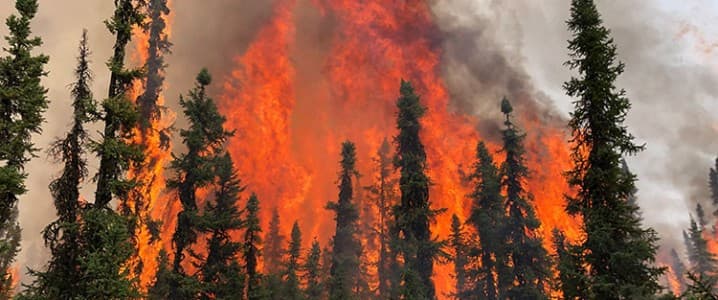
The Alberta Wildfires: A Sudden Jolt to Tightening Global Crude Markets
Canada’s Alberta province is once again at the epicenter of a major energy market disruption, as an early-season wildfire crisis has forced the shutdown of an estimated 1.3 million barrels per day of oil production. This represents over 50% of the province’s total output, sending immediate ripple effects across global energy markets already grappling with supply constraints. The situation, reminiscent of the devastating 2016 fires, has triggered evacuations in key production hubs like Fort McMurray and threatens critical infrastructure, including steam-assisted gravity drainage (SAGD) facilities and vital pipeline corridors. For investors, this unexpected supply shock demands immediate attention, prompting a re-evaluation of short-term crude price trajectories and the underlying vulnerabilities within the heavy crude supply chain.
Immediate Market Response and Price Action Reversal
The swift and substantial loss of Alberta’s oil production has ignited a sharp market reaction. As of today, Brent crude is trading at $96.23 per barrel, marking a robust 1.52% increase within the day’s range of $91 to $96.38. Similarly, West Texas Intermediate (WTI) crude has climbed to $92.61, up 1.46%, moving within its daily range of $86.96 to $92.82. This upward swing stands in stark contrast to the preceding fortnight, which saw Brent decline by nearly 9% from $102.22 on March 25th to $93.22 just yesterday. The sudden supply disruption from Alberta has clearly injected a significant bullish impulse, reversing recent bearish sentiment and highlighting the market’s acute sensitivity to physical supply shocks. Gasoline prices have also edged higher, now at $2.99, up 0.67% on the day, indicating broader energy commodity price sensitivity. The immediate shutdown of operations by key producers like Canadian Natural Resources and Cenovus Energy, which have temporarily halted multiple steam-driven projects and evacuated non-essential personnel, underscores the gravity of the situation and its direct impact on available crude volumes.
Structural Fragility and the Heavy Crude Supply Squeeze
The timing of Alberta’s wildfire crisis exacerbates an already delicate balance in the global heavy crude market. Canada is a primary global supplier of heavy crude, a grade crucial for many refiners. This segment of the market was already tightening due to several factors: seasonal maintenance at Alberta’s oil sands projects had recently reduced output, and U.S. sanctions continue to choke off additional heavy crude barrels from Venezuela, one of the few other producers with a comparable grade. The unexpected loss of 1.3 million barrels per day from Alberta creates a significant vacuum, particularly as demand for heavy blends typically picks up. Experts note that despite lessons learned and improved response plans since the catastrophic 2016 wildfires, the “structural fragility” of Alberta’s wildfire preparedness remains a critical vulnerability. This underscores that while operational resilience has improved, the sheer scale and unpredictability of natural disasters can still overwhelm even advanced mitigation strategies, leaving the market exposed to sudden, large-scale supply disruptions.
Navigating the Forward Outlook Amidst Upcoming Catalysts
The duration of this supply disruption is now a paramount concern for investors. Unusually dry conditions are forecast to persist through the week, indicating that fire crews will remain stretched across more than 100 active burn sites. Looking ahead, investors must weigh the immediate impact against a backdrop of critical upcoming energy events that could further shape market sentiment. The Joint Ministerial Monitoring Committee (JMMC) of OPEC+ convenes on April 18th, followed by the full Ministerial Meeting on April 20th. While these meetings primarily focus on existing production quotas and adherence, any prolonged disruption from Canada could add pressure to their supply strategy discussions, potentially influencing future output decisions. Furthermore, the market will closely scrutinize the weekly API and EIA crude inventory reports, scheduled for April 21st/22nd and April 28th/29th, respectively. These reports will provide crucial, granular insights into how global inventories are absorbing this unexpected supply hit, offering a clearer picture of the magnitude and duration of the market tightening. The Baker Hughes Rig Count reports on April 17th and April 24th will also offer insights into North American production activity, though the immediate focus remains on the wildfire-induced outages.
Investor Sentiment and Strategic Positioning Amidst Volatility
Our proprietary reader intent data reveals a keen investor focus on “building a base-case Brent price forecast for next quarter” and understanding the “consensus 2026 Brent forecast.” The Alberta wildfires introduce significant volatility, complicating these projections considerably. While some market participants may view this as a transient event, the concentrated nature of heavy crude supply means even temporary outages have disproportionate impacts on specific refining sectors and, by extension, global crude benchmarks. This event underscores the need for investors to factor in geopolitical and environmental risks more prominently into their energy sector analyses. Investors should closely monitor daily updates on fire containment, assessing the potential for sustained upward price pressure, particularly if the fires persist into the peak summer demand season or if damage to critical infrastructure requires extensive, long-term repairs. This situation reinforces the argument for diversified energy portfolios, capable of weathering regional supply shocks while capitalizing on the potential for price spikes in a structurally tight market.


