Aker BP Strikes Oil Near Skarv, Bolstering Norwegian Sea Reserves
Aker BP ASA and its consortium partners have announced a significant oil discovery adjacent to the operational Skarv field in the Norwegian Sea. Preliminary assessments indicate recoverable volumes of 3 to 7 million barrels of oil equivalent (boe) from a primary target, reinforcing the company’s growth trajectory and strengthening its asset base in a key production hub. This successful exploration effort adds valuable reserves, promising future production upside for investors.
The discovery emerged from wells 6507/5-13 S and 6507/5-13 A, strategically drilled approximately six kilometers (3.73 miles) southwest of the Skarv floating production, storage, and offloading (FPSO) vessel. These wells fall within production license 212, an integral part of the Aker BP-operated Skarv Unit area, underscoring the company’s focused exploration strategy around existing infrastructure.
Detailed Insights into the Garn Formation Discovery
Well 6507/5-13 S specifically targeted hydrocarbon potential within the reservoir rocks of the Fangst and Båt groups. This endeavor yielded a notable 14-meter oil column within the Garn Formation, characterized by 43 meters of sandstone with moderate reservoir quality. The oil/water contact was precisely identified at 3702 meters below sea level. While other formations within the Fangst and Båt groups proved to be water-bearing, the Garn Formation discovery stands out as the primary value driver from this campaign.
Initial evaluations for the Garn Formation alone project recoverable oil equivalent volumes between 0.48 and 1.11 million standard cubic meters (MMscm), directly translating to the impressive 3-7 million barrels of recoverable oil equivalent. This range provides a clear indication of the substantial reserve addition, offering a tangible boost to Aker BP’s portfolio and its partners.
Additional Early Cretaceous Find and Delineation Efforts
Beyond the Garn Formation, well 6507/5-13 S also identified hydrocarbons from the Early Cretaceous period (Apt/Alba) across multiple sandstone layers. These deeper formations exhibited moderate reservoir quality, with an estimated oil/water contact at 3414 meters below sea level. This secondary find is conservatively estimated to hold 0.16 to 0.32 MMscm of recoverable oil equivalent, adding another 1 to 2 million barrels of recoverable boe to the overall discovery.
Following this dual discovery, well 6507/5-13 A was drilled with the objective of delineating the Early Cretaceous find. While this delineation well confirmed the presence of a moderate quality reservoir, it proved to be saturated with water. Despite this, the combined volumes from both discoveries represent a significant win for Aker BP and its partners, demonstrating continued exploration success in a mature basin.
Strategic Tie-Back Potential and Operational Efficiency
A crucial financial implication for investors is the announced intention to evaluate tying back the Garn Formation discovery to the existing Skarv FPSO. This strategy is highly advantageous, as it leverages established infrastructure, significantly reducing development costs, minimizing project lead times, and accelerating the path to first oil. Connecting new reserves to an operational FPSO enhances overall field life and maximizes economic recovery from the Skarv Unit area, delivering superior capital efficiency for shareholders.
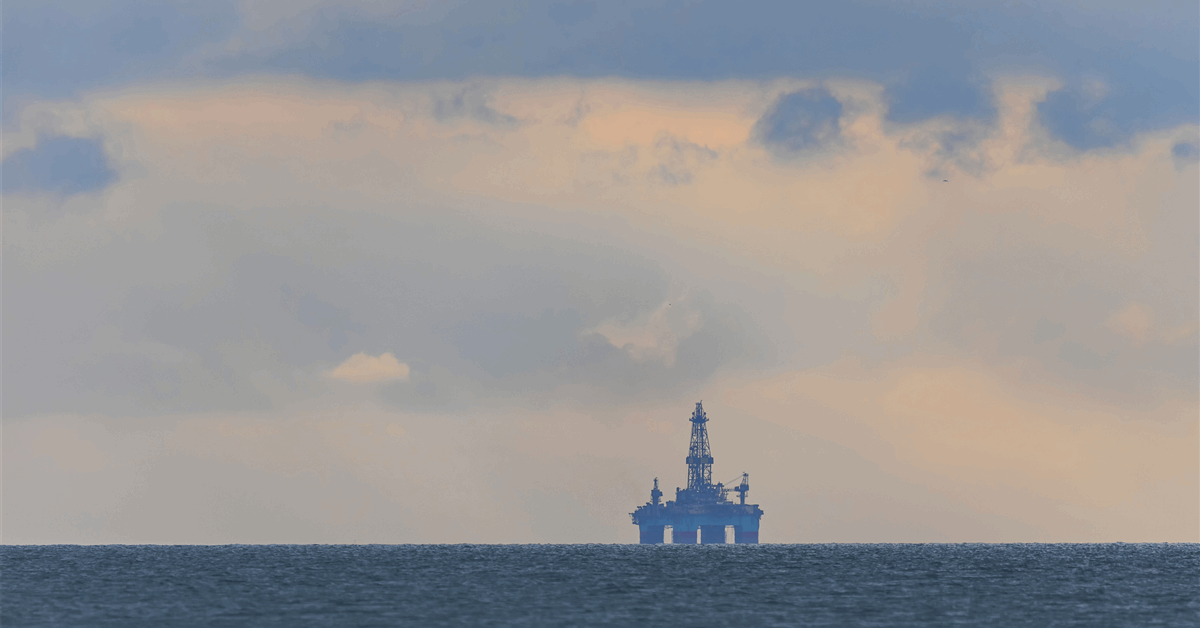
The wells, marking the ninth and tenth exploration efforts within production license 212, have now been permanently plugged, a standard procedure following successful evaluation. Drilling operations were efficiently executed by Saipem SpA’s Scarabeo 8 exploration rig, highlighting the robust capabilities deployed in this technically demanding region.
Partnership Structure and Investment Stakes
The financial success and future development of these discoveries will be shared among a strong consortium of energy companies. In production license 212, Fornebu, Norway-based Aker BP operates with a 30 percent working interest. Majority state-owned Equinor ASA holds an equal 30 percent stake, while London-based Harbour Energy PLC commands 25 percent. Poland’s primarily state-owned ORLEN SA rounds out the partnership with the remaining 15 percent.
Within the broader Skarv Unit area, where Aker BP also serves as the operator, the ownership structure sees Aker BP holding 23.84 percent. Equinor maintains the largest share at 36.17 percent, while Harbour Energy’s interest stands at 28.08 percent. ORLEN holds 11.92 percent in this larger operational unit. This diverse partnership brings together significant capital and operational expertise, enhancing the robustness of the development plans for the newly discovered resources.
Outlook for Oil and Gas Investors
This latest discovery by Aker BP underscores the enduring potential of the Norwegian Continental Shelf (NCS) for profitable oil and gas investments. For shareholders, successful exploration near existing infrastructure translates directly into enhanced reserve replacement ratios, improved asset utilization, and potential for sustained cash flow generation. Aker BP continues to demonstrate its prowess as a leading independent E&P company, consistently delivering exploration successes that add tangible value.
The estimated 4-9 million boe in new recoverable resources, particularly with the prospect of an efficient tie-back to the Skarv FPSO, positions Aker BP and its partners favorably for continued production growth and attractive returns. Investors tracking companies with strong exploration track records and a focus on operational synergies will find this development particularly encouraging, affirming the long-term investment thesis in these key players within the global energy landscape.


