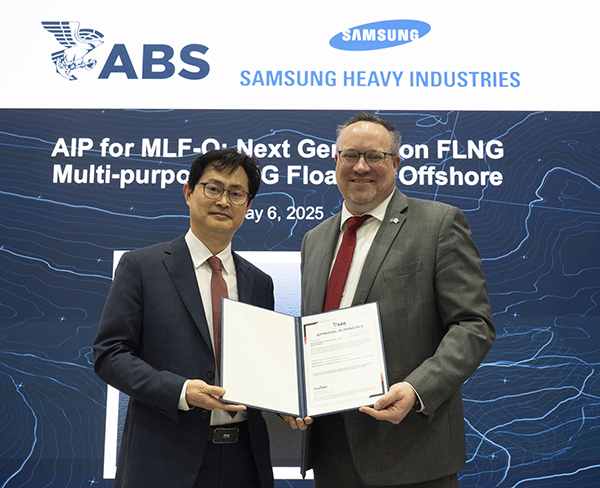
The global energy landscape continues to evolve at a rapid pace, demanding innovative solutions for resource monetization and energy security. A significant development on this front comes from Samsung Heavy Industries (SHI), which recently secured an Approval in Principle (AIP) from ABS for its multi-purpose liquefied natural gas (LNG) floating facility designed for deepwater applications, dubbed MLF-O. This isn’t merely a technical milestone; it represents a pivotal step for investors eyeing the burgeoning deepwater gas sector, offering enhanced flexibility, cost-efficiency, and accelerated project delivery compared to traditional onshore liquefaction plants. As energy markets grapple with volatility and geopolitical shifts, the ability to unlock vast offshore gas reserves quickly and economically becomes a powerful value proposition, underscoring the strategic importance of advanced floating LNG (FLNG) technology.
The Strategic Edge of Deepwater Floating LNG
SHI’s MLF-O design is a testament to the ongoing innovation in offshore energy infrastructure. Engineered specifically for challenging deepwater environments with wave heights up to nine meters, this next-generation facility promises to revolutionize how remote gas fields are developed. A key advantage lies in its expedited delivery schedule and inherent cost-effectiveness when benchmarked against the extensive timelines and capital outlays associated with constructing land-based LNG facilities. The design’s thoughtful architecture includes a two-row cargo hold configuration, ingeniously minimizing internal sloshing effects – a critical safety and operational consideration for floating assets. Furthermore, the standardization of the LNG cargo hold and hull allows for significant scalability, enabling capacity to range from 180,000 to an impressive 220,000 cubic meters. This flexibility is crucial for adapting to various project sizes and market demands, making the MLF-O an attractive option for developers looking to maximize returns from their deepwater gas assets. This marks SHI’s second standard FLNG model, building on the success of the MLF-N for nearshore projects, signaling a clear strategic focus on capturing the growing global demand for efficient LNG solutions.
Navigating Market Volatility: LNG as a Long-Term Investment
In the current market climate, strategic diversification is paramount for energy investors. As of today, Brent crude trades at $90.38 per barrel, marking a significant 9.07% decline from its opening, with WTI crude similarly down 9.41% at $82.59. This sharp intraday drop extends a broader trend, with Brent having shed approximately $20.91, or 18.5%, over the past fourteen days alone, falling from $112.78 on March 30th to $91.87 just yesterday. Such volatility in the crude market often prompts investors to seek stability and long-term growth opportunities elsewhere within the energy complex. This is where investments in advanced LNG infrastructure, like SHI’s MLF-O, gain considerable traction. While crude prices may fluctuate due to short-term supply-demand imbalances or geopolitical events, the fundamental drivers for natural gas demand remain robust. The global push for energy transition, coupled with a persistent need for energy security and diversification away from coal, positions LNG as a critical bridge fuel and a cornerstone of future energy mixes. Investing in cost-effective, rapidly deployable deepwater FLNG solutions allows players to capitalize on this enduring demand, offering a potential hedge against the more pronounced swings seen in crude oil markets.
Investor Focus: Deepwater Gas and the 2026 Outlook
Our proprietary reader intent data reveals a keen interest among investors regarding the future trajectory of energy markets. Many are actively inquiring about oil price predictions for the end of 2026 and seeking clarity on OPEC+’s current production quotas. These questions underscore a focus on macro supply-demand dynamics and the long-term outlook for hydrocarbons. In this context, the development of deepwater gas resources via advanced FLNG technology like the MLF-O becomes particularly relevant. While OPEC+ decisions directly impact crude supply, their broader influence shapes overall confidence in upstream investments across the energy sector. Even if crude prices remain volatile, the long-term demand forecasts for natural gas paint a more stable picture, supported by global energy security imperatives and the drive to reduce emissions from heavier fossil fuels. Deepwater fields, often characterized by vast, untapped reserves, can be brought online more economically and swiftly with solutions like MLF-O, diversifying global gas supply and enhancing market resilience. This aligns with SHI’s stated ambition to maintain its leadership in the FLNG market, signaling a commitment to a segment that promises sustained growth and strategic value for years to come.
Upcoming Events and Their Impact on LNG Investment Decisions
The energy calendar over the next two weeks is packed with events that will undoubtedly influence market sentiment and investment strategies across the oil and gas spectrum, including the LNG sector. The upcoming OPEC+ Joint Ministerial Monitoring Committee (JMMC) and full Ministerial meetings scheduled for April 18th and 19th, respectively, are particularly critical. Any decisions regarding crude production levels will send ripples through the entire energy complex, impacting overall investment appetite. Furthermore, key inventory data releases, such as the API Weekly Crude Inventory reports on April 21st and 28th, and the EIA Weekly Petroleum Status Reports on April 22nd and 29th, will offer crucial insights into current supply-demand balances. These are complemented by the Baker Hughes Rig Count on April 24th and May 1st, which provides a forward-looking indicator of drilling activity and future supply. While these events primarily focus on crude, their collective impact on the broader energy market sentiment cannot be overstated. A robust or stabilizing crude market might encourage broader upstream capital deployment, including into gas exploration and development. Conversely, continued weakness could intensify the focus on highly efficient, cost-effective gas monetization projects such as the MLF-O, as investors prioritize projects with stronger fundamental demand drivers and quicker paths to production. For investors, monitoring these signals will be key to understanding the evolving risk-reward profile of deepwater LNG investments.