Greenland’s Emerging Role: Navigating Arctic Energy and Geopolitical Tides
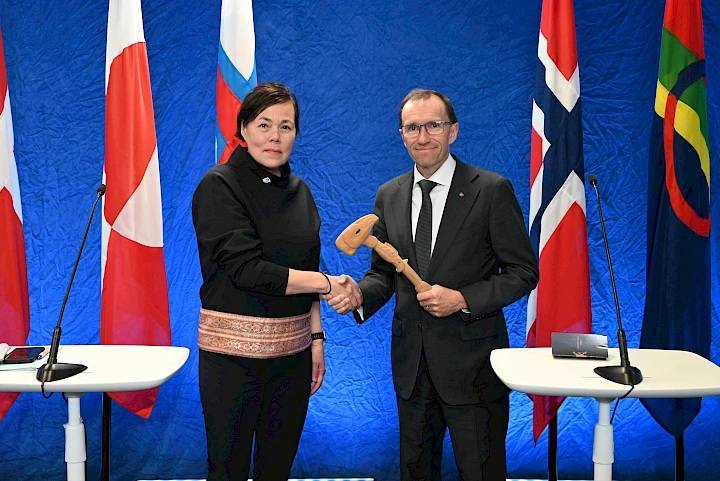
The strategic landscape of the Arctic is undergoing a profound transformation, with Greenland rapidly ascending as a critical player in global energy security and geopolitical maneuvering. As the Kingdom of Denmark prepares to assume the chairmanship of the Arctic Council on May 12, 2025, the spotlight intensifies on Greenland’s Foreign Minister, Vivian Motzfeldt, who is set to spearhead the council’s agenda. This move signals a significant internal power shift within the Danish Realm, underscoring Greenland’s burgeoning diplomatic influence on the world stage and its profound implications for resource development and investment.
The Arctic Council: A New Geopolitical Battleground
Once a beacon of international cooperation focused on scientific research and Indigenous rights, the Arctic Council now finds itself grappling with unprecedented geopolitical headwinds. The long-standing framework of collaboration has fractured, largely due to Russia’s ongoing conflict in Ukraine, which has reshaped diplomatic engagement across the region. Simultaneously, the United States, under potential future leadership, continues to view Greenland as a vital strategic asset, while China intensifies its footprint in Arctic infrastructure and resource exploration. This confluence of factors means the Arctic is no longer an insulated zone of consensus but a burgeoning frontier of global rivalry, presenting both formidable challenges and potential high-stakes opportunities for the energy sector.
Norway’s preceding tenure focused on maintaining stability amidst growing tensions. Denmark, and by direct extension Greenland, now inherits a far more complex mandate: to not merely preserve the Council’s structure but to redefine its relevance in an era where the Arctic’s strategic importance is undeniable. For investors monitoring the energy and mineral sectors, understanding these shifting dynamics is paramount, as they directly impact the risk-reward calculus of Arctic resource projects.
Greenland’s Quest for Autonomy and Economic Independence
Denmark’s claim to Arctic prominence is inextricably linked to Greenland’s inclusion within its realm. Without Greenland, Denmark would effectively lose its status among the world’s Arctic powers, a reality that has fueled decades of intricate and often tense political negotiations between Copenhagen and Nuuk. Greenland’s current governance framework, established by the 2009 Self-Government Act, grants it extensive autonomy over domestic affairs, crucially including the legal right to declare full independence. However, Denmark retains control over foreign policy, defense, and monetary matters, creating a delicate balance of power.
The path to full sovereignty for Greenland remains complex, primarily due to its economic reliance on Denmark, particularly through a substantial annual block grant. While immediate independence appears unlikely given this financial dependency, the underlying political aspiration for greater self-determination persists. This ambition is a key driver behind Greenland’s push for resource development, as securing independent revenue streams is essential for future economic viability.
A significant milestone in Greenland’s diplomatic ascent occurred in 2021, when agreements with the Faroe Islands and Denmark formally designated Greenland to speak first at Arctic Council meetings and serve as the official signatory on council declarations. This move signifies more than just decentralization; it represents a profound decolonial shift in Arctic diplomacy, enhancing Greenland’s leverage in discussions pertinent to its vast, untapped energy and mineral wealth.
The Resource Imperative: Unlocking Greenland’s Subsurface Wealth
For Greenland, achieving true economic independence hinges on diversifying its revenue streams beyond the Danish block grant. Financial analysts estimate that the nation would require at least 24 large-scale mining projects to fully offset its reliance on Danish funding—a formidable undertaking in the near term. While Greenland boasts rich mineral deposits, including rare earths, uranium, and other critical metals essential for the global energy transition, political sensitivities and stringent environmental concerns significantly complicate extraction efforts. These factors directly influence investment timelines and project feasibility in the region.
The potential for a viable oil and gas sector has long tantalized policymakers and investors. Despite extensive exploration efforts, commercially viable oil production has yet to materialize, leaving a substantial portion of Greenland’s offshore potential unexplored. However, the region’s geological prospects remain compelling, and a breakthrough in exploration could radically alter Greenland’s economic trajectory, drawing considerable interest from major energy companies seeking new frontiers. Investors are keenly watching for any advancements in exploration technology or shifts in regulatory frameworks that could unlock these hydrocarbon resources.
Greenland’s historical frustrations over its representation and resource management have occasionally led to boycotts of Arctic Council meetings and diplomatic protests. Disputes over critical issues such as uranium exports, whaling quotas, and international trade bans highlight the persistent tension between national aspirations and international obligations, particularly when they intersect with resource exploitation and environmental stewardship. These past grievances underscore Greenland’s determination to assert greater control over its natural assets, which include significant potential for offshore oil and gas reserves, as well as crucial rare earth elements.
Investment Outlook and Geopolitical Implications
The Arctic’s transformation into a zone of heightened global competition means that investment decisions in Greenland’s energy and mineral sectors carry significant geopolitical weight. The presence of major powers like the United States and China in the region, coupled with Russia’s assertive posture, creates a complex operating environment for companies. Investors must navigate not only geological and technical risks but also evolving regulatory landscapes, Indigenous rights concerns, and the broader strategic interests of competing nations.
For oil and gas investors, Greenland represents one of the planet’s last true frontier exploration regions. While past endeavors have not yielded commercial success, the sheer scale of potential resources, combined with Greenland’s increasing autonomy and desire for economic self-sufficiency, means that future exploration rounds or technological advancements could reignite interest. The strategic importance of the Arctic for shipping routes, energy security, and critical minerals ensures that Greenland will remain a focal point for global resource strategies. Companies capable of navigating this intricate web of geopolitics, environmental stewardship, and community engagement may ultimately unlock substantial value in Greenland’s vast, largely untapped subsurface wealth.