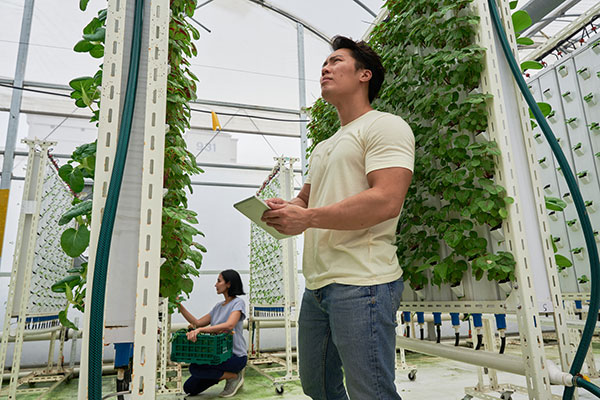
In a striking pivot from traditional logistics, the very same robotic systems that optimize e-commerce warehouses are now revolutionizing agricultural production. Just outside Phoenix, Arizona, a cutting-edge facility isn’t sorting packages; it’s cultivating fresh produce, signaling a profound shift in industrial resource allocation and, critically, energy demand patterns. For astute investors in the oil and gas sector, this evolution in controlled environment agriculture (CEA) represents a significant, yet often overlooked, new frontier for electricity consumption.
Automated Agriculture: A New Industrial Energy Load
The innovation stems from a collaboration between AutoStore, a leader in cube-based storage automation, and ag-tech firm OnePointOne, resulting in Opollo Farm. This fully automated indoor farming system leverages AutoStore’s established robotic grid architecture, but instead of storing consumer goods, its bins nurture leafy greens. These rapidly grown crops are now making their way to select Whole Foods Market stores across Arizona, demonstrating a viable commercial model for hyper-local food production.
The operational mechanics are a marvel of efficiency: robots meticulously move plants through the system, precisely adjusting their exposure to water, light, and nutrients. This optimized environment dramatically accelerates growth cycles, allowing crops to reach harvest readiness in a mere 15 days – roughly half the time required by conventional farming methods. While these efficiencies are celebrated for their speed and resource savings in water and land, the underlying energy footprint for such intensive automation and climate control is substantial and merits close scrutiny from an energy market perspective.
Decoding the Energy Equation of Vertical Farms
The core advantage of Opollo Farm lies in its inherent flexibility and modularity. Its cube-based design allows for seamless integration into existing industrial warehouses or previously underutilized urban spaces, drastically shortening the supply chain from farm to retail. Furthermore, the closed-loop hydroponic system boasts impressive water conservation, utilizing up to 95% less water than traditional agriculture, and completely eliminating the need for pesticides. These are undeniable environmental benefits, yet they come with a distinct trade-off in terms of electrical power consumption.
Every aspect of this advanced farming system—from the precise environmental controls for temperature and humidity, to the powerful LED lighting arrays that mimic sunlight, the sophisticated pumping systems for nutrient-rich water, and the constant movement of automated robots—demands a reliable and significant supply of electricity. While reducing water and land footprints, these facilities are essentially high-tech manufacturing plants for food, and like any industrial operation, their scaling will translate directly into increased demand for grid power.
Scalability and Grid Impact: A Growing Demand Driver
Industry leaders are quick to highlight the transformative potential. Chris Petroulakis, a Category Merchant for Produce at Whole Foods Market, emphasized how “advanced technology can revolutionize local agriculture,” enabling faster delivery of “high-quality, locally grown produce.” Similarly, Sam Bertram, CEO of OnePointOne, pointed to the system’s ability to “grow food almost anywhere using a fraction of those resources” compared to traditional farming’s “vast amounts of water and land.” Parth Joshi, Chief Product Officer at AutoStore, underscored that Opollo Farm exemplifies “what’s possible when proven automation meets global challenges like food supply resilience and sustainability.”
From an energy investment viewpoint, these statements, while positive for food security, signify a burgeoning industrial energy appetite. The ability to integrate into urban centers, while cutting transportation emissions, concentrates electricity demand in areas that may already face grid constraints. Plants are automatically seeded, germinated within the grid, and continuously optimized before being moved to a central port for hands-free harvesting. This seamless, uninterrupted cycle ensures maximum yield, but also maximum continuous energy draw. Each new vertical farm deployment, especially at scale, represents a new, substantial baseload demand for electricity that needs to be met by existing or new power generation capacity.
Implications for Oil & Gas Investors
For investors focused on the oil and gas sector, the proliferation of vertical farms like Opollo Farm should not be underestimated as a long-term energy demand driver. While often championed for their sustainability credentials in water and land use, their inherent energy intensity means they will exert increasing pressure on electricity grids globally. This pressure translates into several key considerations for the fossil fuel industry:
- **Increased Demand for Natural Gas Power:** In many regions, natural gas serves as a crucial bridge fuel for electricity generation, especially to balance intermittent renewable sources. As vertical farms scale, their continuous, high-load demand will likely increase the need for reliable, dispatchable power, bolstering demand for natural gas in the power sector.
- **Grid Infrastructure Investment:** The localized, concentrated energy demand from urban vertical farms will necessitate significant investment in grid infrastructure upgrades. This could indirectly benefit sectors involved in the production of materials and components for electrical grids, some of which are derived from petroleum products.
- **Industrial Energy Consumption Trends:** Vertical farming is part of a broader trend of industrial automation and digitalization that is driving up overall electricity consumption. Understanding these new industrial loads is vital for forecasting future energy demand and pricing.
- **New Market Opportunities:** Oil and gas companies, particularly those with diversified energy portfolios, may find opportunities in providing on-site power solutions, energy management systems, or even investing in the clean energy generation required to power these facilities, especially in regions aiming for greener grids.
The narrative around vertical farming often centers on food security and environmental stewardship. However, an equally critical, though less discussed, aspect is its profound impact on global electricity demand. The energy consumption required to power these highly automated, climate-controlled environments is significant. As the technology matures and adoption accelerates, especially in urbanizing populations, the collective energy footprint of vertical farms will become a material factor in global energy markets.
The transformation of a Phoenix-area warehouse into a high-yield, robot-powered lettuce farm is more than an agricultural innovation; it is a clear signal to energy investors. These facilities are not just growing food; they are growing a new, substantial demand for electricity. As vertical farms become a staple of modern food production, their energy requirements will increasingly influence power generation strategies, grid stability, and the long-term outlook for reliable energy sources, including natural gas, making them a key trend for oil and gas market participants to monitor closely.