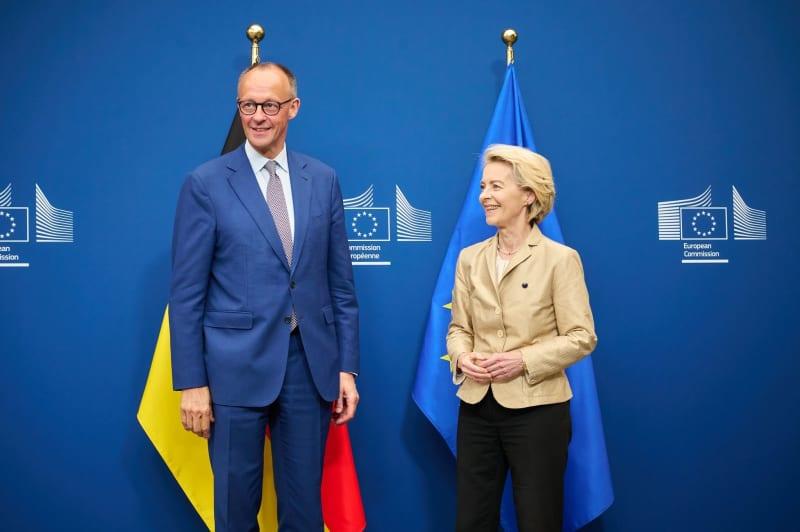
In a significant development poised to reshape the European Union’s regulatory landscape for corporations, German Chancellor Friedrich Merz has issued a bold call for the complete abandonment of the bloc’s Corporate Sustainability Due Diligence Directive (CSDDD). This move signals a potential pivot away from an increasingly stringent ESG framework, with profound implications for global businesses, particularly those operating within the capital-intensive oil and gas sector.
Chancellor Merz, during his inaugural official visit to Brussels, emphatically stated Germany’s intention to nullify its national legislation implementing the directive. He further expressed an expectation for the European Union to follow suit, urging a full cancellation of the CSDDD. This assertive stance from Europe’s largest economy introduces considerable uncertainty into the future of sustainability governance across the continent.
Germany’s Pushback Against ESG Overreach
The CSDDD, formally adopted in 2023 and slated for enforcement in 2028, represents a cornerstone of European Commission President Ursula von der Leyen’s ambitious ESG agenda. Its core mandate requires large corporations to proactively identify, prevent, mitigate, and account for adverse human rights impacts – such as forced labor and child labor – and environmental impacts across their entire global value chains. For oil and gas companies, with their intricate, sprawling supply networks spanning numerous jurisdictions from exploration and extraction to refining and distribution, this directive posed a monumental compliance challenge.
While the directive garnered robust support from civil society organizations and sustainability advocates, a vocal segment of the business community has consistently criticized its provisions. These critics argue that the CSDDD would impose excessive and prohibitively costly compliance obligations, potentially eroding the competitive edge of European businesses on the global stage. Chancellor Merz, representing Germany’s center-right Christian Democratic Union (CDU), has publicly aligned himself with these corporate concerns, framing his intervention as part of a broader push to reduce bureaucratic burdens within the EU.
“We need less bureaucracy, not more,” Merz underscored, echoing a sentiment that resonates deeply within industries grappling with complex regulatory frameworks. His position underscores a growing tension between the EU’s aspirations for global leadership in sustainability and the practical economic realities faced by its member states and their industrial champions.
Implications for Oil and Gas Investors
For investors keenly observing the oil and gas sector, Chancellor Merz’s declaration introduces a critical new variable into their risk assessments. The CSDDD, had it gone into full effect, would have necessitated substantial investments from major energy players into auditing, monitoring, and reporting mechanisms across their entire operational footprint. This includes scrutinizing contractors for drilling, transportation, refining, and even downstream petrochemical operations, ensuring compliance with human rights and environmental standards far beyond direct operational control.
The potential cancellation of the CSDDD could significantly alleviate these anticipated compliance costs. Capital earmarked for extensive due diligence systems, new reporting infrastructures, and expanded legal teams might instead be channeled into core business activities: exploration and production, investments in energy transition technologies, or shareholder returns. This could translate into improved financial performance and potentially higher valuations for European-headquartered or significantly exposed oil and gas entities.
Furthermore, easing the regulatory burden might enhance Europe’s attractiveness as an investment destination for energy projects. Stricter ESG mandates, while laudable in intent, can sometimes deter foreign direct investment by increasing operational complexity and perceived regulatory risk. A more streamlined regulatory environment, as advocated by Merz, could encourage capital flow into critical energy infrastructure and production, supporting both energy security objectives and the gradual transition toward lower-carbon energy sources.
Navigating the Shifting ESG Landscape
The German Chancellor’s stance places Europe’s largest economy squarely at odds with the current legislative trajectory on sustainability governance. This divergence sets the stage for potentially intense policy debates ahead of the directive’s scheduled enforcement in 2028. Investors in the oil and gas space must now consider a spectrum of outcomes: from a full retraction of the CSDDD, as Merz suggests, to a significant watering down of its provisions, or even a delayed implementation.
Such regulatory uncertainty, while challenging, also presents opportunities. Companies that have already invested in robust ESG frameworks, perhaps anticipating the CSDDD, might find themselves in a stronger competitive position regardless of the outcome. Conversely, those that have lagged could see this as a reprieve, offering additional time to adapt without immediate punitive measures.
The broader context of energy security in Europe, amplified by recent geopolitical events, adds another layer of complexity. Policymakers are increasingly balancing ambitious climate goals with the immediate imperative to secure reliable and affordable energy supplies. A move to reduce “green tape” could be interpreted as prioritizing economic pragmatism and industrial competitiveness, which could indirectly benefit traditional energy sectors by reducing overheads.
Investor Outlook: Vigilance is Key
As this high-stakes political debate unfolds, investors in the oil and gas sector should remain highly vigilant. The outcome of Germany’s push against the CSDDD could fundamentally alter the risk-reward profile of European energy assets. A successful cancellation or significant revision would likely be interpreted positively by the market, potentially bolstering equity valuations for companies that stood to incur substantial compliance costs.
Conversely, if the directive proceeds largely as planned despite Germany’s objections, companies must be prepared for the significant financial and operational challenges it entails. The focus on supply chain transparency and accountability for human rights and environmental impacts would necessitate comprehensive overhauls of existing operational practices and contractual agreements globally.
Ultimately, Chancellor Merz’s intervention marks a pivotal moment in the evolution of European ESG policy. For oil and gas investors, understanding the trajectory of this debate will be crucial for making informed capital allocation decisions in an industry already navigating profound transformations.


