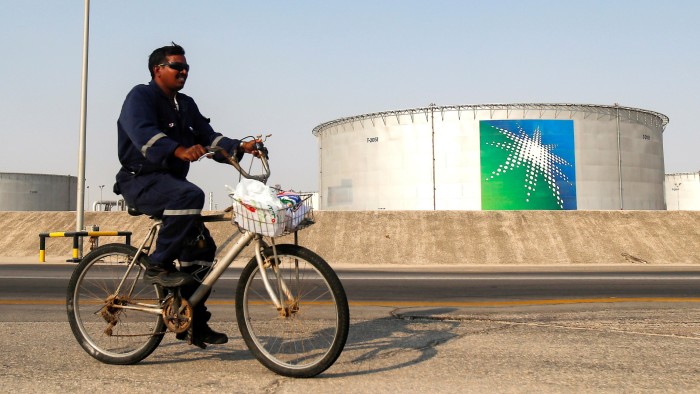
Global energy markets are grappling with significant shifts, and Saudi Aramco, the world’s preeminent oil producer, finds itself at the epicenter. The company recently disclosed a notable decline in its first-quarter profitability, a development that has directly led to a substantial $10 billion reduction in its dividend payout. This move carries considerable weight for Riyadh, as Aramco’s distributions represent a critical financial pillar for the Saudi Arabian budget, particularly amidst an increasingly unpredictable crude oil price environment.
Aramco’s Q1 Financial Performance and Dividend Revisions
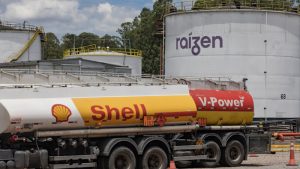
For the first quarter of the year, Aramco’s net income registered a 5% decrease compared to the same period last year, settling at $26 billion. This performance reflects a lower average realized oil price, which stood at $76.30 per barrel, a noticeable dip from the $83 per barrel achieved in the corresponding quarter of the prior year. While these figures represent a contraction, it is important for investors to note that Aramco’s operational resilience outshone some of its major international counterparts. For instance, BP experienced a halving of its first-quarter profits, and Shell reported a 28% decline during the same period.
Despite outperforming certain peers, Aramco’s board opted to adjust its total dividend for the quarter to $21.4 billion, a significant decrease from the $31 billion disbursed in the final quarter of the previous year. This decision aligns with earlier communications; in March, the company had already indicated that its total payout for the current year would approximate $85 billion, a stark contrast to the $124 billion paid out in 2024. These revised dividend policies signal a more conservative approach to capital allocation in the face of market volatility.
Implications for Saudi Arabia’s Fiscal Landscape
The reduction in Aramco’s dividend directly intensifies fiscal pressure on the Saudi Arabian government. The Kingdom is currently channeling billions of dollars through its government and state-backed entities, most notably the Public Investment Fund (PIF), into ambitious economic diversification initiatives. These programs aim to lessen the nation’s historical reliance on hydrocarbon revenues, a cornerstone of Crown Prince Mohammed bin Salman’s Vision 2030 agenda. Flagship “gigaprojects,” such as the futuristic Neom city planned for the north-west coast, exemplify this monumental economic transformation.
Evidence of these budgetary strains emerged with the Ministry of Finance’s recent announcement. Saudi Arabia’s deficit expanded considerably in the first quarter, soaring to $15.6 billion from just $3.3 billion in the first quarter of 2024. This widening gap directly correlates with an 18% fall in oil revenues during the period, underscoring the immediate impact of fluctuating crude prices and Aramco’s adjusted payouts on the national coffers.
Navigating Market Headwinds: Executive Insights and Future Outlook
Amin Nasser, Aramco’s President and CEO, acknowledged the challenging market conditions, stating that “global trade dynamics affected energy markets in the first quarter of 2025, with economic uncertainty affecting oil prices.” His comments highlight the complex interplay of macroeconomic factors influencing energy demand and pricing. Furthermore, the market has witnessed a continued downturn since the end of the first quarter. Oil prices have plummeted an additional 15%, now hovering around $64 a barrel. This further depreciation stems from a confluence of factors, including new US trade tariffs and growing apprehension regarding potential oversupply, especially after the Saudi-led OPEC+ alliance committed to increasing production for the year.
Aramco has refrained from providing specific guidance on whether further dividend adjustments or capital expenditure cuts might be necessary. However, the company emphasized the critical importance of “disciplined capital planning and execution” during periods characterized by significant oil price volatility. This strategic imperative suggests a proactive and cautious stance on managing its vast investment portfolio.
Saudi Arabia’s Strategic Project Recalibrations and Global Commitments
In response to the evolving fiscal landscape, Riyadh is actively recalibrating its national spending strategy. This involves a measured approach to its ambitious development projects, with some being scaled back and others extended over longer timelines to better manage financial outlays. Despite these adjustments, the Kingdom faces a demanding schedule to develop infrastructure for a series of high-profile international events it is slated to host. These include Expo 2030 and the prestigious FIFA World Cup in 2034, both requiring immense capital investment and timely execution.
It is crucial for investors to remember the close financial ties between Aramco and the Saudi state. The government, alongside the Public Investment Fund, collectively holds more than 97% ownership of Aramco. This concentrated ownership structure means Aramco’s financial health and dividend policy are intrinsically linked to the Kingdom’s economic stability and its ability to fund national development objectives.
OPEC+ Production Strategy and Market Reaction
Paradoxically, even as global oil prices exhibit weakness, Saudi Arabia and its partners within the OPEC+ coalition are moving forward with plans to boost oil production. At the beginning of this month, eight key OPEC+ members, including Saudi Arabia and Russia, announced an an increase in supply of 411,000 barrels per day for June. This marks the second consecutive month of output increases from the alliance. This decision by OPEC+ introduces additional complexity for investors, as increased supply could exacerbate concerns about market oversupply, potentially placing further downward pressure on crude prices.
Market analysts are closely scrutinizing this dynamic. The move by OPEC+ to raise production, despite an already softening price environment and growing economic uncertainties, highlights a strategic gamble. It suggests a focus on maintaining market share and potentially capitalizing on future demand, even if it means navigating short-term price volatility. Investors should monitor how this increased supply interacts with global demand trends and geopolitical developments in the coming months, as these factors will significantly influence future oil price trajectories and, by extension, Aramco’s financial outlook.