

Federal Reserve Signals Prolonged Economic Uncertainty, Dampening June Rate Cut Hopes
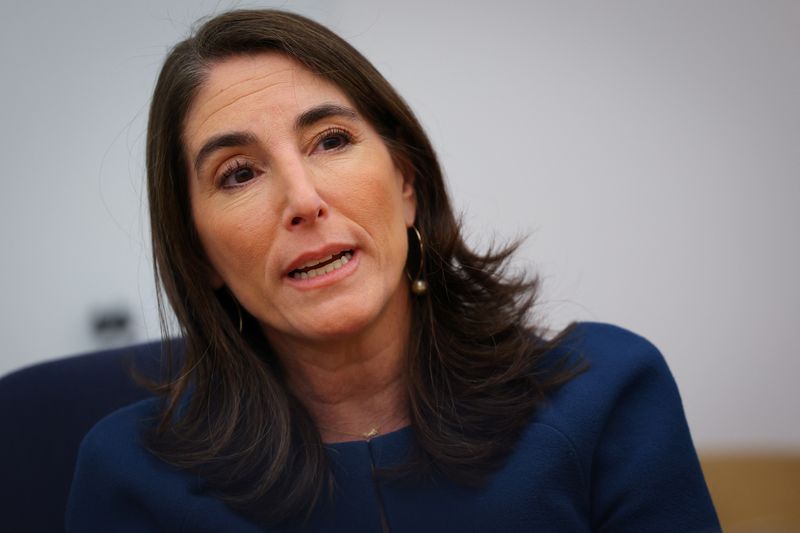
The Federal Reserve is signaling a cautious stance on monetary policy, with Cleveland Federal Reserve President Beth Hammack articulating a clear need for more time and definitive data before considering any adjustments to interest rates. This cautious outlook, delivered amidst swirling uncertainties stemming from trade policy, suggests that oil and gas investors should brace for a period of sustained economic vigilance rather than anticipating imminent rate relief.
Speaking from a monetary policy conference in Palo Alto, Hammack underscored the profound challenges in assessing the economy’s trajectory given the broad and still-unfolding impacts of recent administrative policies, particularly tariffs. “I stand ready to move whenever we have clear and convincing evidence,” Hammack stated, yet she immediately qualified this by highlighting the extensive scope of discussed and implemented policies, questioning their ultimate effects. This sentiment points to a “wait and see” approach, indicating that the Fed’s next move is far from predetermined.
Insufficient Data Clouds Near-Term Rate Outlook
A key factor driving the Fed’s current hesitancy is the scarcity of actionable economic data points between now and the central bank’s next interest rate setting meeting in June. Hammack explicitly noted this data vacuum, suggesting that without fresh, unambiguous signals, policymakers are ill-equipped to make significant shifts. This lack of immediate clarity compounds the challenge for energy markets, which thrive on predictable economic conditions and stable financial environments.
While the U.S. economy registered an annualized contraction of 0.3% last quarter, many analysts, including Hammack, view this as an unreliable indicator of the underlying economic health. Distortions attributed to trade policy are believed to have skewed this figure, leading the Fed to consider the economy’s broader resilience. For oil and gas stakeholders, this mixed economic picture translates into heightened demand uncertainty, directly influencing crude prices and investment appetite.
“It is all premature to me — I think everything is very fluid and I think we need to really wait and see how the data play out,” Hammack emphasized, articulating the prevailing sentiment within the Federal Reserve. This fluidity demands that investors remain highly adaptable, continuously re-evaluating their positions in a market that lacks a clear directional signal from the nation’s central bank.
Employment Strength vs. Tariff Headwinds
Adding to the complex economic mosaic, the labor market continues to exhibit robust health, with the unemployment rate holding firm at a low 4.2%. This strong employment picture typically supports consumer demand, a positive for energy consumption. However, this strength is tempered by growing concerns among businesses regarding the potential fallout from new tariff policies.
Businesses within Hammack’s district are reportedly sketching out contingency plans, including potential workforce reductions, should demand significantly soften. Yet, a counterbalancing force is the difficulty firms have faced in securing talent over recent years, making them reluctant to shed employees prematurely. This push-pull dynamic highlights the profound uncertainty facing employers, who are, in Hammack’s words, unsure “which way it will settle out.”
Should the impact of tariffs on prices prove limited and the economy show signs of weakening, Hammack indicated that the Fed would prioritize its employment mandate. This suggests a potential pivot towards easing policy if the job market faces substantial threats, a scenario that would likely be welcomed by capital-intensive sectors like oil and gas, as lower rates typically reduce borrowing costs and stimulate investment.
Inflationary Pressures: A Lingering Question Mark
The specter of inflation, particularly from tariffs, presents another critical variable. Hammack acknowledged that tariffs could trigger one-time price hikes. However, a more concerning scenario involves businesses implementing a series of price adjustments over an extended period as they navigate evolving import duties, a process that could stretch well into the summer. The longer such adjustments persist, the greater the risk that temporary inflationary pressures could morph into a more enduring trend, necessitating a tighter monetary policy from the Fed.
Currently, the Federal Reserve has maintained short-term interest rates within the 4.25%-4.5% range, a level sustained since December. Fed Chair Jerome Powell previously acknowledged that tariffs introduce risks of both elevated inflation and higher unemployment, yet the precise magnitude, duration, and sequence of these effects remain unclear. With ongoing trade negotiations and the full scope of levies still unknown, the Fed’s response remains largely unformulated.
For oil and gas companies, the prospect of persistent inflation translates into higher operational costs, from equipment and raw materials to labor. Simultaneously, higher interest rates, which would be the Fed’s response to sustained inflation, directly increase the cost of capital for exploration, production, and infrastructure projects. This creates a challenging environment for financing long-cycle investments characteristic of the energy sector.
Investment Implications for Energy Markets
The Federal Reserve’s current stance of “wait and see” carries significant implications for oil and gas investors. A prolonged period of economic uncertainty and potentially higher-for-longer interest rates could constrain capital availability and dampen investor enthusiasm for new energy projects. Companies in the upstream sector, in particular, rely heavily on debt financing for their exploration and development activities, making them sensitive to interest rate fluctuations.
Moreover, the tariff-induced economic ambiguity translates into unpredictable global demand for crude oil and refined products. Any significant slowdown in global trade or domestic economic activity could directly impact commodity prices, eroding profit margins for producers and refiners alike. Energy investors must carefully monitor not only the Fed’s communications but also the unfolding dynamics of international trade and their reverberations through the real economy.
In essence, the message from the Federal Reserve is one of caution and patience. Policymakers require more definitive signals to chart their course, leaving financial markets, and particularly the energy sector, in a state of heightened anticipation. For oil and gas stakeholders, this underscores the importance of robust balance sheets, operational flexibility, and a keen eye on macroeconomic indicators as the Fed navigates these uncharted waters.
