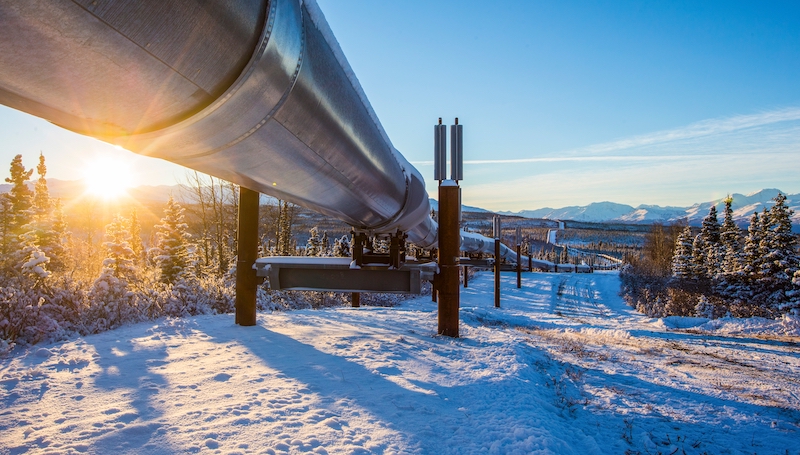
Thailand’s Strategic Gas Play: Balancing Trade, Tariffs, and Energy Security
Thailand is actively pursuing a multi-faceted strategy to secure its energy future while simultaneously navigating complex international trade relations. At the core of this strategy lies a significant interest in co-developing a massive $44 billion natural gas project in Alaska. This potential investment, encompassing gas exploration, production, and critical infrastructure, is not merely an energy play; it’s a calculated move designed to address a substantial $46 billion trade surplus with the United States and preemptively mitigate the threat of steep import tariffs. For investors, this dual objective transforms the Alaskan venture into a compelling case study of how geopolitical pressures and domestic energy imperatives increasingly converge to shape large-scale capital allocation in the global oil and gas sector.
Geopolitical Imperatives Driving Energy Investment
The primary catalyst for Thailand’s push into the Alaskan gas project is undoubtedly the looming specter of U.S. tariffs. With Washington contemplating a 36% tariff on Thai exports, Bangkok’s proactive engagement in U.S. infrastructure projects signals a clear intent to rebalance trade flows through strategic investment and increased imports of American goods. This approach positions energy, alongside petrochemical feedstock and farm commodities, as a critical tool for macroeconomic diplomacy. The Ministry of Energy’s discussions with Alaska Governor Mike Dunleavy and executives from the Alaska Gasline Development Corp. and Glenfarne Group highlight the seriousness of this intent. Thailand joins a growing list of Asian LNG buyers, including Japan, South Korea, and Taiwan, who are exploring partnerships with U.S. developers, recognizing the multifaceted benefits of such collaborations beyond mere commodity transactions. This trend underscores a broader shift where energy investments are increasingly viewed through a geopolitical lens, offering a pathway to strengthen bilateral ties and avert trade disputes.
Thailand’s Deepening Domestic Energy Challenge
Beyond the immediate trade considerations, Thailand’s interest in Alaskan gas is fundamentally rooted in its pressing domestic energy security needs. The nation faces rapidly depleting natural gas reserves in the Gulf of Thailand, a critical concern given that natural gas accounts for a substantial 58% of its power generation mix. Last year, domestic output could only meet approximately 60% of the country’s daily requirement of 4,500 million standard cubic feet, with the remaining demand met through increased liquefied natural gas (LNG) imports and supplies from Myanmar. This growing reliance on imported LNG exposes Thailand to volatile global spot markets and supply disruptions.
Looking ahead, the country anticipates a significant surge in electricity demand, driven by the proliferation of electric vehicles, the burgeoning artificial intelligence sector, and the construction of power-hungry data centers. As Prasert Sinsukprasert, permanent-secretary at the Energy Ministry, observed, the Alaskan project represents a “viable future option” for securing affordable electricity. The involvement of state-controlled entities like PTT Pcl, the Electricity Generating Authority of Thailand, and Electricity Generating Pcl, all licensed LNG shippers, further solidifies the national strategic importance of this potential long-term supply agreement for 3 to 5 million tons of LNG annually.
Alaska’s $44 Billion Bet Amidst Market Realities
The Alaska gas project, a monumental $44 billion endeavor, represents a significant long-term commitment. While Thailand’s motivations are clear, the project itself still faces considerable hurdles, notably the absence of binding investments or definitive purchase agreements despite sustained interest from various Asian governments. For potential investors, the sheer scale of this project necessitates careful consideration of long-term energy price trajectories and market stability.
As of today, Brent crude trades at $95.16, experiencing a slight uptick of 0.39% within a day range of $91 to $95.79. Meanwhile, WTI crude is at $91.04, down 0.26%, fluctuating between $86.96 and $92.38. Gasoline prices remain stable at $2.97. This current market strength provides a generally robust backdrop for considering large-scale energy infrastructure, though it’s important to note Brent’s recent 14-day trend saw a decline from $102.22 on March 25th to $93.22 on April 14th, marking a nearly 9% drop. This recent volatility underscores the long-term price assumptions inherent in a $44 billion gas project. Project developers and potential investors will be closely scrutinizing the future stability of crude and gas prices to justify such a substantial capital outlay, especially in a landscape where global energy demand and supply dynamics are constantly shifting.
Upcoming Catalysts and Investor Outlook
Investors tracking the energy market are actively seeking clarity on the base-case Brent price forecast for the next quarter, with a keen eye on what is driving Asian LNG spot prices this week. These questions are particularly salient when assessing the long-term viability and return potential of major LNG import commitments like Thailand’s potential Alaskan deal. The next two weeks are packed with events poised to inject fresh insights and potential volatility into the market.
Key among these are the upcoming OPEC+ meetings, with the Joint Ministerial Monitoring Committee (JMMC) scheduled for April 18th, followed by the Full Ministerial meeting on April 20th. Decisions from these gatherings could significantly influence global crude supply policies, directly impacting prices and, by extension, the broader investment climate for large-scale gas projects. Furthermore, regular updates such as the Baker Hughes Rig Count on April 17th and April 24th, alongside the API Weekly Crude Inventory on April 21st and 28th, and the EIA Weekly Petroleum Status Report on April 22nd and 29th, will provide critical data points on North American production activity and inventory levels. These events collectively shape market sentiment and contribute to the long-term price forecasts that are essential for evaluating multi-decade commitments like the Alaska gas project. The confluence of geopolitical maneuvering, domestic energy demand, and ongoing market fundamentals will ultimately determine the success and profitability of this ambitious venture.


