In a testament to the enduring power of commercial imperatives over geopolitical friction, Israel’s NewMed Energy has inked a monumental $35 billion deal to significantly boost natural gas supplies from its vast Leviathan field to Egypt. This ambitious long-term agreement, which will eventually nearly triple gas flows, stands as a critical development for regional energy security and underscores the remarkable resilience of the energy market in navigating complex political landscapes. For investors, this move signals a powerful commitment to infrastructure development and long-term supply stability in a region often characterized by volatility, offering compelling insights into where capital is flowing for essential energy assets.
The Leviathan Expansion: Fueling Egypt’s Future
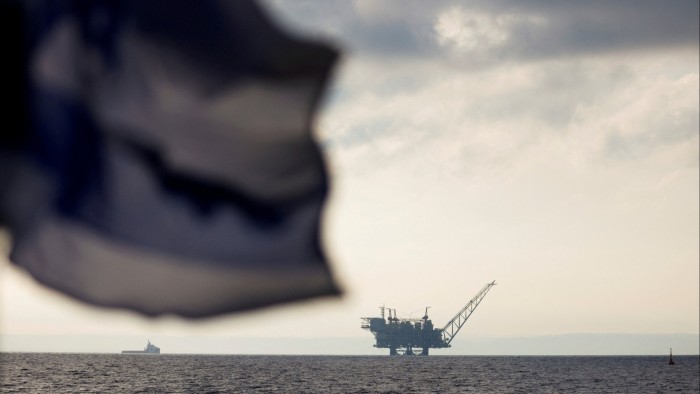
The core of this landmark agreement centers on increasing natural gas deliveries from the Leviathan field, co-owned by NewMed, Chevron, and Ratio Oil. Currently supplying Egypt with approximately 4.5 billion cubic meters (bcm) annually, the deal targets an impressive ramp-up to roughly 12 bcm per year by 2029. Over the next 15 years, NewMed is committed to supplying a staggering 130 bcm of natural gas to Egypt, a volume equivalent to roughly two years of the country’s total gas consumption. This substantial increase is not merely a number; it represents a strategic lifeline for Egypt, which has struggled with declining domestic production and a rising reliance on costly liquefied natural gas (LNG) imports, exacerbated by public discontent over rolling blackouts during the summer of 2024.
To achieve this enhanced production, NewMed and its partners are embarking on a significant capital expenditure program. This year will see the addition of a third supply line from the gas field to its offshore platform. Further investment of $2.5 billion is earmarked for drilling two new wells and installing necessary systems by 2029. An intermediate step will see flows increase to 6.5 bcm annually later this year or early next, before reaching the ultimate target of 12 bcm. Complementing this offshore expansion, a new onshore pipeline will be constructed from Israel to the Egyptian border at Nitzana, further solidifying the infrastructure backbone of this crucial energy corridor.
Geopolitical Crosscurrents and Commercial Imperatives
This massive energy deal unfolds against a backdrop of severe geopolitical strain, with relations between Cairo and Tel Aviv at their lowest point in years due to the ongoing conflict in Gaza. Egyptian society, across all sectors, expresses widespread anger, and President Abdel Fattah al-Sisi has described Israel’s offensive as a “genocide.” Despite these profound political and social tensions, the commercial logic of the gas deal has prevailed. NewMed’s chief executive emphasized their focus on the “commercial win-win,” stating, “we are not political or geopolitical entities.”
For investors, this situation presents a fascinating case study in energy market resilience. While some analysts, like Dr. H.A. Hellyer, suggest that many Egyptians fear Israel’s potential use of energy to pressure Cairo, the overwhelming economic imperative for Egypt to secure affordable gas trumps these concerns. Egypt stands to save “a tremendous amount of money” by avoiding expensive LNG imports, while Israel secures a long-term revenue stream from one of the Mediterranean’s largest gas fields, with production expected until 2064. This dynamic underscores that fundamental energy needs and economic benefits can often transcend even the most fraught political environments, providing a degree of stability for long-term infrastructure investments that might otherwise seem vulnerable to regional instability.
Market Context and Investor Insights
The long-term certainty offered by this Leviathan expansion is particularly noteworthy in the context of dynamic global energy markets. As of today, the energy complex shows renewed vigor, with Brent crude trading at $99.6, marking a significant daily increase of 4.92%, climbing from an intra-day low of $94.42. WTI crude similarly saw a robust gain of 3.85%, settling at $91.52. This resurgence follows a recent 14-day trend where Brent had experienced a notable decline, dropping over 12% from $108.01 on March 26th to $94.58 on April 15th. While crude prices remain volatile, this substantial gas deal injects long-term supply certainty into a critical regional market.
Our proprietary reader intent data reveals that investors are actively seeking clarity on market fundamentals, with frequent inquiries about “a base-case Brent price forecast for next quarter” and the “consensus 2026 Brent forecast.” Furthermore, questions like “What’s driving Asian LNG spot prices this week?” highlight the intense focus on natural gas market dynamics. This Israel-Egypt deal directly addresses the latter by securing significant, competitively priced long-term gas supply for a major regional consumer. By reducing Egypt’s reliance on the global LNG spot market, it could indirectly alleviate some of the upward pressure on spot prices in the Mediterranean basin, potentially freeing up LNG cargoes for other demand centers. This strategic supply agreement offers a counterbalance to short-term market fluctuations, providing a clearer long-term outlook for regional gas supply and demand balance.
Strategic Outlook and Upcoming Catalysts
Looking ahead, the phased expansion of Leviathan production offers tangible milestones for investors to monitor. The planned addition of a third supply line this year, followed by the $2.5 billion investment for new wells and systems by 2029, represent concrete project catalysts that will drive increased volumes. These developments, while specific to Leviathan, align with broader industry trends that will be reflected in upcoming data releases.
Investors should pay close attention to the Baker Hughes Rig Count reports scheduled for April 17th and April 24th. These reports offer a crucial pulse on drilling activity across the industry, providing insights into the overall capital deployment and operational confidence that underpins such major gas field expansions. Furthermore, the upcoming OPEC+ Joint Ministerial Monitoring Committee (JMMC) meeting on April 18th and the full Ministerial Meeting on April 20th will be pivotal in shaping the global crude supply landscape. While this is a gas deal, the broader energy market sentiment, heavily influenced by OPEC+ decisions and global oil prices, can impact the economic viability and strategic importance of all large-scale fossil fuel projects. The API Weekly Crude Inventory reports on April 21st and April 28th, along with the EIA Weekly Petroleum Status Reports on April 22nd and April 29th, will provide weekly snapshots of demand and inventory levels, offering further context on the health of the overall energy market. For investors seeking stable, long-term plays in essential energy infrastructure, the Leviathan expansion, underpinned by significant capital commitment and strategic market positioning, presents a compelling narrative of resilience and growth, insulated from daily crude price swings but benefiting from a robust overall energy market.