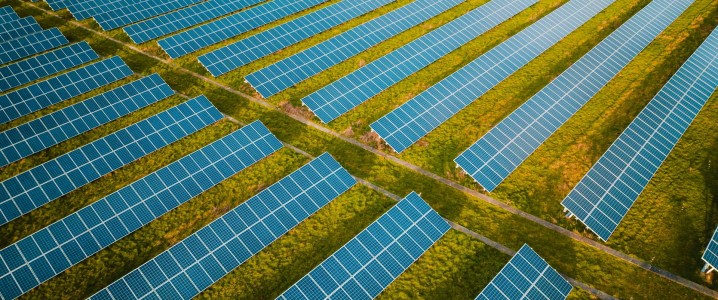
The energy transition narrative has long been dominated by the relentless upward trajectory of renewable energy deployments. Yet, a surprising forecast from BNEF is poised to introduce a significant recalibration: 2026 is projected to mark the first-ever annual decline in solar power capacity installations globally, following a seven-year low in growth for 2025. This unexpected deceleration, driven by critical policy shifts in major markets like China and the United States, presents a compelling moment for oil and gas investors. While global solar additions are expected to rebound in 2027, the interim period of adjustment to new market realities creates an intriguing window, potentially fueling demand and investment interest in conventional energy sources.
The Unforeseen Solar Slowdown and Its Implications
For years, the energy sector has witnessed unprecedented expansion in solar capacity, but the latest outlook paints a different picture for the near term. Developers are set to add approximately 649 gigawatts (GW) of solar power capacity worldwide in 2026, a slight reduction from the 655 GW anticipated for the current year. This shift signals a departure from the rapid expansion observed over the last decade, with analysts pointing to policy adjustments in the world’s two largest economies as primary drivers. The slowdown in these critical markets is simply too substantial to be offset by growth in other regions, suggesting a period where the global energy mix will rely more heavily on existing, stable sources. This unexpected deceleration in the renewable buildout naturally prompts a re-evaluation of energy supply security and the pace of decarbonization, directly impacting the investment thesis for traditional oil and gas assets.
Market Reaction and Shifting Investor Sentiment
This news arrives at a particularly dynamic time for crude markets. As of today, Brent crude trades at $91.87 per barrel, reflecting a significant daily dip of 7.57% from its high, with WTI crude similarly pressured at $84.00, down 7.86%. This recent volatility, which saw Brent drop from $112.57 just three weeks ago to $98.57 yesterday before today’s further decline, underscores the market’s sensitivity to supply-demand signals and macroeconomic shifts. Our proprietary reader intent data reveals a notable surge in investor questions regarding the future trajectory of oil prices, specifically “what do you predict the price of oil per barrel will be by end of 2026?” and “How well do you think Repsol will end in April 2026?” These inquiries highlight a growing need for clarity amidst market uncertainty. The projected solar dip for 2026, while not immediately reversing the energy transition, certainly provides a potential tailwind for oil and gas, suggesting that peak demand for hydrocarbons might be further out than previously assumed. This could translate into sustained investment in exploration and production, as the market adjusts to a potentially slower pace of renewable adoption than previously modeled.
Policy Headwinds and Strategic Realignment
The core of the solar capacity slowdown lies in pivotal policy changes within China and the United States. In China, after a period of booming solar and wind installations in the first half of 2025, the government introduced a new renewable pricing mechanism that eliminated guaranteed rates of return for developers. This move, aimed at fostering a “quality over quantity” approach in line with the 15th Five Year Plan, has already led to a slump in installations during the summer months. Furthermore, Beijing is enacting stricter controls on the bloated solar manufacturing capacity that has led to intense price wars and significant losses for companies. Meanwhile, in the United States, the political climate surrounding clean energy has introduced considerable uncertainty. Analysis by the Solar Energy Industries Association (SEIA) indicates that political attacks on America’s solar and storage industry threaten 519 projects totaling 117 GW of capacity. These projects represent half of all new planned power capacity in the U.S., with 17 states potentially losing over half of their planned additions. These dual policy-driven decelerations create a vacuum that traditional energy sources are well-positioned to fill, at least in the medium term, offering a reprieve and renewed focus for oil and gas producers.
Forward-Looking Catalysts and O&G Opportunities
Against this backdrop of softening renewable growth, the upcoming energy calendar holds particular significance for oil and gas investors. This Friday, April 17th, the OPEC+ Joint Ministerial Monitoring Committee (JMMC) convenes, followed by the full Ministerial Meeting on Saturday, April 18th. With crude prices showing recent weakness, the solar outlook could subtly influence these discussions, potentially reinforcing the rationale for current production quotas or future supply management strategies to stabilize markets. Beyond OPEC+, investors will be closely watching weekly data points, including the API Weekly Crude Inventory reports on April 21st and 28th, and the EIA Weekly Petroleum Status Reports on April 22nd and 29th. These reports will provide crucial insights into current supply-demand balances, which could be bolstered by a slower-than-expected renewable build-out. Furthermore, the Baker Hughes Rig Count on April 24th and May 1st will offer a gauge of North American drilling activity. Should the solar dip persist or deepen, these traditional indicators of oil and gas health could gain even greater prominence, offering an increasingly bullish signal for the sector as investors seek stability and reliable returns in a shifting energy landscape.


