The Billion-Dollar Bet on Decentralization: Implications for Oil & Gas Investors
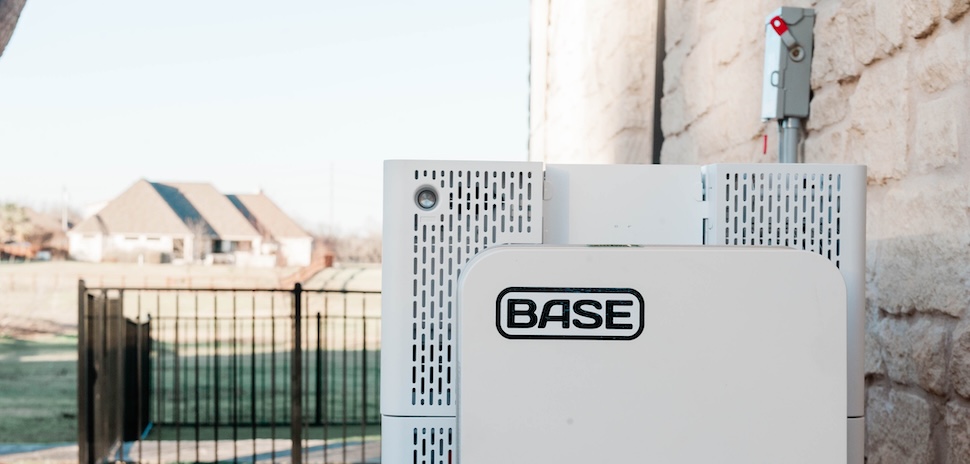
A recent $1 billion Series C funding round for Base Power, an Austin-based energy technology firm, signals a significant acceleration in the deployment of distributed home battery systems across the United States. This substantial capital injection, earmarked for expanding battery leasing programs and establishing domestic manufacturing facilities, underscores a growing investor confidence in decentralized energy solutions. For oil and gas investors, this development is more than just a clean energy headline; it represents a tangible shift in grid architecture and potential demand patterns that warrants close attention. As the U.S. grid grapples with escalating strain from extreme weather events, aging infrastructure, and rising electrification, solutions that enhance resilience and integrate renewables are attracting unprecedented investment, creating both challenges and opportunities for traditional energy portfolios.
Market Volatility & The Grid’s Shifting Sands
The current energy market is a study in contrasts. While investment pours into grid modernization and distributed energy, traditional commodity markets are experiencing notable volatility. As of today, Brent crude trades at $90.38, marking a significant 9.07% decline in a single trading session. This sharp downturn comes on the heels of a broader retreat, with Brent having shed nearly 20% of its value, falling from $112.78 just two weeks ago to its current price. WTI crude mirrors this trend, standing at $82.59, down 9.41% today, while gasoline prices have also pulled back to $2.93, a 5.18% drop. This pronounced bearish sentiment in crude and refined product markets contrasts sharply with the stability narrative promoted by distributed energy solutions. While oil prices swing on geopolitical events and supply-demand imbalances, firms like Base Power promise homeowners reliable backup power and the ability to feed excess energy back into the grid, directly addressing the grid’s vulnerability and aiming to smooth out supply fluctuations. For investors grappling with the inherent volatility of crude, the long-term stability offered by grid resilience plays, even if indirectly, begins to shape the future demand landscape for traditional power generation.
Domestic Manufacturing: A Strategic Imperative Reshaping Supply Chains
Base Power’s commitment to establishing its first energy storage and power electronics manufacturing facility in Austin, with plans for additional sites, highlights a crucial strategic pivot: the reindustrialization of the energy sector within the U.S. This move aligns directly with national policy objectives aimed at reducing reliance on imported components and fortifying domestic supply chains. For oil and gas investors, this signifies a broader shift in capital allocation towards domestic energy infrastructure, not solely focused on fossil fuel extraction but also on the hardware that underpins the energy transition. The emphasis on “physically deploying hardware” manufactured domestically speaks to a critical need for energy independence and security. Furthermore, Base Power’s qualification for Texas’s Aggregated Distributed Energy Resource (ADER) program exemplifies how state-level policies are actively creating markets for these decentralized solutions, allowing homeowners to become active participants in grid management. This growing ecosystem of domestic manufacturing and supportive regulatory frameworks suggests a durable trend that will increasingly influence energy investment decisions beyond traditional upstream and midstream assets.
Navigating the Near-Term: Upcoming Events and Investor Outlook
As investors look to gauge the trajectory of crude oil prices, particularly in light of the recent market declines, immediate attention turns to a series of critical upcoming events. This Sunday, April 19th, the OPEC+ JMMC Meeting will set the stage, followed by the full OPEC+ Ministerial Meeting on Monday, April 20th. Many investors are keenly asking about OPEC+’s current production quotas and what actions the cartel might take to stabilize the market given the sharp price drop. Any adjustments to output levels will significantly impact global supply and price forecasts, influencing portfolio decisions for the remainder of 2026 and beyond. Throughout the coming weeks, the API Weekly Crude Inventory (April 21st, 28th) and the EIA Weekly Petroleum Status Report (April 22nd, 29th) will provide crucial insights into U.S. supply and demand dynamics, while the Baker Hughes Rig Count (April 24th, May 1st) will offer a forward-looking indicator of domestic production capacity. These traditional market signals remain paramount for forecasting oil prices by the end of 2026. However, astute investors must also integrate the accelerating trend of distributed energy solutions, exemplified by Base Power’s expansion, into their long-term models. While not directly impacting short-term crude prices, the growth of decentralized power will gradually reshape electricity demand, potentially mitigating the need for new traditional power generation and influencing the long-term outlook for natural gas consumption, thereby adding another layer of complexity to future energy market predictions.


