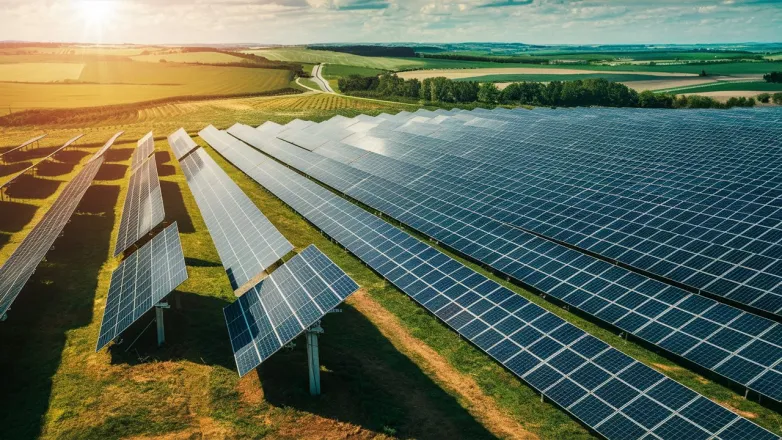
The energy landscape is undergoing a profound transformation, with industrial giants increasingly driving the shift towards sustainable power. A compelling recent example comes from Spain, where Zelestra has successfully brought online a 162MW solar cluster, marking a significant milestone in the decarbonization efforts of the pharmaceutical sector. This project, delivered with remarkable speed, underscores a growing trend: corporations are not just observing the energy transition; they are actively investing in and shaping it, creating new avenues for capital deployment far removed from traditional hydrocarbon plays. For oil and gas investors, understanding these emerging dynamics is crucial, as they represent both a challenge and an opportunity to diversify portfolios and capture value in a rapidly evolving market.
The Pharma Green Shift: A Blueprint for Industrial Decarbonization
The new Belinchón I, II, and III solar plants in Castilla-La Mancha represent more than just another utility-scale renewable project. With 162MW of capacity, these facilities are expected to offset over 42,700 tons of CO2 emissions annually, a tangible contribution to Spain’s and the EU’s climate targets. What truly distinguishes this development, however, is its innovative financing and direct link to industrial demand. The projects are underpinned by a long-term, multi-buyer Power Purchase Agreement (PPA) structured through the Energize program. This mechanism aggregates demand from major pharmaceutical companies like Takeda Pharmaceuticals International AG, Teva Pharmaceutical Industries, and UCB, alongside key suppliers such as Avantor, Organon LLC, Perrigo, and West Pharmaceutical Services Inc. This collaborative approach directly addresses both Scope 2 emissions from purchased electricity and critical Scope 3 emissions embedded throughout complex supply chains. For investors, this model highlights a strategic shift: the pursuit of stable, long-term revenue streams from corporate entities actively seeking to future-proof their operations against carbon risks and regulatory pressures. It signals a robust and growing market for renewable energy infrastructure that is decoupled from the volatile swings of commodity prices.
Navigating Traditional Energy’s Headwinds Amidst Decarbonization Pressures
While the renewable sector sees rapid deployment driven by corporate demand, the traditional oil and gas market continues to grapple with its inherent volatility and a shifting global narrative. As of today, Brent Crude trades at $92.54, reflecting a -0.75% dip within a day range of $91.39 to $94.21. Similarly, WTI Crude stands at $88.78, down -0.99% for the day, with gasoline prices also seeing a slight decline to $3.1, a -0.64% change. This short-term downward pressure comes against a backdrop where Brent has seen a more significant decline over the past two weeks, dropping from $101.16 on April 1st to $94.09 yesterday, representing a -7% move. This persistent fluctuation underscores the exposure of conventional energy investments to geopolitical events, economic indicators, and supply-demand imbalances. For investors, this volatility presents both trading opportunities and long-term risks, contrasting sharply with the more predictable, contractually-secured cash flows offered by PPA-backed renewable assets like Zelestra’s Spanish solar cluster. The ongoing decarbonization trend, even if gradual, adds another layer of long-term uncertainty to the demand outlook for fossil fuels.
Key Data Points and Upcoming Catalysts for Informed Investment
For investors focused on traditional oil and gas, staying ahead of market-moving data is paramount, even as the energy transition gains pace. The coming weeks are packed with crucial releases that will offer insights into supply, demand, and drilling activity. This Wednesday, the EIA Weekly Petroleum Status Report will provide an updated snapshot of U.S. crude oil, gasoline, and distillate inventories, influencing short-term price movements. Following closely, the Baker Hughes Rig Count on Friday will indicate changes in drilling activity, a key forward-looking indicator for future production. The cycle repeats next week with the API Weekly Crude Inventory on Tuesday, April 28th, followed by another EIA report on Wednesday, April 29th, and the subsequent Baker Hughes Rig Count on May 1st. Significantly, the EIA Short-Term Energy Outlook, due on May 2nd, will offer a broader perspective on market fundamentals and price forecasts. These events provide critical windows into the health and direction of the hydrocarbon sector, allowing investors to adjust positions based on supply-side shifts and inventory draws or builds. While the long-term trajectory points towards decarbonization, these short-term catalysts remain pivotal for managing risk and capturing value in the existing energy complex.
Investor Sentiments: Balancing Short-Term Swings with Long-Term Vision
Our proprietary reader intent data reveals a clear dichotomy in investor focus. Many are intensely focused on immediate directional shifts, with questions like whether WTI crude is “going up or down” dominating queries. There’s also a strong interest in the performance of specific European energy majors and the broader outlook, such as “how well Repsol will end in April 2026,” and longer-term price predictions, exemplified by “what do you predict the price of oil per barrel will be by end of 2026?” This reflects the constant tension between short-term trading opportunities and strategic, long-term portfolio positioning. The Zelestra solar project offers a stark contrast to this immediate focus, showcasing an investment path driven by long-term corporate commitments and environmental mandates rather than daily commodity price fluctuations. For savvy investors, the challenge lies in balancing exposure to the volatile, yet often profitable, traditional energy markets with an increasing allocation to stable, growth-oriented renewable assets. The accelerating pace of industrial decarbonization, exemplified by multi-buyer PPAs, suggests that a diversified approach incorporating both elements will be key to navigating the complexities of the evolving global energy landscape.


