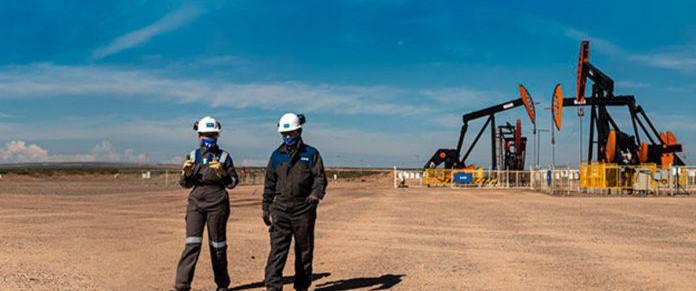
Argentina’s energy sector is undergoing a significant re-evaluation, with national oil company YPF S.A. experiencing a remarkable rally, surging nearly 40% over the past five trading sessions. This impressive performance signals renewed investor confidence, fueled by a confluence of foreign investment interest and bolstered political stability. At the core of this optimism are advanced discussions between XRG, the low-carbon investment arm of Abu Dhabi National Oil Company, and YPF regarding a pivotal LNG export project, alongside a substantial $20 billion energy-financing agreement secured by the Argentine administration with Washington. These developments collectively underscore a clear pathway for upstream liberalization and ambitious export growth, positioning Argentina, and YPF, as key players in the future global energy landscape.
Geopolitical Alignment and Capital Influx Drive YPF’s Momentum
The recent surge in YPF’s valuation is a direct reflection of powerful geopolitical and financial catalysts converging to de-risk Argentina’s energy investment thesis. The reported negotiations with XRG, ADNOC’s dedicated low-carbon investment arm, for YPF’s flagship LNG export initiative represent a strategic coup. This project is designed to establish floating-LNG capacity, initially targeting an impressive 12-18 million tons per annum, with the potential for expansion to 24-28 million tons. Such a partnership not only brings significant capital and technical expertise from a global energy powerhouse but also provides a crucial stamp of international confidence in Argentina’s long-term energy strategy. Complementing this, President Javier Milei’s administration recently solidified a $20 billion energy-financing pact with the United States. This substantial backing is earmarked for critical infrastructure, including new LNG terminals, essential pipeline expansions, and further development within the prolific Vaca Muerta shale formation. The dual infusion of Gulf capital and U.S. financial support materially enhances the feasibility and attractiveness of Argentina’s energy export ambitions.
Vaca Muerta’s Potential Amidst Global Energy Dynamics
The Vaca Muerta shale, often touted as one of the world’s most significant unconventional resource plays, is the bedrock of Argentina’s burgeoning LNG aspirations. YPF’s strategic pivot towards large-scale LNG exports is an astute move to monetize these vast natural gas reserves, transforming a domestic resource into a global commodity. While the focus on natural gas and LNG offers a distinct investment profile, the broader energy market context remains a critical factor for investor sentiment. As of today, Brent Crude trades at $90.38 per barrel, marking a significant daily decline of 9.07%, with a day range between $86.08 and $98.97. Similarly, WTI Crude stands at $82.59, down 9.41%. This sharp daily downturn follows a pronounced 14-day trend where Brent has fallen from $112.78 on March 30th to its current level. Such volatility in crude prices highlights the importance of diversified energy portfolios and the long-term contract structures often associated with LNG sales, which can offer greater revenue stability compared to spot crude markets. For investors, the ability of Argentina to develop a competitive, cost-effective LNG export chain from Vaca Muerta will be paramount, especially against a backdrop of fluctuating global energy prices and increased competition from established LNG exporters.
Navigating Investor Concerns and Upcoming Market Catalysts
Our proprietary reader intent data reveals that investors are keenly focused on the macro energy environment, with common questions surfacing such as “What do you predict the price of oil per barrel will be by end of 2026?” and “What are OPEC+ current production quotas?”. While YPF’s core business is increasingly geared towards natural gas and LNG, the broader sentiment in crude markets invariably influences capital allocation and investor appetite for large-scale energy projects. The upcoming week presents several critical market catalysts that will shape this sentiment. The OPEC+ Joint Ministerial Monitoring Committee (JMMC) Meeting on April 19th, followed by the full OPEC+ Ministerial Meeting on April 20th, will be closely watched for any signals regarding production policy. Any adjustments to current quotas or rhetoric around supply discipline could significantly impact crude price trajectories, indirectly influencing the perceived attractiveness of major energy investments globally. Furthermore, the API and EIA Weekly Crude Inventory reports on April 21st/22nd and April 28th/29th, alongside the Baker Hughes Rig Count on April 24th and May 1st, will offer real-time insights into U.S. supply-demand dynamics. For YPF and Argentina’s LNG ambitions, the immediate forward-looking analysis centers on the formalization of the XRG partnership and the rapid progression of projects funded by the U.S. financing package. Investors will be seeking concrete milestones and definitive agreements to sustain the current rally and validate the long-term investment thesis.
Political Consolidation and Execution: The Path Forward
President Milei’s mid-term election victory on October 26th has been a crucial factor in strengthening investor confidence. This consolidation of power, which translated into greater congressional leverage, provides a clearer and potentially faster pathway for crucial energy reforms. Before the vote, Argentina’s political landscape was fragmented, with Milei’s party governing from a minority and facing shifting alliances. The inability of opposition forces to unite behind a single program effectively secured Milei’s position, reducing immediate political risks and creating a more stable environment for large-scale, long-term infrastructure investments like the proposed LNG export facilities. However, sustaining this momentum will require unwavering commitment to execution. The pace at which these ambitious LNG projects are advanced, from securing final investment decisions to actual construction and commissioning, will be critical. While the current geopolitical and financial tailwinds are strong, investors will be closely monitoring the Argentine administration’s ability to translate political will into tangible progress on the ground, ensuring that YPF can fully capitalize on its strategic advantages and Argentina’s vast energy potential.


