The energy landscape continues its rapid evolution, presenting both immediate volatility and profound long-term shifts for oil and gas investors. While the daily headlines often focus on geopolitical tensions and supply-demand imbalances, a deeper current of technological innovation is steadily reshaping future energy consumption. This week, as traditional markets react to significant price movements, advancements in electric vehicle (EV) battery technology, exemplified by companies like Xing Mobility, underscore the ongoing energy transition and its material implications for crude demand and investor strategies.
Immediate Market Pressures and Investor Outlook
The immediate outlook for crude oil shows considerable turbulence. As of today, Brent Crude trades at $90.38, marking a sharp 9.07% decline within the day, with prices ranging from $86.08 to $98.97. Similarly, WTI Crude has seen an even steeper drop, currently at $82.59, down 9.41% with a daily range of $78.97 to $90.34. This daily slump follows a broader trend; Brent crude has shed $20.91, or 18.5%, over the past two weeks alone, plummeting from $112.78 on March 30th to $91.87 on April 17th. Such rapid shifts naturally prompt investors to question the market’s stability, with a recurring query among OilMarketCap.com readers this week being: “What do you predict the price of oil per barrel will be by end of 2026?”
Adding to the short-term focus, the coming days are packed with market-moving events. The OPEC+ Joint Ministerial Monitoring Committee (JMMC) meets today, April 18th, followed by the full OPEC+ Ministerial Meeting tomorrow, April 19th. These gatherings are critical as investors keenly await any adjustments to production quotas, another top question from our readers. Further shaping the near-term supply-demand picture will be the API Weekly Crude Inventory report on April 21st and the EIA Weekly Petroleum Status Report on April 22nd. While these events dictate immediate price action, they operate against a backdrop of fundamental change driven by electrification, a factor that increasingly weighs on longer-term price forecasts despite current volatility.
Xing Mobility’s Battery Innovation: Accelerating EV Adoption
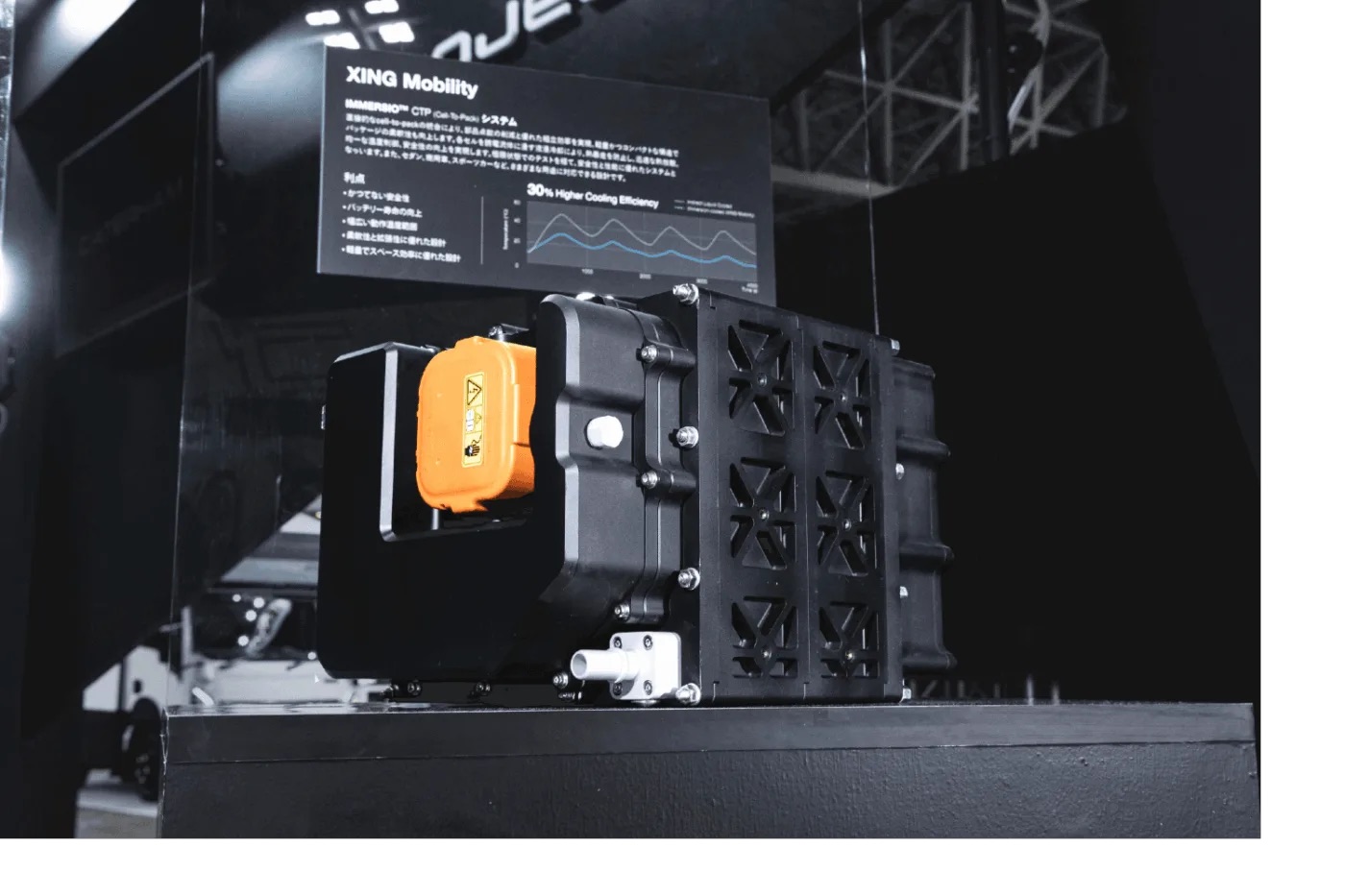
Amidst the daily fluctuations in crude prices, the march of EV technology continues to gain momentum, directly impacting the long-term demand for fossil fuels. Taiwanese innovator Xing Mobility recently showcased its latest ‘Immersio’ series cell-to-pack (CTP) battery system. This system, featuring a module-free architecture and direct immersion cooling, was notably integrated into Caterham’s fully electric lightweight sports coupé, Project V. The core innovation lies in its direct immersion cooling technology, where battery cells are completely enveloped by a dielectric coolant. This method significantly enhances heat transfer compared to conventional cooling plates, efficiently dissipating heat to prevent thermal runaway and improve safety and longevity.
The performance metrics for the Immersio system in the Caterham Project V are compelling: a 55 kWh capacity, enabling the sports coupé to deliver up to 200 kW of output and accelerate from 0 to 100 kph in a brisk 4.5 seconds. Critically for consumer adoption, the battery can charge from 20% to 80% State of Charge (SOC) in just 15 minutes, while providing a substantial 400-kilometer range for a vehicle weighing just under 1.2 tonnes. This blend of high performance, rapid charging, and extended range directly addresses common consumer anxieties around EV practicality, making electric vehicles a more viable and attractive alternative across various segments, from luxury sports cars to heavy commercial vehicles, as evidenced by Xing’s XM25 battery for commercial fleets.
The Long-Term Demand Shift: EV Tech vs. Gasoline Consumption
The continuous improvement in EV battery technology, as demonstrated by Xing Mobility, has profound implications for global oil demand, particularly for gasoline. With advancements in energy density, charge rates, and cost-effectiveness, EVs are rapidly moving from niche products to mainstream transportation solutions. The ability to achieve a 400 km range with a 15-minute fast charge, as seen in the Caterham Project V, significantly erodes the convenience advantage traditionally held by internal combustion engine (ICE) vehicles. As these capabilities become more widespread across sedans, SUVs, and commercial vehicles – segments Xing Mobility’s flexible Immersio series aims to serve – the rate of gasoline displacement will accelerate.
This trend is already exerting pressure on refined product markets. Gasoline prices, currently at $2.93 and down 5.18% today, reflect a complex interplay of current demand, refinery output, and inventory levels. However, the secular trend points towards diminished long-term demand growth for gasoline as EV penetration deepens. Oil and gas companies, therefore, face a strategic imperative to consider how these technological leaps will impact their refining margins and overall product portfolios. The scalability of solutions like Xing’s Cell-to-Chassis concept further promises future efficiencies and cost reductions in EV manufacturing, pushing the tipping point for mass adoption closer and presenting an undeniable challenge to sustained growth in liquid fuel consumption.
Strategic Investment Considerations for Oil & Gas Portfolios
For investors primarily focused on the oil and gas sector, the rapid advancements in EV battery technology necessitate a proactive and adaptive investment strategy. While the immediate focus remains on navigating crude price volatility and understanding OPEC+ production quotas, the long-term trajectory is clearly influenced by the energy transition. Companies that are purely upstream, with little diversification, face increasing exposure to declining long-term demand forecasts. This is why many integrated majors are now heavily investing in renewable energy divisions, carbon capture technologies, or alternative fuels like hydrogen.
Investors must critically assess the resilience of their holdings against a future where EV adoption continues to accelerate. This might involve evaluating companies based on their commitments to decarbonization, their flexibility to adapt to changing market dynamics, or their strategic acquisitions in burgeoning energy sectors. The continuous innovation in batteries, as underscored by Xing Mobility’s production of its Immersio pack in Taiwan and its demonstrated scalability, is not a distant threat but an active force shaping the investment landscape today. Prudent oil and gas investors are not just watching the daily price swings but are also closely monitoring these technological developments, understanding that they are fundamental drivers of the industry’s future.