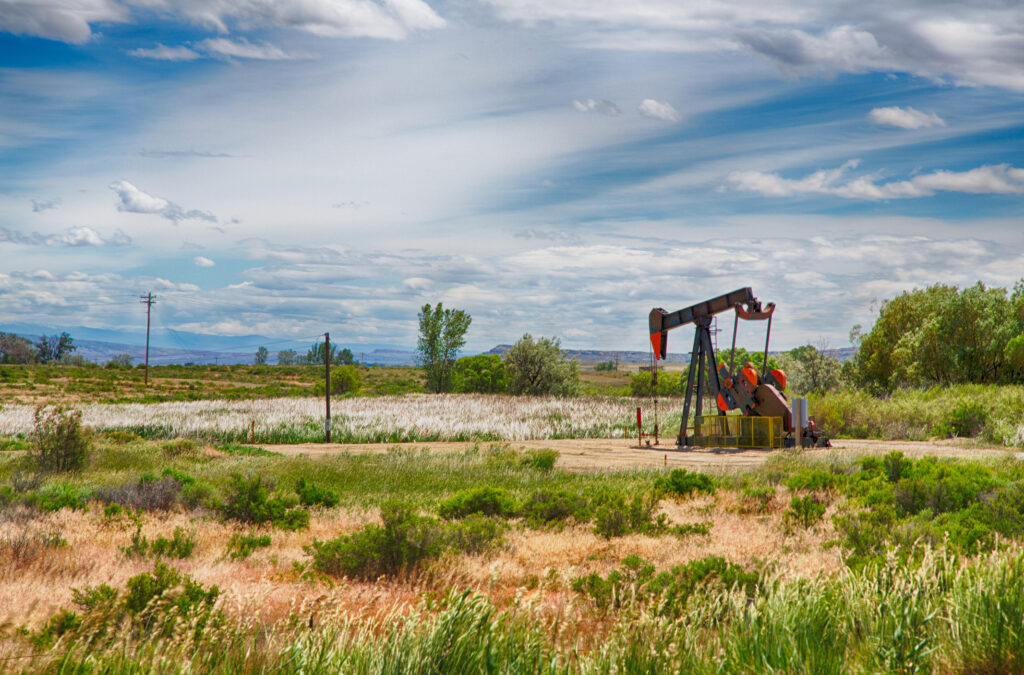
The Powder River Basin (PRB) in Wyoming is undergoing a significant transformation, evolving from an area once considered economically challenging for oil production into a compelling frontier for energy investment. This shift is primarily driven by groundbreaking advancements in horizontal drilling technology, specifically the dramatic increase in lateral well length. For investors closely monitoring domestic crude oil production and seeking opportunities in resilient plays, the PRB’s trajectory warrants close attention.
Our proprietary data pipelines and market intelligence reveal that this technological evolution is not just theoretical; it’s actively reshaping production economics and attracting substantial capital. Companies are now pushing the boundaries of what’s possible, unlocking vast resources with unprecedented efficiency gains. This analysis delves into the implications of these developments for investor portfolios, examining how enhanced drilling techniques in the PRB intersect with current market dynamics and future catalysts.
The Powder River Basin’s Efficiency Leap: 3-Mile Laterals Redefine Economics
The core of the PRB’s revitalization lies in the extended reach of horizontal drilling. While the technique itself is over a century old, modern equipment and sophisticated geological modeling have enabled operators to dramatically increase lateral lengths. What began with 1-mile laterals in the early days of the play has now progressed to an era where 3-mile laterals are not just possible, but actively being drilled.
Anschutz Exploration Corp., a prominent Wyoming producer, is at the forefront of this innovation, reportedly drilling its first 3-mile laterals in Johnson County. This move signifies a critical inflection point for the basin. Longer laterals mean a single well can access significantly more of the productive, thin horizontal oil layers characteristic of the PRB’s stacked pay zones. This translates directly into higher initial production rates, greater ultimate recovery per well, and, crucially, a reduced per-barrel lifting cost. With Anschutz adding approximately 65 new wells annually and producing around 60,000 barrels of oil equivalent per day, these efficiency gains will have a material impact on their operational performance and overall profitability.
Continental Resources, a major player in the U.S. shale landscape, also recognizes the PRB as a core asset, highlighting its potential to mobilize “several billion barrels of resources.” This strategic focus from leading E&P companies underscores the long-term viability and growth prospects of the basin, driven by continuous technological refinement that promises to sustain production plateaus rather than hasten peaks.
Navigating Market Volatility with Enhanced Production Economics
The timing of these efficiency breakthroughs in the PRB could not be more critical for investors. As of today, April 18, 2026, Brent Crude trades at $90.38 per barrel, reflecting a significant decline of 9.07% within the day, with its range spanning $86.08 to $98.97. WTI Crude mirrors this trend, currently priced at $82.59, down 9.41%, within a daily range of $78.97 to $90.34. This sharp daily drop extends a broader trend; our proprietary data indicates Brent has fallen by $20.91, or 18.5%, from $112.78 on March 30th to $91.87 just yesterday, April 17th.
This palpable market volatility, characterized by pronounced downward pressure on crude prices, underscores the imperative for producers to optimize their cost structures and maximize well productivity. In such an environment, the ability of PRB operators to drill 3-mile laterals becomes a powerful competitive advantage. These longer laterals allow for greater resource extraction per drilling pad and reduced infrastructure costs per barrel, inherently lowering the breakeven price required for profitability. For investors, this translates into a more resilient asset base, capable of generating returns even when faced with significant fluctuations in global crude benchmarks. Companies leveraging these advanced techniques in the PRB are better positioned to weather downturns and capitalize more effectively when prices rebound.
Investor Horizon: Production Outlooks and Key Catalysts
Our proprietary reader intent data reveals a consistent investor focus on future oil price trajectories and the dynamics of global supply. Questions such as “What do you predict the price of oil per barrel will be by end of 2026?” and “What are OPEC+ current production quotas?” highlight the market’s ongoing search for clarity amidst geopolitical and economic uncertainties. The efficiency gains in basins like the PRB directly influence the supply side of this equation, offering a domestic counterweight to international supply decisions.
Looking ahead, several key events on the energy calendar will provide critical context for these investor concerns. The upcoming OPEC+ Joint Ministerial Monitoring Committee (JMMC) and full Ministerial meetings today, April 18th, and tomorrow, April 19th, respectively, are paramount. Any decisions regarding production quotas will have immediate ramifications for global supply and pricing, directly impacting the revenue potential of all producers, including those in the PRB. Following closely, the API Weekly Crude Inventory reports on April 21st and 28th, along with the EIA Weekly Petroleum Status Reports on April 22nd and 29th, will offer crucial insights into U.S. demand, inventory levels, and refining activity. These reports provide a granular view of the domestic market balance, which informs the investment case for U.S. onshore plays.
Furthermore, the Baker Hughes Rig Count on April 24th and May 1st will serve as a bellwether for drilling activity across North America. A sustained increase in rig counts, particularly in efficient basins like the PRB, would signal confidence from operators in their ability to profitably expand production, even in the current price environment. For investors, understanding these intertwined market signals and their potential impact on U.S. shale production, particularly from high-efficiency areas, is essential for informed portfolio adjustments.
Strategic Positioning in a Stacked-Pay Environment
The Powder River Basin is renowned for its “stacked pay zones,” meaning it contains multiple productive geological layers. This characteristic, combined with the ability to drill extended laterals, offers a significant strategic advantage for operators. Instead of drilling numerous vertical wells to tap into different formations, companies can now utilize a single pad to drill multiple long horizontal wells, each targeting a different productive zone.
This multi-zone development strategy not only maximizes the recovery from a given acreage but also reduces surface footprint and operational costs. For investors, this signifies a more capital-efficient development model, potentially leading to higher returns on invested capital. Companies that have successfully mapped and are actively exploiting these stacked pay zones with extended laterals are demonstrating a sophisticated approach to resource development. This strategic positioning allows them to unlock immense reserves over a longer production horizon, contributing to a stable and potentially growing output profile that can appeal to long-term energy investors.